11 Amazing Sauna and Cold Plunge Benefits

By now, you may have seen or heard of some people’s sauna and cold plunge routine, but are still wondering what the entire point is.
What’s the point of first saunaing and then immersing yourself in icy cold water, or vice versa, and maybe even repeating this process several times?
What benefits does this hobby offer and are they worth it?
And if you wanted to try it for yourself, when, where, and how could you do it? What about the cost, or some kind of DIY version?
In this article, I’ll answer all these questions and more, so let’s dive in!
11 Sauna and Cold Plunge Benefits
You can definitely sauna and cold plunge separately, but they’re ideal to combine, especially when you have access to both.
While saunaing is pleasant and relaxing the entire time (= during and after), cold plunging is initially quite a shock for the body, and not inviting at first.
But when you alternate between sauna and cold plunge sessions, getting in the cold water becomes easier, as it’s preceded and followed by sauna heat.
Let’s investigate what benefits these extreme opposites (= contrast therapy) provide.
1. Relaxation & Stress Reduction
Saunaing is very relaxing, reduces stress levels, increases levels of calmness and endorphins (= natural mood boosters), and relaxes muscles.
Cold plunging also triggers the release of endorphins, and increases the secretion of norepinephrine and beta-endorphin that seem to promote stress tolerance.
2. Pain Relief & Muscle Recovery
Sauna sessions provide relief from muscle soreness, joint pain, and arthritis symptoms, as the heat relaxes muscles, improves circulation, and reduces inflammation, aiding in faster recovery after exercise or injury.
Because of these benefits, most people enjoy sauna sessions as a post-workout recovery tool.
Cold water immersion also promotes faster recovery and reduces inflammation in addition to relieving back, neck, and shoulder pain.
Cold plunging relieves rheumatics’ joint pains and helps with muscle aches too.
3. Invigoration & Mental Clarity
Cold plunges are ideal for mental health, as they’ve been shown to reduce symptoms of depression and anxiety, improve mental clarity, and increase overall feelings of well-being.
These feelings are something most, if not all, cold plungers share: Markus, for instance, who not only plunges but can also swim in icy waters, says that:
“My brain kind of resets during a cold plunge. Right after plunging, it almost feels like you’re reborn.”
He’s been cold plunging for 6 years and adds that:
“No matter how pissed off you are before the plunge, it all disappears in the water. When cold plunging, you’re living in the moment. You’re not thinking about work or worrying about something else. Your survival instincts kick in and you’re fully concentrated on what’s happening right now.”
4. Improved Circulation
Both sauna and cold plunge improve circulation.
When you sit in a sauna, your heart rate increases and blood vessels dilate, improving blood flow throughout the body. This increased circulation can lower blood pressure and improve overall cardiovascular function.
When you expose your body to cold water, however, blood vessels constrict, which helps increase blood flow to vital organs and tissues. This can enhance overall cardiovascular health.
5. Improved Sleep
Saunaing is known to improve sleep, and so is cold plunging.
It’s linked to relaxation and stress reduction, as those affect sleep. When your body and mind are in good health, it shows in more good quality sleep, too.

6. Improved Cardiovascular Health
Regular sauna use has been linked to reduced risk of cardiovascular diseases, lower blood pressure, and improved endothelial function.
This particular point is also an excellent example of high quality sauna research, with 2,315 participants studied for over 20 years!
7. Immune System Boost
Cold plunges are known to boost the immune system. The sudden exposure to cold water can stimulate the production of white blood cells which are responsible for fighting off infections and diseases.
Regular cold plunges can help strengthen the immune system and make you less susceptible to illnesses.
Just don’t overdo it! As stated in the National Library of Medicine:
“While short-term exposure in cold water can certainly improve the activity of the immune system, repeated exposure without sufficient recovery may actually lead to a reduced immune function.”
8. Lowered Risks of Dementia & Alzheimer’s Disease
Traditional saunas are to thank for these benefits.
It’s not known whether they are caused by some physical effect or if the enjoyable experience of saunaing itself prevents or postpones the development of memory disorders.
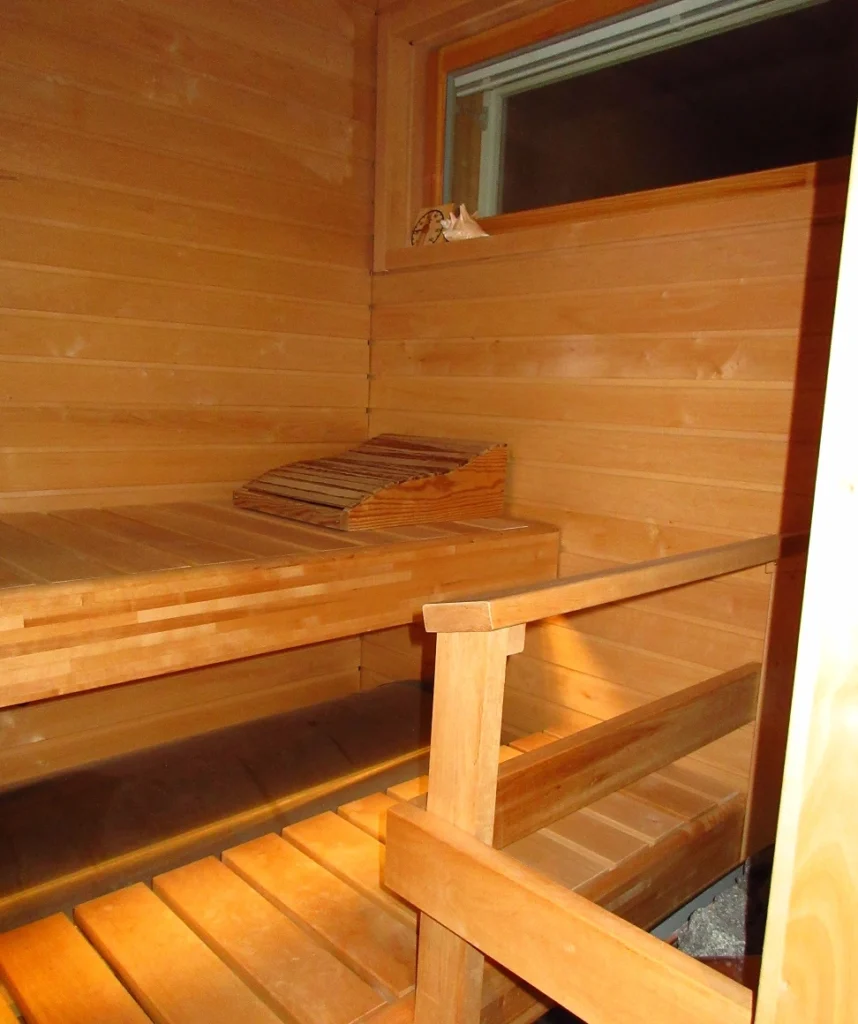
9. Improved Metabolism
Many people have been tricked into thinking that saunaing burns lots of calories and therefore leads to weight loss, which isn’t true in the sense you’d wish: you’re not losing any fat by sweating in a sauna but are losing water weight due to dehydration.
You gain that “lost weight” back when you drink water.
But what about sauna and cold plunge for weight loss as a combo?
Regular exposure to cold water can increase the amount of brown fat in your body. Brown fat is the so called “good fat” as it improves metabolism.
Brown fat produces heat, which requires energy. That’s why cold plunging can indirectly lead to weight loss.
10. Improved Insulin Sensitivity
With diabetics, their insulin sensitivity can improve and insulin resistance reduce while cold plunging.
“Fat metabolism moving in the right direction may also have a heart-protecting effect,” says Sirkka Rissanen, lead researcher at the Institute of Occupational Health, when asked about cold plunge benefits.
11. Improved Respiratory Function
Both sauna and cold plunge help with respiratory function.
Traditional saunas benefit respiratory health by clearing airways and improving lung function, as the warm, humid air helps alleviate symptoms of respiratory conditions such as common colds, asthma, and chronic bronchitis.
Many cold plungers also report their respiratory diseases have gotten better or even disappeared.
Sauna and Cold Plunge: Where, When, and How?
While the average sauna temperature is 140–185 F (60–85 C), the water you use for cold plunging can be under 40 F.
If your local spa happens to have a cold water pool that mimics cold plunging in nature, you can expect the temperature to vary between 39–48 F (4–9 C).
But if you have a chance to cold plunge outdoors in a real body of water during the winter season, then the temperature is usually even colder, around 32 F (0 C).
There are three ways to get access to sauna and cold plunge (pools):
1. Google sauna and cold plunge near me

Regardless of the time of year, most cold plunge options in the US are indoor pools.
The best thing about them is that they allow saunaing and cold plunging to become a regular, year-round hobby (at least for the rich), which is something a natural body of water can’t offer.
What about sauna and cold plunge cost? I compared three options across the map and found the following:
🔶 California: $17.25 per person for a private 45-minute session including infrared sauna and cold plunge tub (when booked for a group of 4 people)
🔶 North Carolina: $40 for 2 hours in a public bathhouse with access to 2 cold plunges and 2 traditional saunas
🔶 Ontario: CA$42.37 for a guided, 75-minute contrast therapy session including sauna, cold water barrel, and steam room
It’s surprisingly difficult to find places in the US that offer both, a traditional sauna and cold plunge pool(s). Most places offer only infrared saunas, and the tubs available may be for hot tub use only.
If you happen to be traveling to Northern countries during wintertime and are wondering what is the sauna to cold plunge called, here are a few options: sauna ja avanto (Finnish), bastu och vinterbad (Swedish), and ба́ня и про́рубь (Russian).
2. DIY Cold Plunge
In this option you need to rent a sauna or already have your own, either indoor or outdoor, and have access to a natural body of water you’re allowed to use.
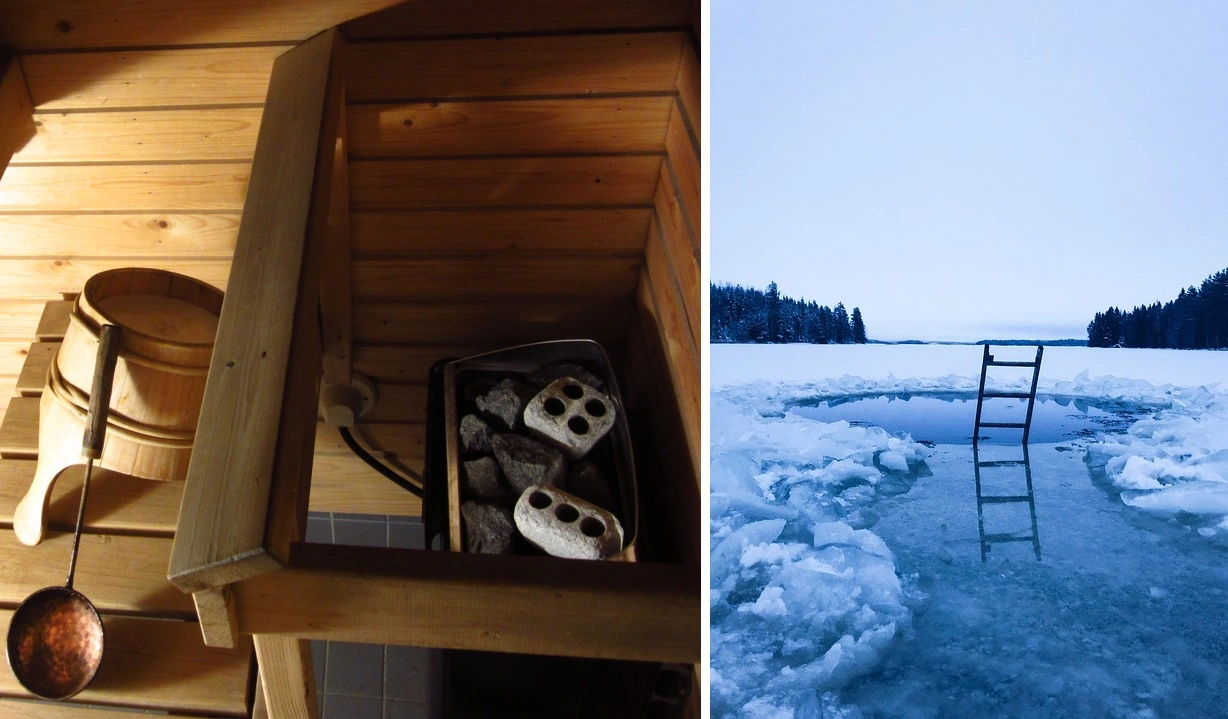
Like in ice fishing, you drill a hole through the ice but just make it a lot bigger (see the picture above); this way you have enough room to plunge and even swim a little.
When cold plunging like this, it’s the most authentic way but obviously only a seasonal hobby, which is a con if you want maximum health benefits.
3. Create Your Own Sauna and Cold Plunge Spot at Home
This is clearly the best sauna and cold plunge option if it’s something you want to do regularly.
Having seen the prices above, I bet this option is also the cheapest over time.
Below you can see my setup:

I have an indoor sauna and a portable bathtub I can fill with cold water and ice. Obviously the tub can be used for warm baths too, making it more versatile.
There are many inflatable and expensive cold plunge tubs on the market with chillers (powered by electricity), but I wanted a more solid and affordable option.
It’s easy to store on the highest sauna bench when not in use. It’s also so narrow that you need a lot less water than you’d think to plunge successfully.
If you want a “real” cold plunge tub, make sure to read lots of reviews first: most tubs take a lot of space, are extremely heavy, and have to be hooked up at all times, increasing your electricity bill substantially.
Final Thoughts
Now that you have all this information on sauna and cold plunge, you’re good to go.
Just remember to avoid the most common sauna mistakes such as overheating and not throwing water on the hot sauna rocks.
Also, don’t stress if you don’t have easy access to saunas and/or cold plunges; saunas are harder to emulate (there are sauna tents, though), but the closest thing to a cold plunge is a cold shower.
The exposure to cold water should be brief but intense. Novice cold plungers usually start with a few seconds, and as they get more used to the cold, a typical session lasts about 20 seconds, and there can be several sessions during the same morning/night.
Cold plungers who go for just one session like an average of a 40-second plunge.
Diving and getting your head wet isn’t recommended when cold plunging. This kind of behavior increases heat release, which can result in hypothermia.
If you suffer from cardiovascular diseases or severe asthma, it’s best to consult your doctor before cold plunging and combining it with sauna.

Frequently Asked Questions (FAQ)
1. Is it good to cold plunge after sauna?
Many people like to cold plunge after sauna, as cooling is more desired when you’ve been sweating and are feeling hot.
Icy cold water isn’t as inviting when you’re shivering (on the shore), which is why combining cold plunge with sauna is so popular.
You shouldn’t cold plunge just seconds after sauna, though, but have to let your body cool down a little before.
That’s because the extreme temperature difference between sauna and cold plunge stresses your heart significantly, causing your blood pressure to change rapidly from low to high and making you feel dizzy.
So, let your body cool down for a minute or two in between sauna and cold plunge.
2. What not to do after a cold plunge?
You shouldn’t let your body get cold after a cold plunge, but should wear warm clothes and maybe even have a warm drink if you feel like it.
3. Sauna and cold plunge after workout, is it always a good idea?
Sauna and cold plunge have typically been used after workouts even by professional athletes.
It makes a lot of sense considering the many benefits (pain relief, faster recovery, relaxing the muscles, improved sleep, etc.) sauna and cold plunge offer.
Recent studies, however, suggest that you shouldn’t cold plunge after strength training.
That’s because the cold relieves inflammation, which sounds good, but when you strength train, and your muscles become inflamed because of it, that means there is wanted progress happening (= your muscles are growing, as they’re repairing themselves).
You don’t want to hinder or disturb this process with any kind of cold exposure.