Best Sauna Heaters & Stoves: Withheld Info Exposed (2025)

So, you need a sauna heater.
Either for the first time ever, or you’re replacing an old sauna heater.
That’s great as the heater really is the heart of the sauna, but how are you supposed to know which heater or stove to choose, in what size and capacity, or even the main features since the names sound like gibberish and don’t tell you anything?
Harvia, Huum, Narvi, Helo… names like these really don’t make shopping any easier! How do you even assess which heater brands are the most reliable?
No worries as I’m here to help! I’ve been saunaing for 40 years, currently have two saunas, an outdoor and an indoor one, and have bought and installed several sauna heaters during my life.
Most sauna heaters sold in the US and elsewhere in the world are Finnish. I’m of Finnish origin myself, so I’m well versed in this topic.
Let’s rank the best sauna heaters below, answer all your questions, look at real ratings/reviews, and debunk some commonly held beliefs about certain sauna heater brands.
Step 1: What Type of Heater is Best for a Sauna?
There are three types of sauna heaters on the market: electric, wood-fired, and gas-run.
(Just to make sure we’re on the same page: infrared saunas, in reality infrared heat rooms, don’t have sauna heaters as they’re not saunas.)
Since all heater types can be equally good technically, what really determines what is the best one depends on your preferences and habits.
Why is that? Let’s say you’ve read somewhere that wood-burning sauna stoves are the best. But what if you’re someone with a fireplace in your house but you never use it? Is it then realistic to expect you’d enjoy lighting fires in your sauna? Probably not.
An electric sauna heater would then be a better match for you.
But if you happened to be someone who definitely wants an outdoor sauna, has easy access to firewood, and the idea of not needing any electricity intrigues you, then a wood-burning sauna stove would be the most ideal.
If you’re still undecided, below you’ll find helpful tips.
When to choose an electric sauna heater?
💡 you want or already have an indoor sauna
💡 you want the convenience an electric heater brings: no work needed on your part
💡 you appreciate the freedom a remote control system gives you: with the newest sauna heaters, you don’t even have to be at home as you can set the timer remotely on your phone
💡 you need an easy & space-saving installation: closed-sided (and wall-mounted) sauna heaters require no additional heat shields; the sauna room walls don’t need any fire-proofing either
Although an electric heater usually goes hand in hand with an indoor sauna, you can alternatively have a wood-burning stove in an indoor sauna, but then you’ll also need a chimney which may be difficult and costly to install.
The opposite scenario is also possible: you can have an electric heater in an outdoor sauna, but then your sauna will need insulation (that’s otherwise not needed) as electric heaters are not meant to be used in freezing temperatures.
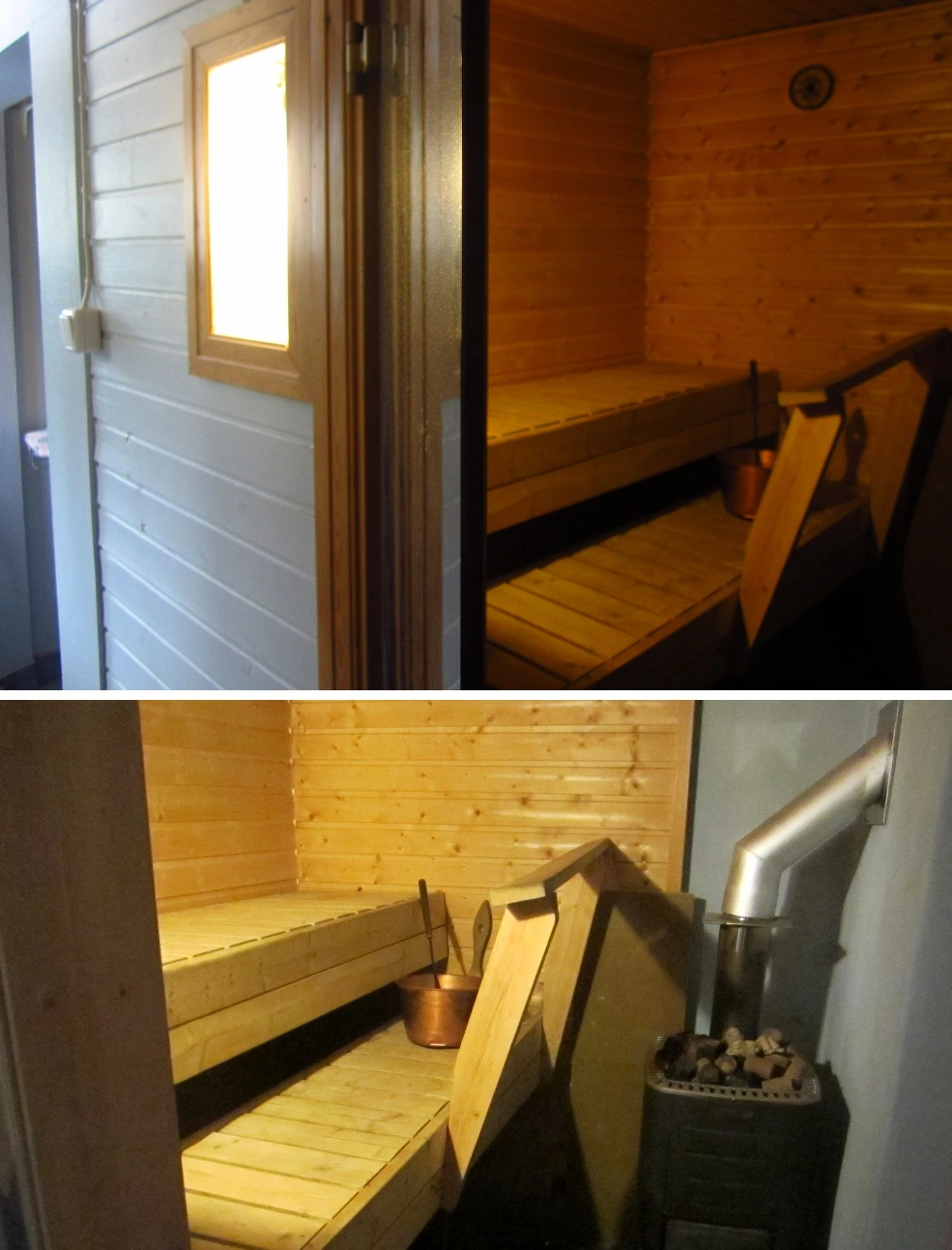
When to choose a wood-burning sauna heater?
🔥 you want or already have an outdoor sauna
🔥 you appreciate the authentic and traditional feel and smell of a wood sauna, with crackling fire in the background
🔥 you don’t mind the work: a wood-fired heater always means more work and effort than an electric heater
🔥 you own a woody property or otherwise have easy access to firewood
🔥 you don’t have access to electricity (or gas): a wood-burning sauna can function entirely without electricity as the stove itself requires none and even the lights you have can be battery-operated
A wood-burning sauna stove is the best match for people who not only like the wood-burning aspect but who find it a meaningful phase in the entire sauna-going process that also brings them closer to nature.
A wood stove is the only heater type you’re allowed to install yourself without it voiding your warranty. It saves you money if you’re capable of doing such work.
(With most electric heaters, you need to hire a licensed electrician (only the smallest heaters you can plug in yourself) whereas with a gas heater, you need a certified plumber or HVAC technician.)
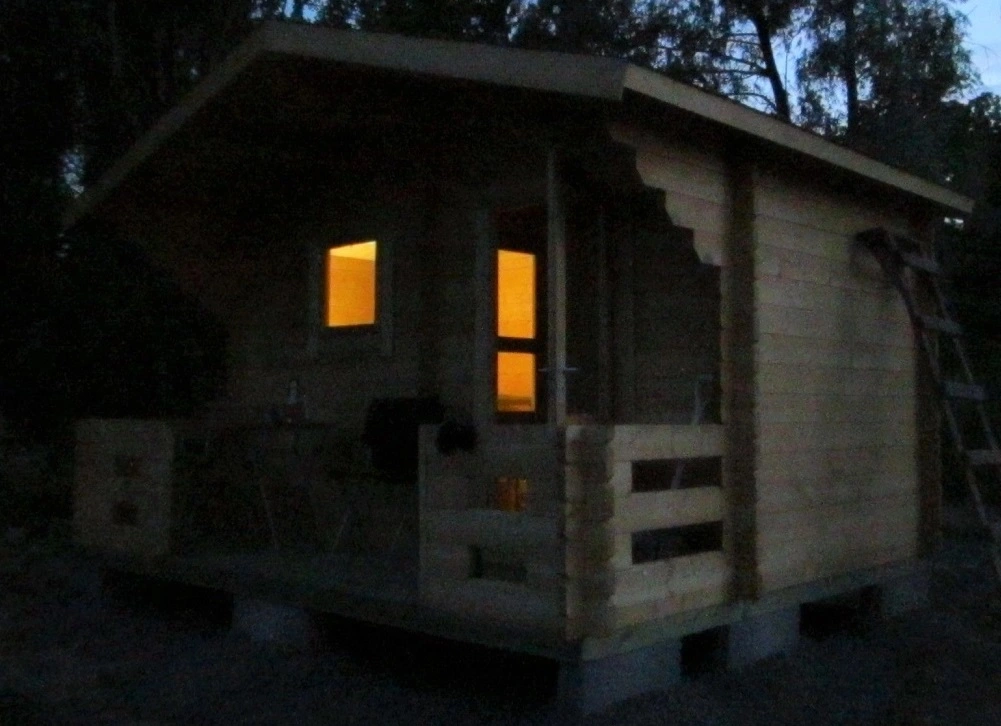
When to choose a gas sauna heater?
This is the least popular and least sought-after option, so it’s the best choice only for some people:
💨 you have easier/cheaper access to natural gas or liquid propane than electricity or wood
💨 you can afford the installation cost: a gas heater is the most expensive type to install as gas lines are often much further away from the sauna location than electric lines; this adds to labor and material costs
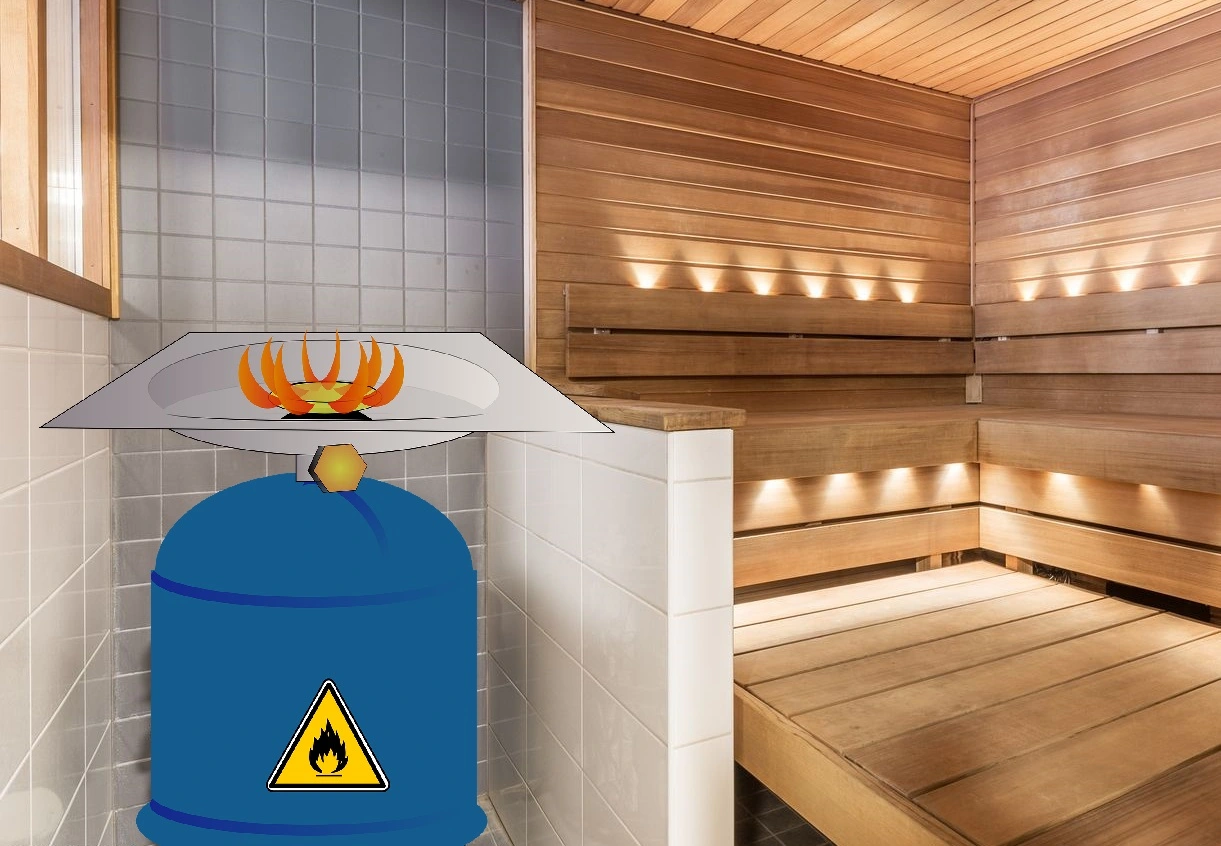
💨 you’re not afraid of gas stoves in general as this is the most dangerous heater type if used incorrectly: while saunaing, if you smell gas, you’re not to touch any electrical switches and can’t even use your own phone to call your gas supplier; instead, you have to use your neighbor’s phone for safety reasons (= to avoid a fire or an explosion)
Gas heaters are much more common in outdoor than indoor saunas, but some models are still suitable for indoor use as well.
If you know you have easy access to gas, the operating costs of a gas heater can be lot lower than with an electric heater. Scandia is the most sold gas sauna heater brand.
Natural gas is so much more affordable than propane that if you only have access to the latter, the savings won’t necessarily be that significant when compared to running an electric heater.
It’s likely that as we keep moving away from fossil fuels, and electricity becomes the more environmentally friendly option in more countries, gas sauna heaters will become even less common than they are now.
Step 2: How Big of a Sauna Heater Do I Need?
The main reason why picking the right size might feel difficult at first is because you think of your sauna room in square feet while sauna sellers use cubic feet with their heaters.
But don’t worry as you don’t have to convert or calculate anything yourself: there’s a calculator that does all the math for you.
I tested it myself to see whether my Harvia heater in my indoor sauna is the right size. I was pleased to get 6 kW as the result since that’s exactly the capacity of my existing heater.
The dimensions you’ll need for the calculator in feet or inches are the depth, width, and height of your sauna room + the square feet of glass surfaces.
The reason why glass is measured is because it allows heat to dissipate unlike wood that is more insulating. This means that if your sauna has lots of glass surfaces, you’ll need a more efficient heater than the space would otherwise call for.
When comparing different heaters, you can see most sellers specifying what room volume is ideal for each heater. This is great since it allows you to see how powerful your heater actually is; let’s use mine as an example:

My sauna is 171.33 cubic feet, and the heater I have, Harvia KIP60 (6KW), is meant for saunas ranging from 170 to 300 cubic feet. As the same heater would be ideal even in larger saunas, it’s no wonder it heats my smaller sauna so efficiently and fast even on lower settings.
These numbers are perfect as it’s always better to have a heater with “room to spare” than a slightly too weak heater that you always have to have full on to barely get the temperatures you’re after.
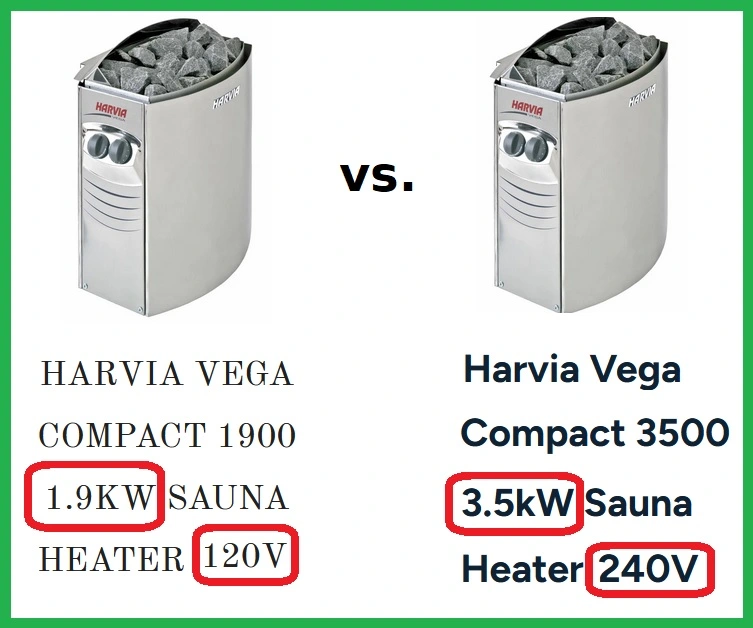
What about voltage, is that something you have to think about? What’s the difference between electric heaters of 110V and 120V, and will an electric sauna heater of 240V even work in the US?
Luckily you can almost forget about the voltage when sauna shopping: 240V is by far the most common voltage found in heaters for home use (208V/3PH is meant for commercial saunas) and can easily be wired with 220V by your electrician.
The difference between 240V and 220V is so minor or even non-existent that it’s most likely unnoticeable; 240V wouldn’t be the standard in heaters sold in the US if it didn’t work ideally even in a 220V network.
The smallest heaters have voltages of 110V or 120V and are recommended only for the smallest of saunas.
Step 3: Choose the Best Sauna Heater or Stove for Your Needs
Now that you have a much clearer idea on what type of heater you’re interested in and the size required, we can finally move on to introducing the best sauna heaters on the market.
I added some ratings from Finnish stores to give you an idea of what verified buyers actually think, but all the links in this list direct you to US stores.
1. Harvia / Finlandia
Harvia, founded in 1950 in Finland, is without a doubt the most known and most sold sauna brand in the whole world.
Even today, they still make around 80% of their heaters in Finland although most of them are sold overseas, with the US being the biggest market (and Japan and even China showing new-found interest).
This is what Harvia sauna heaters mean to many Finns: they’re beloved, authentic, dependable, combine tradition with innovation, bring back memories, and just feel right.
When you walk into any sauna and see it has a Harvia heater, there’s nothing else to do but just nod in agreement and start saunaing. That’s how reputable Harvia is.
Harvia sauna heaters are sometimes sold under their rebranded name Finlandia in the US, so if you’ve been eyeing a Finlandia heater or have previously had one, hoping to replace it with a new one, you can either choose a Finlandia or a Harvia heater as they’re identical.
All Finlandia heaters are made in Finland (as most Harvia heaters are too).
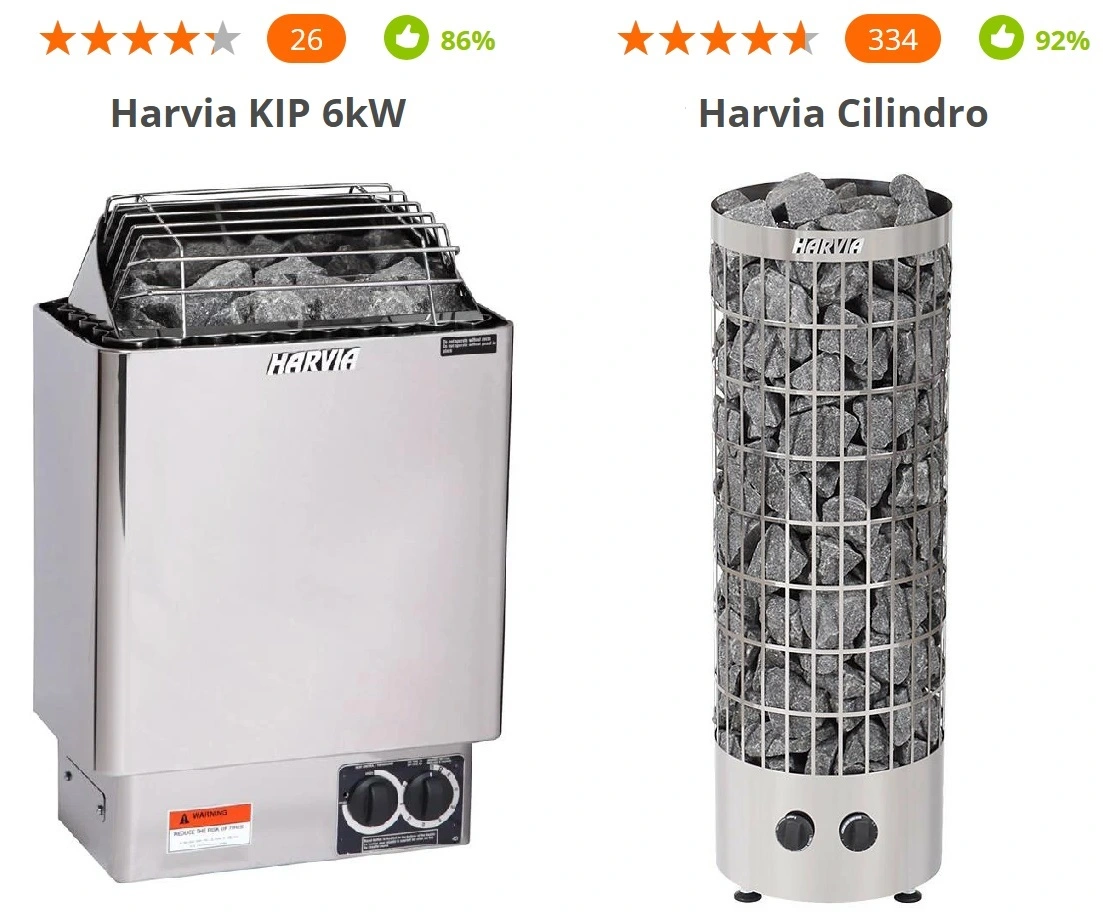
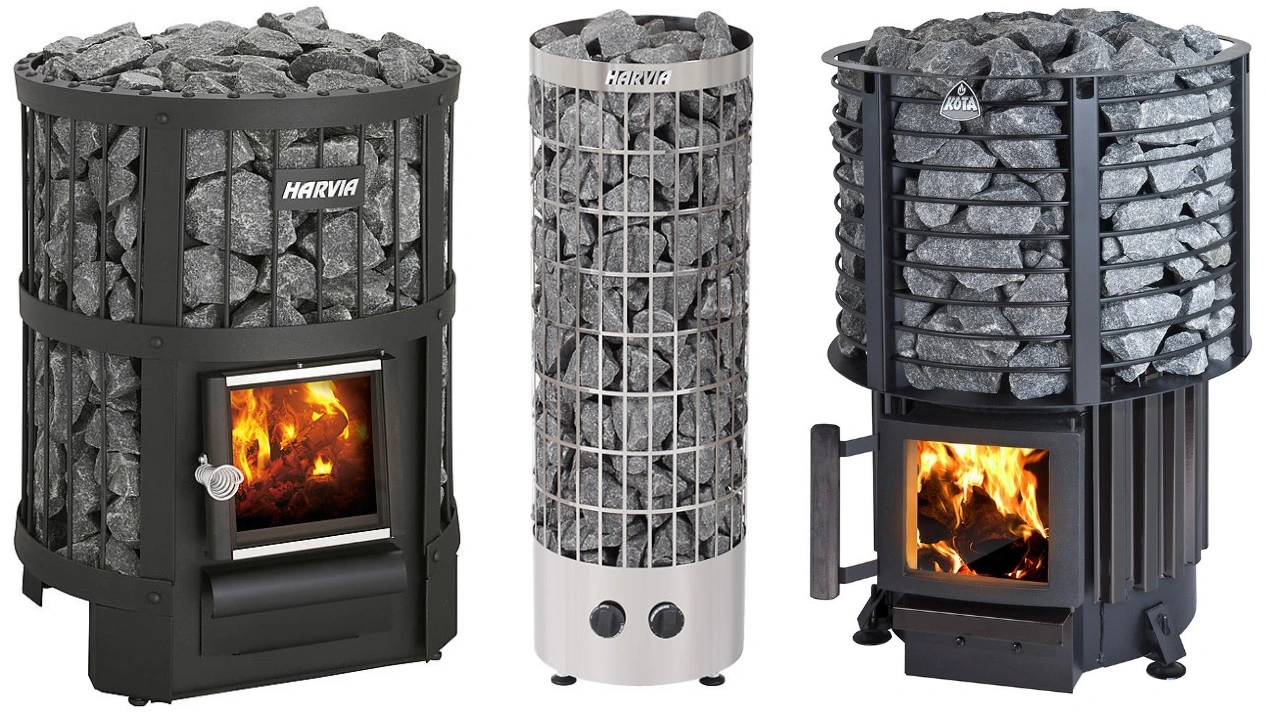
Above we have two of the most popular choices for small to medium saunas, with power ranging from 3 kW to 10.5 kW.
Harvia KIP is the exact heater I have, and all users, me included, think it gets the job done quickly and efficiently. It’s a basic wall-mounted heater, which means it doesn’t have any extra features like remote control.
Harvia Cilindro, on the other hand, is deemed the best electric sauna heater according to hundreds of reviewers. The main benefit of a freestanding pillar like this is that it offers the most even heat possible.
That’s because the steel grid allows the hot stones to spread heat more evenly than an enclosed heater that mostly radiates heat from the top.
You lose this benefit if you have your pillar heater embedded into the benches, which is a popular design choice nowadays. Then you can’t enjoy löyly in all of its forms either.
You get the most out of a pillar heater when it’s on a high enough level and you’re able to pour water on all of the rock surfaces: you get feistier löyly when pouring water on the top, and softer steam when pouring water on the sides.

As heaters with more sauna rocks have become more popular during recent years, some people think they’re always better or even the best heaters out there.
The truth isn’t that simplistic, though. A heater with a larger stone mass takes longer to heat than a Harvia KIP style heater but then it also retains that heat better.
This means that even when the Cilindro model has 175–200 pounds of rocks and the same kilowatts as the KIP, the latter heats the sauna room more quickly with its 45 pounds of rocks and direct heat.
The heat also stays even for the whole duration the heater is on but once it’s turned off, temperature drops much more quickly than with a pillar heater.
If you sauna alone or with a spouse, for instance, you don’t need the heater to stay hot for longer (so KIP is a viable choice), but if you have a bigger family, meaning there are people saunaing before/after you, you could benefit from a Cilindro type heater that retains heat.
Heaters containing lots of stones are most known for softer and gradual heat and even steamier löyly, but you can definitely achieve the same effect with less rocks too: steam stones are the perfect solution if your heater has less rocks but you prefer a more humid sauna.
Built-In Controls vs. Remote Control vs. Sauna Heater with WiFi
Before we move on, you should know how you plan to control your new sauna heater: are you happy with built-in controls, or do you prefer a remote control unit with or without WiFi?
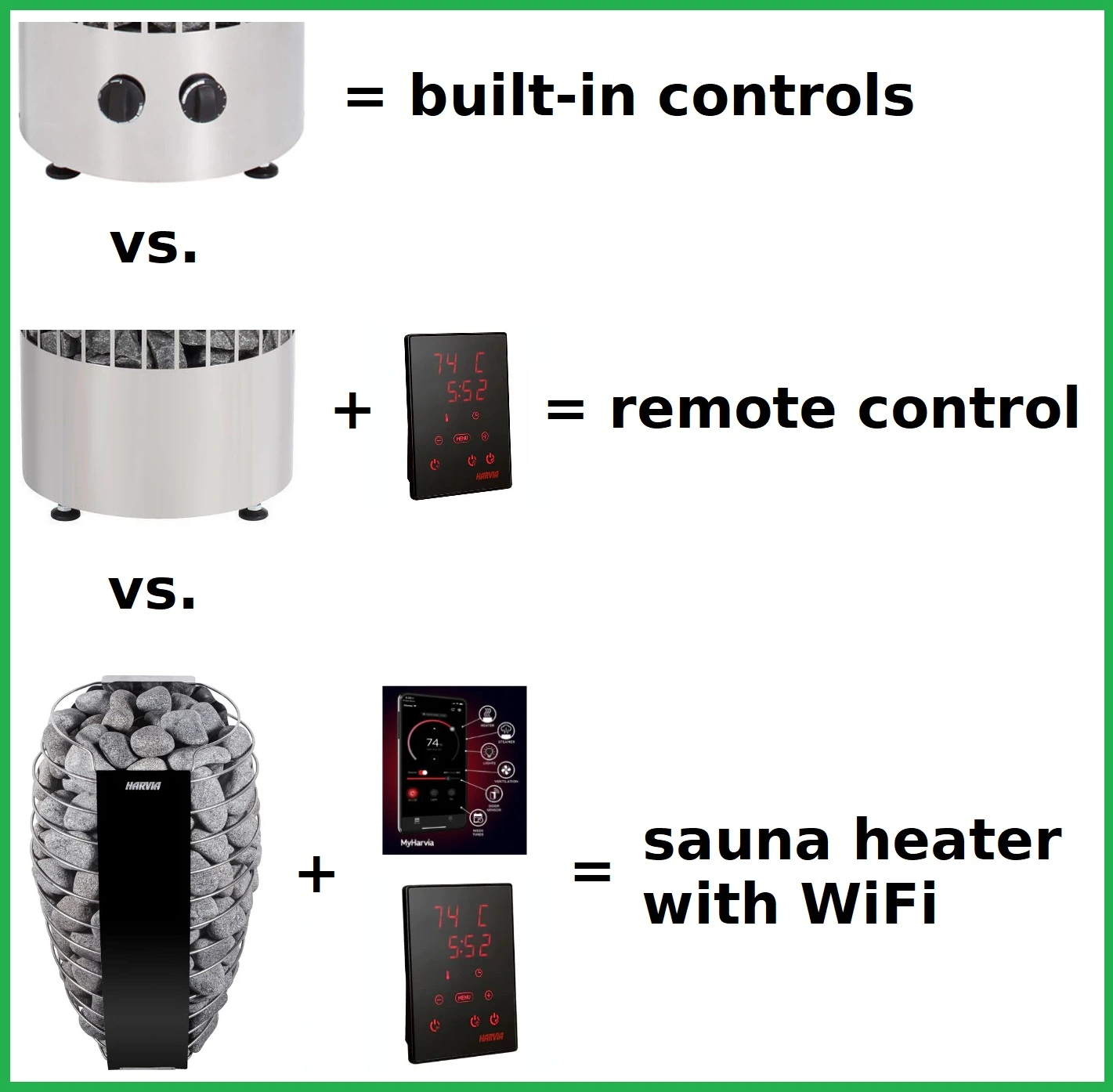
Built-in controls are the most self-explanatory and the “old-fashioned” way of controlling a heater: you can turn it on and off and adjust the settings only when you’re physically present.
Even with this option, you get a timer switch that allows you to delay the heater turning on usually for up to 8 hours.
Remote control, on the other hand, means a digital screen that can be installed anywhere in your home except for the sauna room in some cases.
The most important thing to know about remote control is that it doesn’t automatically include WiFi, meaning you can’t necessarily control your heater through an app on your phone.
It’s only when you buy a sauna heater with WiFi that you can control it fully remotely. This kind of system comes with the same screen/remote as the previous option and has WiFi connectivity as an added feature.

The safest and cheapest option is built-in controls, but many still prefer remote control and apps.
Sometimes the exact same heaters come with either built-in or remote control, meaning the controlling system doesn’t have to deter you from choosing the heater you like the most. Harvia Cilindro, for instance, is sold with both options.
When using a sauna heater with WiFi, some ground rules are needed unless you live alone and are the only one using your sauna. You don’t want anything or anyone being in the sauna room when you remotely turn the heater on when you’re away.
Many times the safety features won’t even allow misuse, meaning the heater is automatically turned off if someone opens the sauna room door when it’s not supposed to be opened, for instance. You won’t be able to turn the heater back on remotely before the sauna room has been checked.
Back to Harvia
As Harvia has the widest selection, I want to introduce a few more heaters before moving on to other brands.

Harvia Spirit
This decorative and modern sauna heater with WiFi (6 kW or 8 kW) is meant for small to medium saunas. It heats the sauna efficiently and fast, providing lots of löyly.
It’s wall-mounted, space-saving, and has the heating elements protected, which extends durability and increases airflow.
That’s important as a similar heater, Huum Drop, has had lots of issues with heating elements breaking and melting because rocks are too tightly stacked against them due to poor design and quality.
Harvia Forte
This freestanding or embedded sauna heater (from 4.5kW to 10 kW) is an interesting and unique innovation that has won people’s hearts. It’s ideal for anyone who goes to sauna several times a week, every day, or even several times a day:
✅ the heater is always ready for use because it comes with a standby heat feature; when you have that on, you can sauna any time, even on a whim, since it only takes 5–15 minutes to reach a pleasant sauna temperature
⚡ excellent thermal insulation makes sure the temperature stays high enough in the stone space with as little energy as possible: the energy won’t go to waste as it keeps your sauna dry in between uses + the eco mode saves electricity in general
💧 reviewers praise Forte for soft, moist, and pleasant löyly that won’t run out even when there are several bathers
🔥 when you leave the cover opened for longer, you get more hot and intense löyly
Harvia Virta (Combi)
This heater is ideal for bigger and taller saunas (power up to 20kW), and is sold as a regular and as a combination heater, the latter meaning it has a built-in steamer.
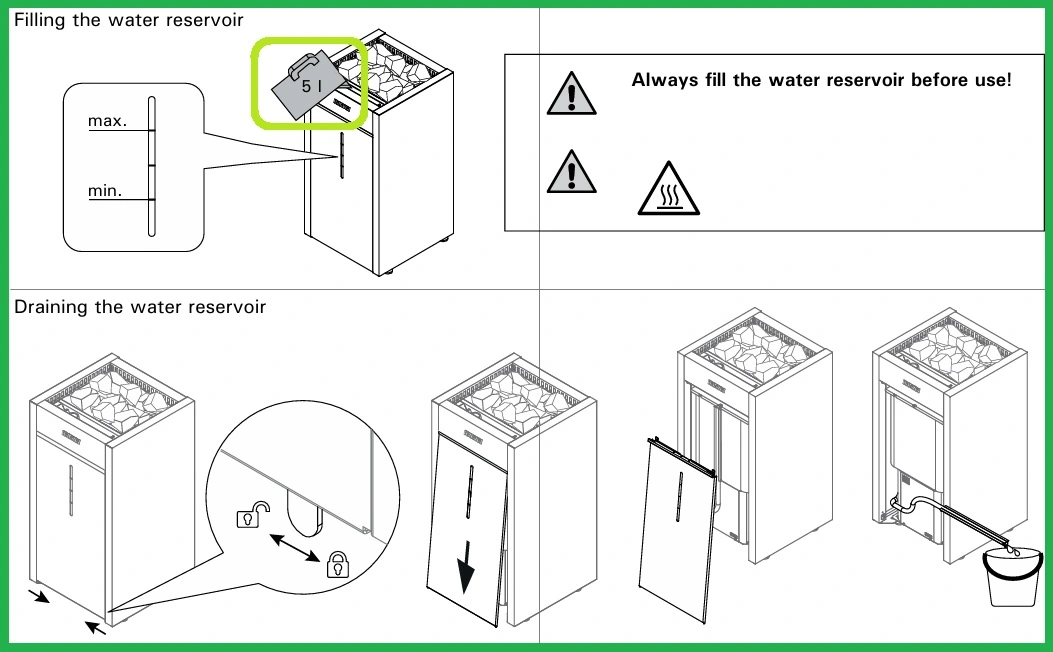
It’s a nice feature if you prefer a humid sauna but are a shy or fearful löyly thrower.
But just to be clear, a steamer is never a must. Any real sauna heater, such as all Harvia heaters, provide plenty of steam (löyly) without steamers.
But if you’re a real spa lover, a combination heater like Virta may be the perfect match as it offers four different modes: traditional sauna, steam room, herb sauna, and fragrant sauna. There are designated compartments for herbs and fragrances in the heater.
Wood-Burning Harvia Sauna Heaters
In many ways, wood-burning sauna stoves have less variation between them than electric heaters since they’re more traditional, never remotely controlled, and so on.
As long as the stove is in the right size and within your budget, you can choose any according to your preferences.
These include aesthetics and your heat vs. steam preference as heaters with lots of stones produce steamier sauna experiences.
Below we see three of the most popular models.

Harvia Legend
This sauna heater with rocks is a powerful heat source but emphasizes steam even more since lots of stones always mean more long-lasting and pleasantly soft löyly.
One reviewer puts it best (translated from Finnish): “Best löyly I’ve ever experienced. The wood burns very cleanly. I need much less wood than with my previous heater. Very moist löyly with lots of rocks, the sauna room stays hot for hours after the fire has gone out.”
Other reviewers say the same: the stove stays hot for longer and you get milder löyly, but if you happen to like more intense löyly, that’s easily achievable as well.
Many reviewers also mention how much they like the aesthetic of this stove.
Harvia Linear 16 & Harvia M3
These two are very similar in size, price, and style, but I wanted to include them both here since they’re so popular.
I myself had to decide between these two very recently as my old Harvia stove died, lasting for 20 years (2004–2024), and I chose Linear 16 but only because I found a better deal for it and because my old stove was a Harvia 16 as well.
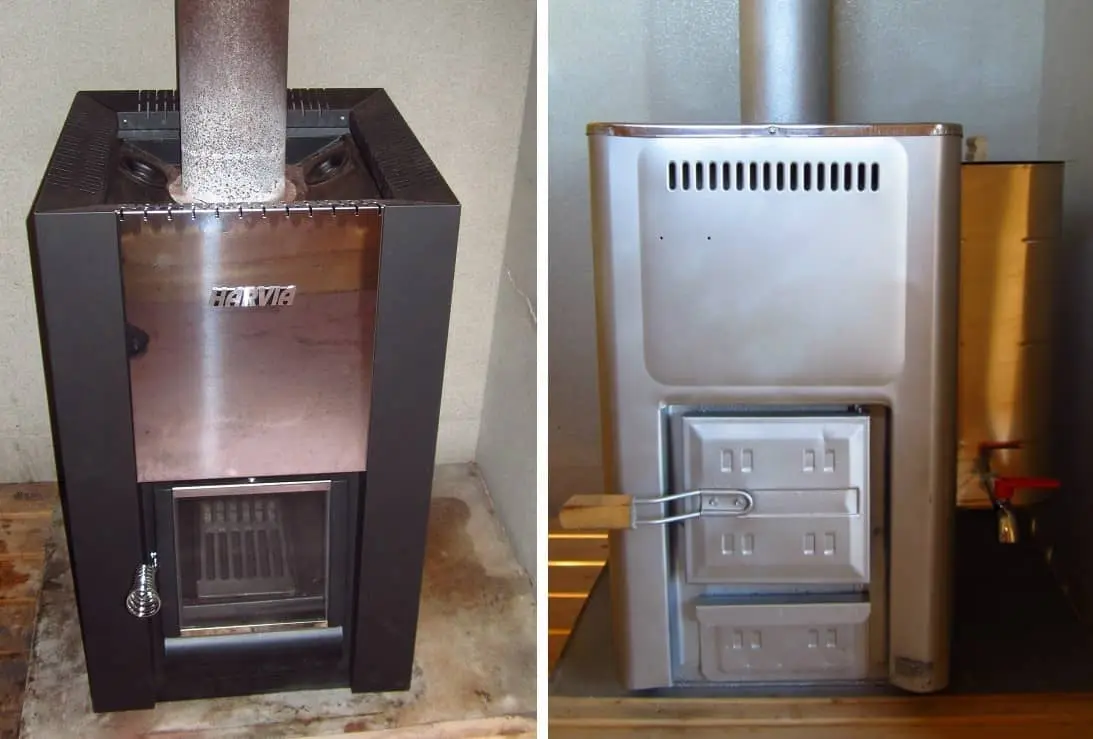
Both Linear 16 and M3 are basic, tried and tested models that many people love. They’re also among the most affordable sauna stoves.
As long as these heaters are big enough for your sauna, you can’t go wrong with either one.
Reviewers have the same things to say about them both: very good choice, “it only takes half the amount of wood to heat the sauna compared to my previous heater,” nice quality, heats the sauna fast, and the ash is easy to clean.
Yes, I can attest to that!
2. Narvi
This amazing brand is 100% made in Finland, manufacturing both electric and wood-fired heaters, but in the US, only wood-burning stoves are available. They’re known for their quality and robustness.
If you aren’t convinced by Harvia’s wood stoves, then Narvi is the answer. It’s like the heavy-duty big brother of Harvia and meant for demanding use.
Narvi was founded in 1937 in Finland and has grown substantially in recent years, with international markets in their radar. Kota and Aitokiuas are Narvi’s brands as well.

As you can see above, Narvi heaters have significantly less reviews than Harvia whose Cilindro heater alone has over 300 (!) reviews.
That goes to show how massively Harvia dominates the sauna heater market. As Narvi heaters are for bigger saunas, they’re more powerful and also more expensive. Heavier mass in some cases means better durability too.
Many people easily get by with a smaller, lighter, and more affordable heater, which is why they choose Harvia instead of Narvi.
But if your sauna is bigger, or you need a wood-burning heater for a public sauna, for instance, then Narvi can be the best choice.
As all Narvi heaters are praised for the same qualities as Harvia heaters (they heat up quickly, don’t require a lot of wood, burn cleanly, and rocks bring plenty of pleasant and long-lasting löyly), there’s only one Narvi sauna stove I’m going to spotlight in greater detail.

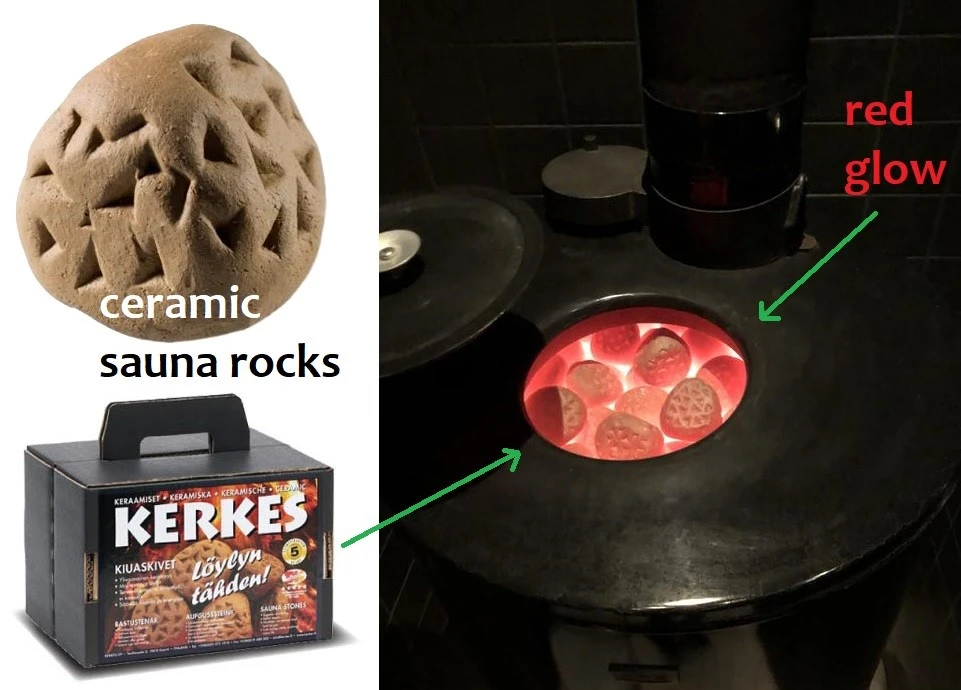
It’s a completely different type of heater not yet mentioned. It’s called Aitokiuas (authentic sauna stove in Finnish) and featured above on the right.
It’s a heat storing sauna heater, which means that once you heat it, it stays hot and ready for use till the next morning.
In a heat storing heater you have the fire directly touching the sauna rocks, which is not the case with most heaters that keep the fire in its own chamber.
This direct contact makes the rocks glowing red once you’re done with heating.
Aitokiuas is very insulated, keeping the heat in for long. All the work is done beforehand, meaning you don’t add wood during saunaing. You can adjust the temperature by closing or opening the löyly lid, which allows you to let the heat enter the sauna room or keep it in the stove.
Huge stone mass and the stove structure allow sauna-goers to experience the softest, most oxygenated löyly known to mankind. Cast iron and firebrick are key materials with a stove like Aitokiuas.
A few reviewers mention that they replaced their previous Aitokiuas with a new one after 30 years of use, which is easily double the lifespan of other heaters.
3. Helo / Finnleo / Amerec / Tylö
Helo is a Finnish sauna company founded in 1919, still making electric heaters in Hanko, Finland. Helo owns the wood-burning sauna stove brand Kastor as well.
I personally used an electric Helo sauna heater for hundreds of times during my childhood and teenage years when I still lived with my parents (and my dad still uses it!), but I’m struggling to describe this brand now, over 20 years later.
Why is that? It’s because of countless rebrandings that have led to a lack of identity and lack of transparency.
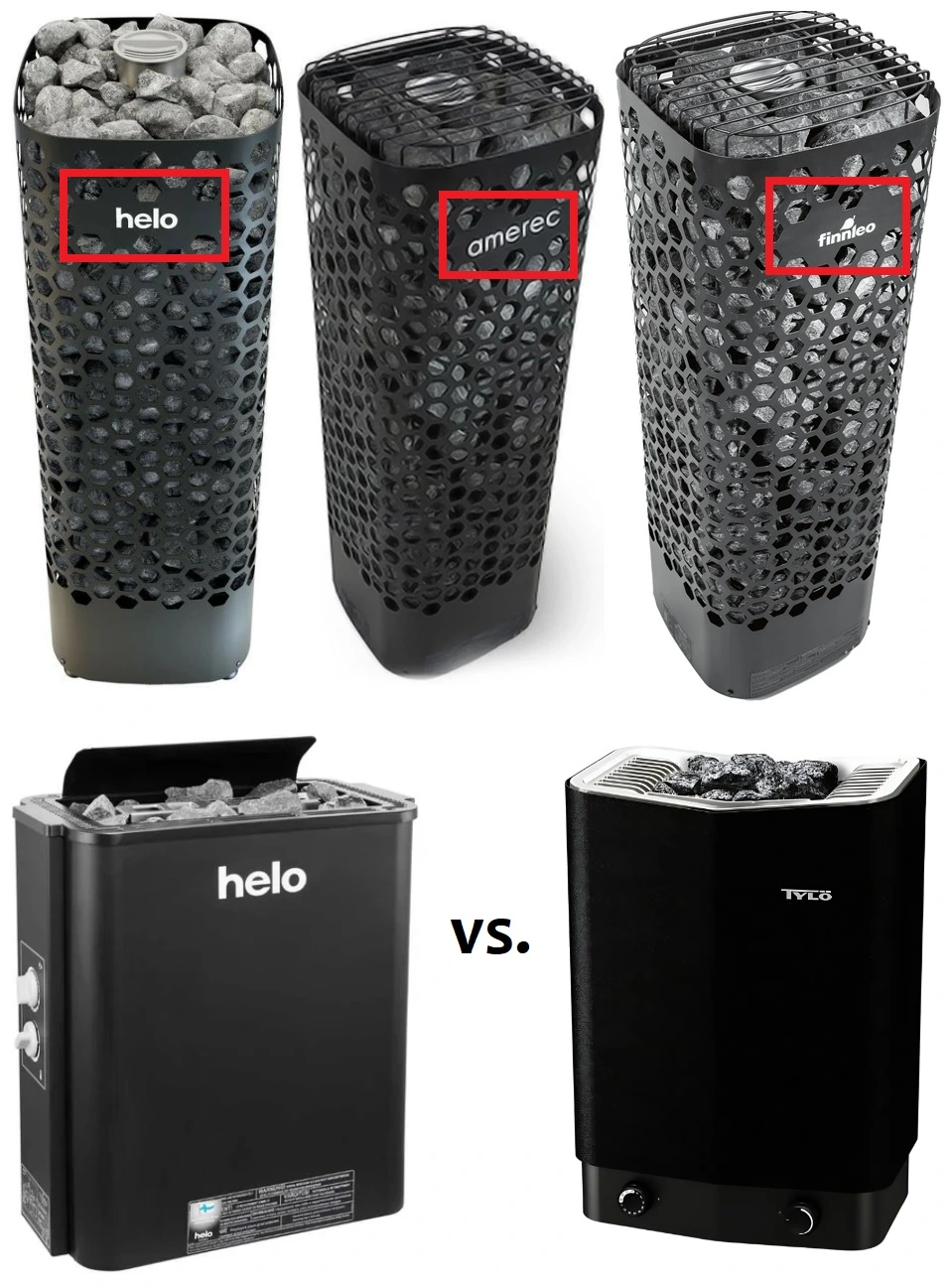
Helo is nowadays identical with Finnleo and Amerec and sometimes even with Swedish Tylö since Helo bought them in 1991, 1998 and 2008 respectively: if you want a Helo heater in the US, it’s always sold as a Finnleo or Amerec and sometimes as a Tylö as well.
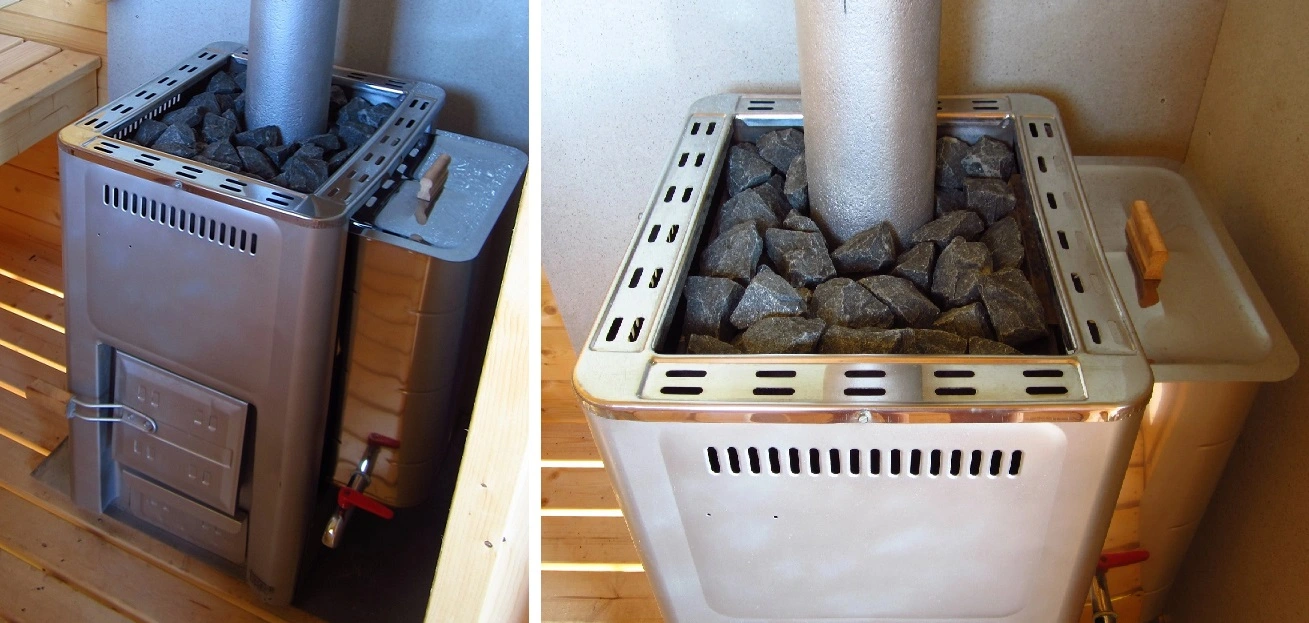
According to Helo, all their heaters are made in Finland while Tylö claims all their heaters are made in Sweden. Then where was the below heater made since it’s a Helo, Tylö, and Amerec at the same time?

Even if you don’t mind a confusion like this or don’t care about the origins, this kind of rebranding fails to tell what makes Helo/Amerec/Tylö special. How do you stand out favorably from the crowd when you’re so blended in that people can’t tell your heaters apart?
Despite rebranding issues, Helo has been around for over a hundred years, offering heaters that are known for their quality, longevity, and design.
If you specifically want a Helo (or a Finnleo or Amerec), it can be a great purchase. After all, my dad’s Helo is 35 years old and still working! (The lifespan of an electric sauna heater is typically 10-15 years.)
To be clear, most people would’ve replaced such a heater a long time ago, and some of the heating elements have stopped working years ago, but my dad, the stubborn man that he is, has found the elements that still do work are sufficient for his weekly use.

In terms of quality, price, lifespan, and innovation, it’s difficult to differentiate a Helo from a Harvia heater.
Many Finns would agree they are equal in almost every way, the only difference being Harvia excelling in world domination unlike Helo with its several rebrandings during the last 15 years.
Tylö, on the other hand, had its manufacturing moved from Germany to Sweden, according to an archived Swedish news article written in 2009.
Most of their current heaters are NOT exact copies of Helo, Amerec, and Finnleo, but don’t offer anything new I haven’t already touched on with Harvia heaters, for instance.
Tylö’s biggest selling points are steamer function and sauna fragrances, making their sauna heaters a close match with Harvia Virta Combi featured above.
4. IKI
IKI is 100% handmade in Finland, founded in 1997. It was the first sauna company to introduce the open steel grid design that many others have copied since.
IKI makes both electric and wood-burning sauna heaters. The latter, their epic wood-burning stoves, are what IKI is most known for. I had the pleasure to review their most popular model, IKI Original.
With an IKI heater, you get durability and the best quality possible, but some learning and new skills may be required when using their wood-burning heaters.
That’s because they don’t have a grate or an ash box like all other stoves. It’s a big deal since the ash box is normally used for natural ventilation too.
IKI’s response is that a grate and an ash box are simply not needed because the wood burns so cleanly.
There are some other distinguishing features as well, like the round fire chamber the door of which opens upward unlike most other stove doors. Some users love these features whereas some think they’re impractical.
Some love the original look while it makes others think of fish traps and washing machines.
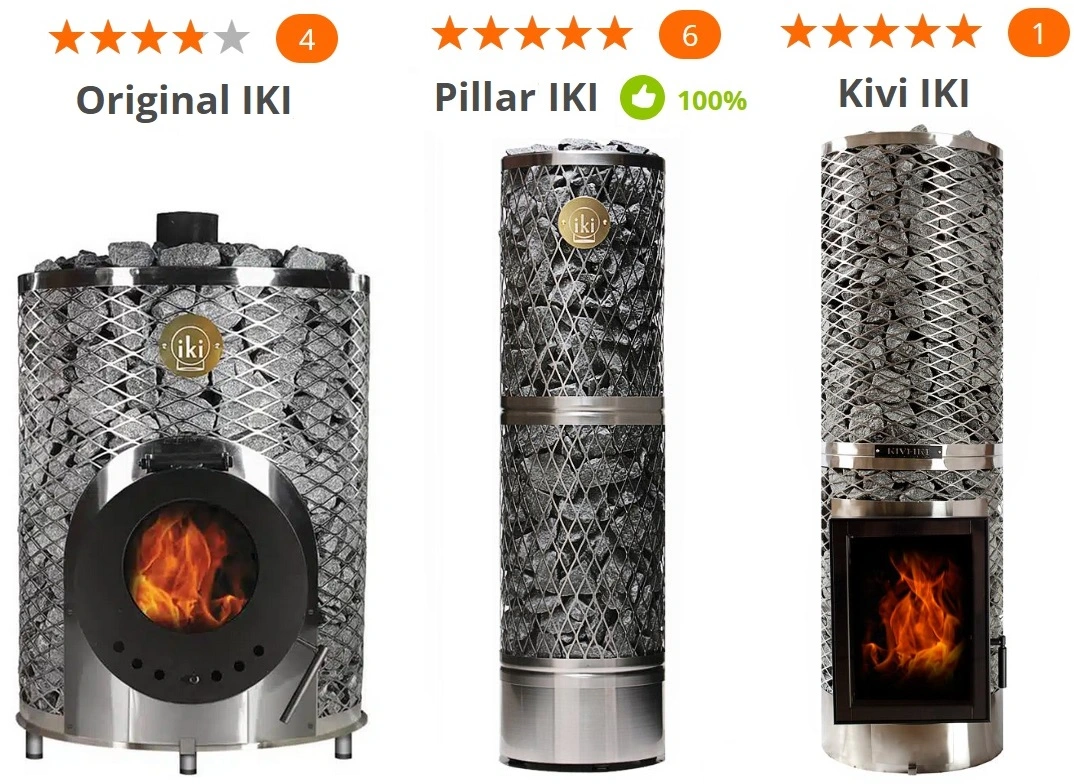
Some people have wanted to like IKI as it’s the “real deal,” but according to their own words, have failed to master using it.
I’ve seen some people on Reddit wonder whether they should buy an IKI because they’ve heard somewhere it’s the best. The answer is fortunately simple: IKI is the ultimate löyly sauna heater, meaning it’s in its element at lower temperatures and lots of pouring water on the sauna rocks.
So if you’re one of those people who wonder how to get their sauna to that “sweet spot” of 200+ degrees and whether to pour water on the sauna rocks or not 😄, then IKI is definitely not for you!
Since the rock mass in IKI sauna heaters is gigantic, several Finnish reviewers say they get amazing löyly at just 130–150 F (55–65 C).
5. Huum
Huum, the first Estonian brand in my list, was founded in 2013, meaning it’s still in its infancy compared to many Finnish sauna brands.
Because of its young age, Huum doesn’t have the track record that reputable Finnish brands do.
Although HUUM sauna heaters are extremely hyped by salespeople and therefore wanted by the public, the reality is quite different than many people would expect. With Huum, the more research you do, the uglier it gets.
As evidenced by such few reviews below, Huum is an unpopular brand in Finland. That’s because Finns know what to expect from sauna heaters unlike many others and are thus less gullible with everything related to saunas.
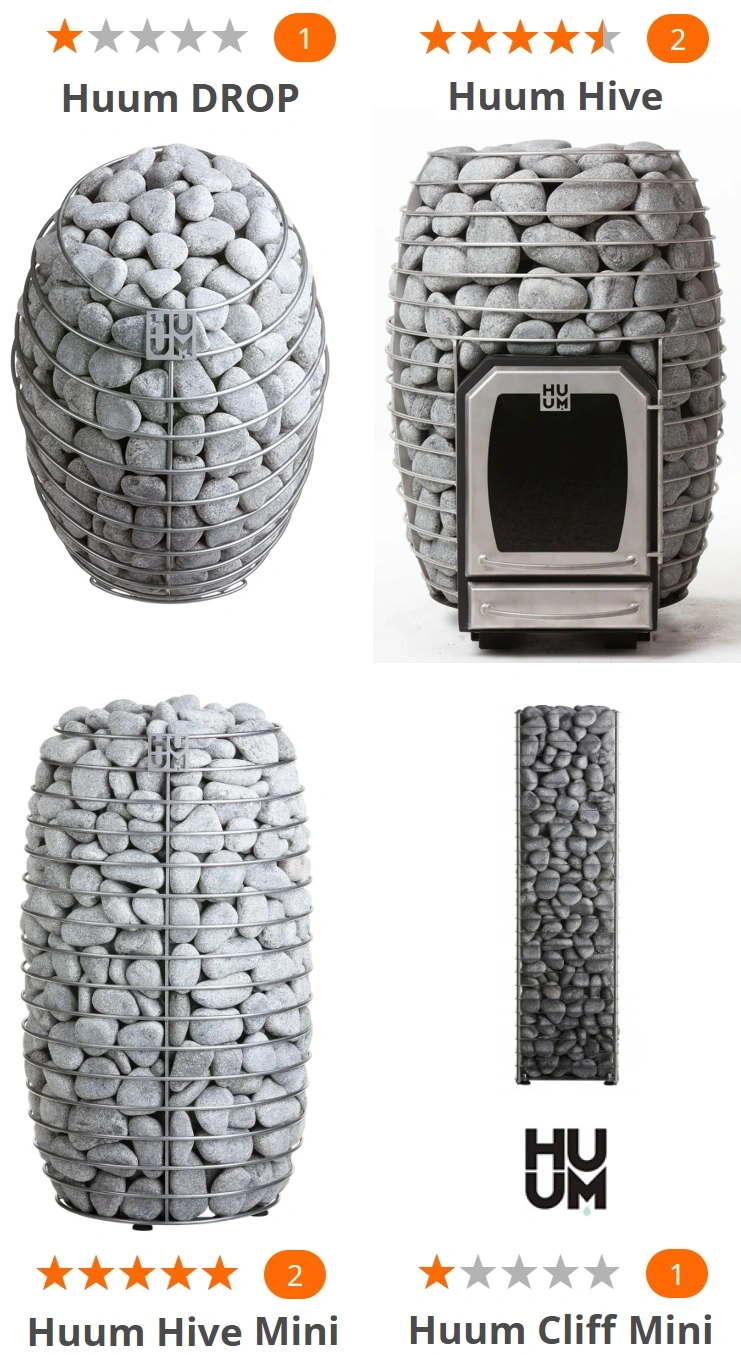
Based on countless reviews (both Finnish and English), this is what people have to say about their Huum heaters:
🔶 the heating elements “melted,” to which Huum responded it was a user error; 5 year warranty is a joke
🔶 wire harness nearly burnt, heater has been in use for under 1 year, notification of defects has been made extremely difficult
🔶 warranty doesn’t cover heating elements that are the weakest link of the entire product
🔶 there’s too little space in between the heating elements, so it’s best to use less stones than Huum recommends
🔶 been using the heater for two months, now there’s a weird smell while heating, like something’s melting
🔶 [about Huum Cliff Mini]: When stacking sauna rocks, the support beams keep coming off in the back, while the ones in the front keep bending. Either this exact product is defected, or the heater is just a toy. With this price, you expect better quality.
To be fair, there are happy Huum sauna heater owners out there too. I wouldn’t even discuss Huum here if I thought it’s pure garbage.
But I do still think these issues should be highlighted since so many people buying Huum honestly think they’re buying the “best” heater out there. Even when they’re forced to replace the heating elements (sometimes ALL of them) within a few years of use, and at their own expense!

One thing never mentioned on Reddit or anywhere else is that sauna heaters are much more affordable to make in Estonia than Finland; yet, Huum heaters are more expensive although the quality is inferior to best sauna heater brands Harvia, Narvi, and Helo.
While the median salary in Finland is €3,160, the Estonian equivalent is only €1,641. This means sauna companies in Finland pay their sauna heater employees higher salaries than what is the case in Estonia.
This translates to Huum profiting much more per heater, and probably saving money on UL certifications they don’t bother to get for most of their heaters.
How does Huum justify their overpriced heaters? The answer is they don’t have to as so many people just love the aesthetic of Huum heaters!
The most important thing to understand with Huum is that you’re paying for the looks and the app. That’s where Huum’s assets lie instead of any fundamental sauna heater craftsmanship.
What Huum really is the best at is marketing. I’d say they’ve done a brilliant job in convincing huge crowds of their heaters’ superiority although the evidence speaks to the contrary.
Since Huum is so young, it’ll take a long time to see what quality they’re truly able to offer. If we think of my dad’s 35-year-old Helo heater, for any Huum heater to reach the same age, it would have to be functional even in 2048 (!). Right now that seems impossible.
If you absolutely want a Huum sauna heater, the wood-burning ones have a better reputation. If you get an electric model, make sure it comes with a separator case (also called an air tunnel) as it’ll protect the heating elements from warping and breaking.
6. Saunum
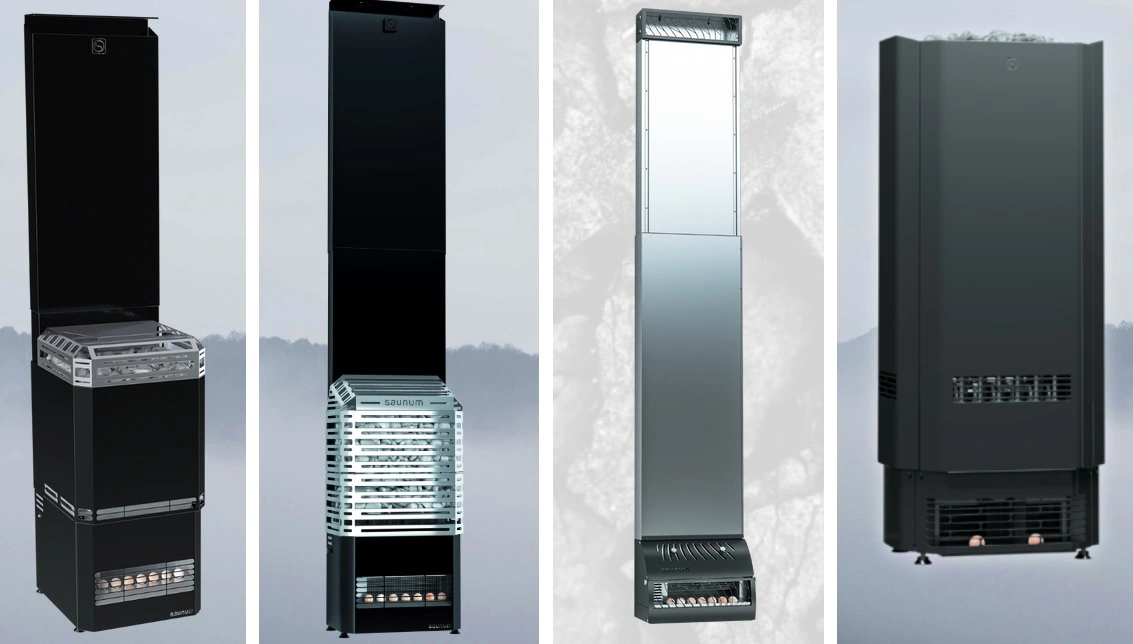
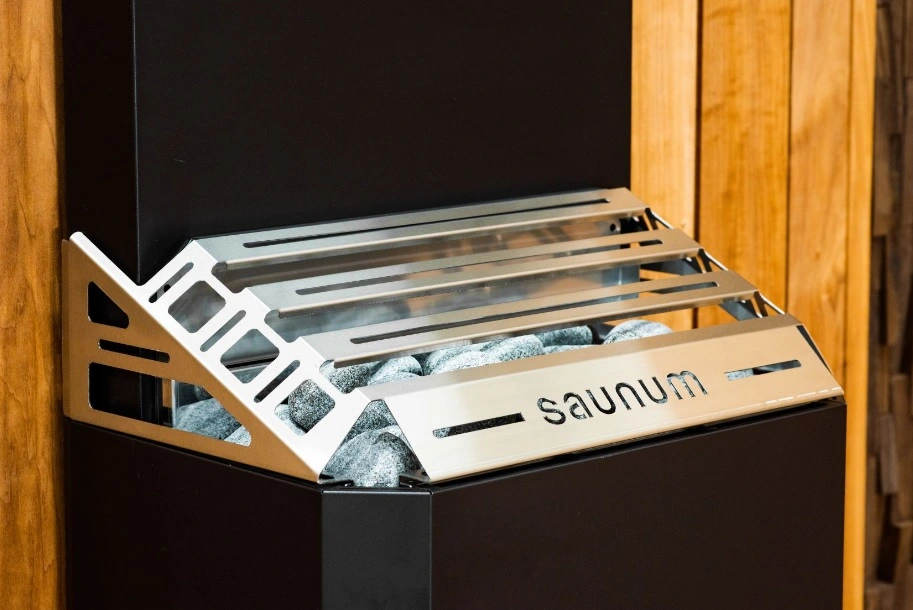
This Estonian brand deserves to be on this list as it’s the sauna world’s biggest innovation in a long time, but since it’s such a new company (its heaters have been available in the US since 2023), it can’t be ranked any higher at this stage.
Even the mere look of Saunum sauna heaters is enough to tell you that they are something else.
The reason for their height is the blending chamber where hot air from the ceiling and more oxygen-containing cool air from floor level are mixed and then circulated throughout your sauna.
This not only creates very even heat and pleasant löyly but makes temperature differences in your sauna as minimal as possible.
How this shows in practice is that there is no feisty löyly hitting your head while your feet are cold, but instead, you’re embraced by an even and soft cloud of long-lasting steam.
If you already have a sauna heater you’re happy with, Saunum also sells heat equalizing systems that are “compatible” with other heaters. That way you can enjoy your old heater but bring your sauna experiences to a new, more pleasant and less fatiguing level.
Are there any cons to this bliss? Not necessarily cons, but a few things should be made clear.
🔶 Saunum can’t fix the worst saunas: every regular sauna should have good ventilation. If your sauna doesn’t have any fresh air coming in, Saunum can’t magically make it happen. It can then only circulate the stuffy air present in your sauna.
🔶 Saunum appeals to tech lovers but isn’t a must in any properly built sauna for most people. I, for one, have never had my feet cold and my head burning hot in any sauna; that’s to be expected, too, since it’s not normal for any proper sauna to have an issue like this.
That’s exactly why sauna hats are unnecessary as well.
Only badly designed and constructed saunas can have extreme heat variation, and even then, there are often considerably cheaper fixes than Saunum: these include raising the sauna benches, pouring more löyly instead of going for higher temperatures, adding air vents, and so on.
🔶 As Saunum heaters are pricey, you get the most out of them in specific situations, one of which is if you’re in a wheelchair; people who can’t easily climb and sit on the highest sauna bench are the ones who suffer the most from lacking heat and löyly since they naturally always rise up.
If you’ve saunaed before while in a wheelchair, the difference between that experience and Saunum should feel like night and day.
Frequently Asked Questions (FAQ)
1. What is the lifespan of a sauna heater?
It’s generally said that wood-burning sauna heaters last about 10 years while electric ones last for 10–15 years.
This varies by model, though. Above I introduced Narvi’s Aitokiuas that several reviewers said they had for 30 years before replacing it with a new one. This is reflected in the price too; the most affordable heaters (under $1,000) won’t last this long.
For reference, my previous wood-burning Harvia lasted for 20 years (2004–2024) and electric Helo sauna heater for 21 years (2001–2022).
How you use your heater and how often has a major effect: by replacing sauna rocks every 1–3 years and by not stacking them too tightly but allowing enough airflow, you can extend the lifespan of your sauna heater.
2. Is it expensive to heat a sauna and do sauna heaters use a lot of electricity?
Luckily sauna heaters aren’t that expensive to run.
I compared four reputable sources, Harvia among them, and calculated that if you have to pay 0.12–0.16 dollars/kWh, and sauna every day for 30–60 minutes, it costs $21–44 a month.
The range is quite wide as your sauna size, saunaing time, heater type, ventilation, and temperature preferences affect your electricity consumption.
The best way to reduce your electricity bill is to say goodbye to excessive heat, aim for the optimal range of 140-185 F (60-85 C), and pour lots of löyly instead as it will make the sauna feel a lot hotter.
3. What is the cheapest way to heat a sauna?
Wood but only when you own a woody property, meaning you get the wood for free if you’re willing to do the chopping.
If you don’t have access to wood, it’s possible it isn’t any cheaper than electricity since you’re potentially paying for the transportation too.
Solar power will require a huge initial investment but is of course free to use for those few people who it’s a year-round option for.
4. Which is better, steam or heat sauna?
A traditional sauna gives you both heat and steam, meaning it’s more versatile than steam rooms.
Steam (löyly) is the whole point of saunaing, so steam is always better than just heat. But you wouldn’t be getting any steam if you didn’t have heat first.
If you’re confused on how a sauna (heater) should be used, this dry vs. wet sauna discussion will provide clarity.
5. Is it OK to put water in a sauna heater?
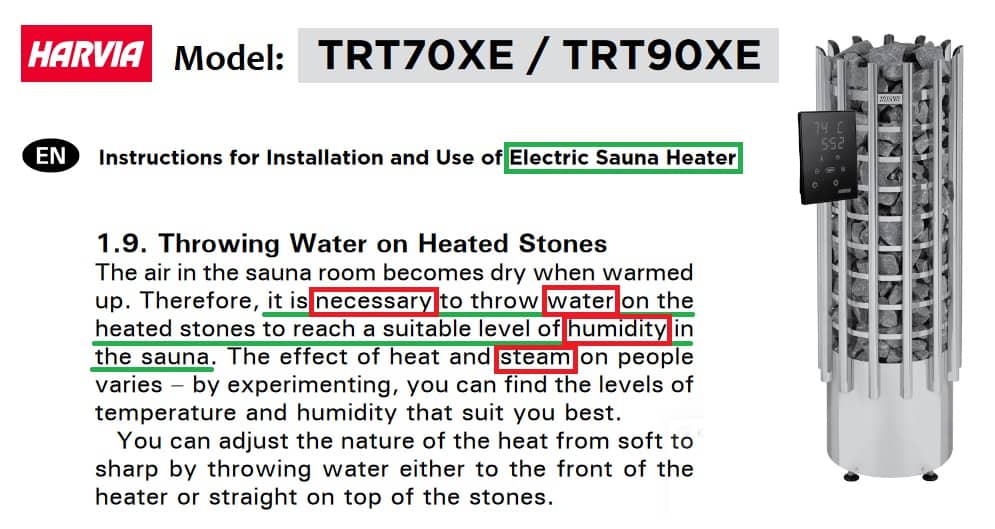
Not only okay, but a must!
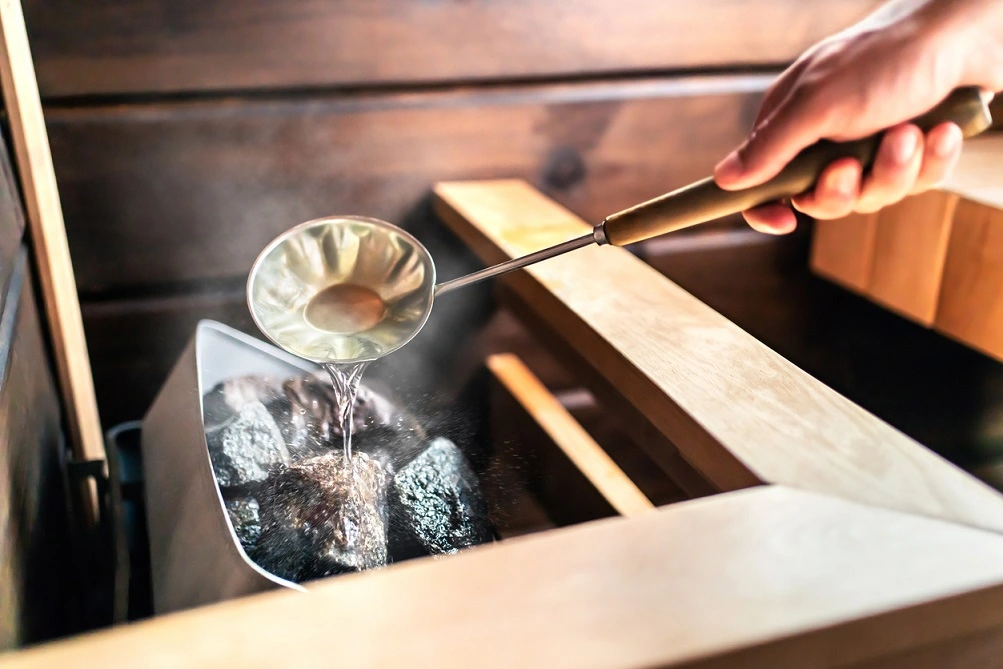
Pouring water on the hot sauna rocks produces steam (löyly) that’s the #1 reason for saunaing. It’s also the #1 criterion when buying a sauna heater: will it produce good steam or not?
Sauna heaters with the biggest stone mass bring the most löyly when you throw water on them. They can also take in the most water, which means all the water will turn to steam and evaporate instead of dripping on the floor through the stone mass.
Final Thoughts + Best Sauna Heater Brands Not Yet Discussed
Now that you know a ton about different sauna heaters, you’re much more equipped to choose the best one for your needs.
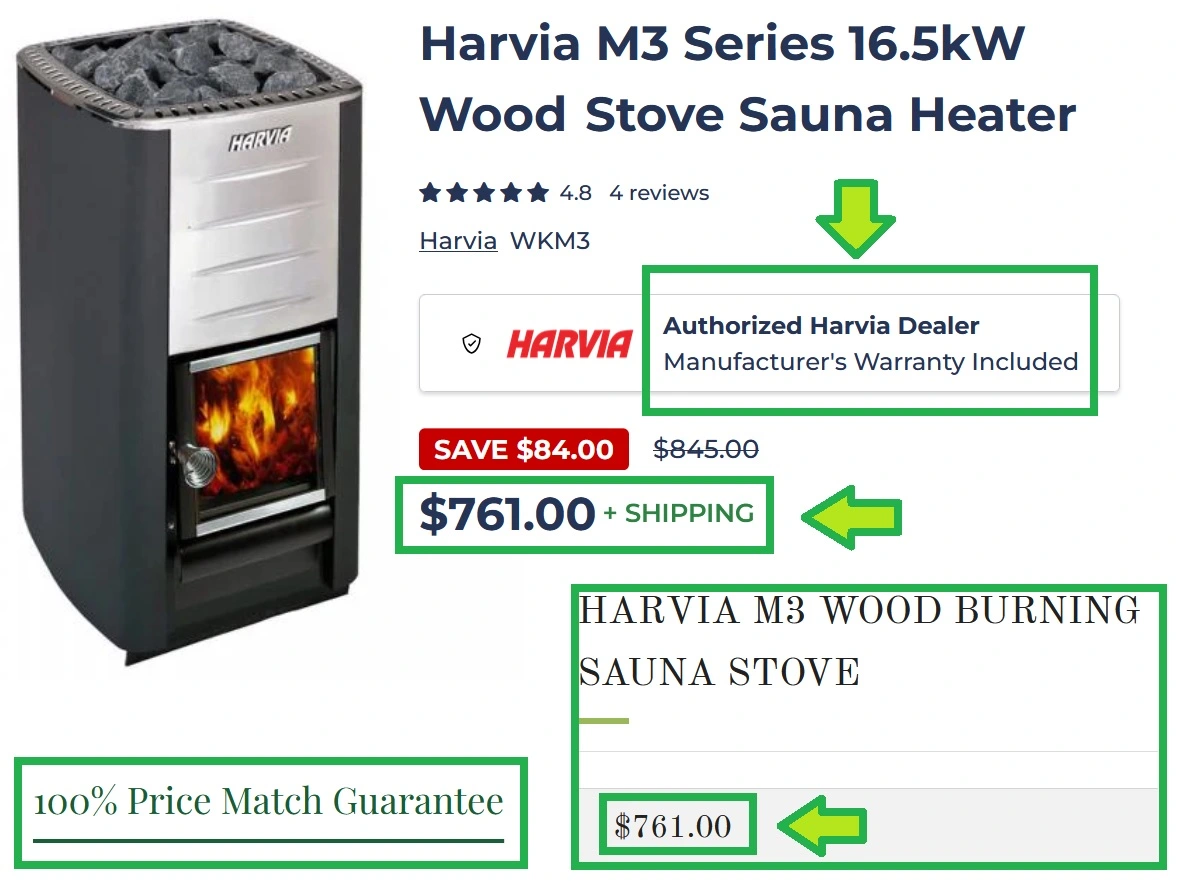
One last thing I want to mention when sauna shopping is that choosing an authorized dealer is a great idea (all the shops I linked to in this article are authorized dealers).
Since a sauna heater is a slightly bigger investment that’s supposed to last for years or even decades, it makes sense to have full warranty included. It’s never included when buying from unauthorized dealers.
Many authorized dealers also provide price match guarantees or otherwise price their heaters similarly or even identically:
The last thing I want to address is some of the best sauna heater brands that you might have heard of but that I didn’t include in my ranking.
The only reason for not including them is the fact that none of them are sold in the US.
These brands are Mondex, VETO, Magnum, Aino, and Tulikivi.
They’re all 100% made in Finland, valued for their design and durability, and all have something unique to offer.
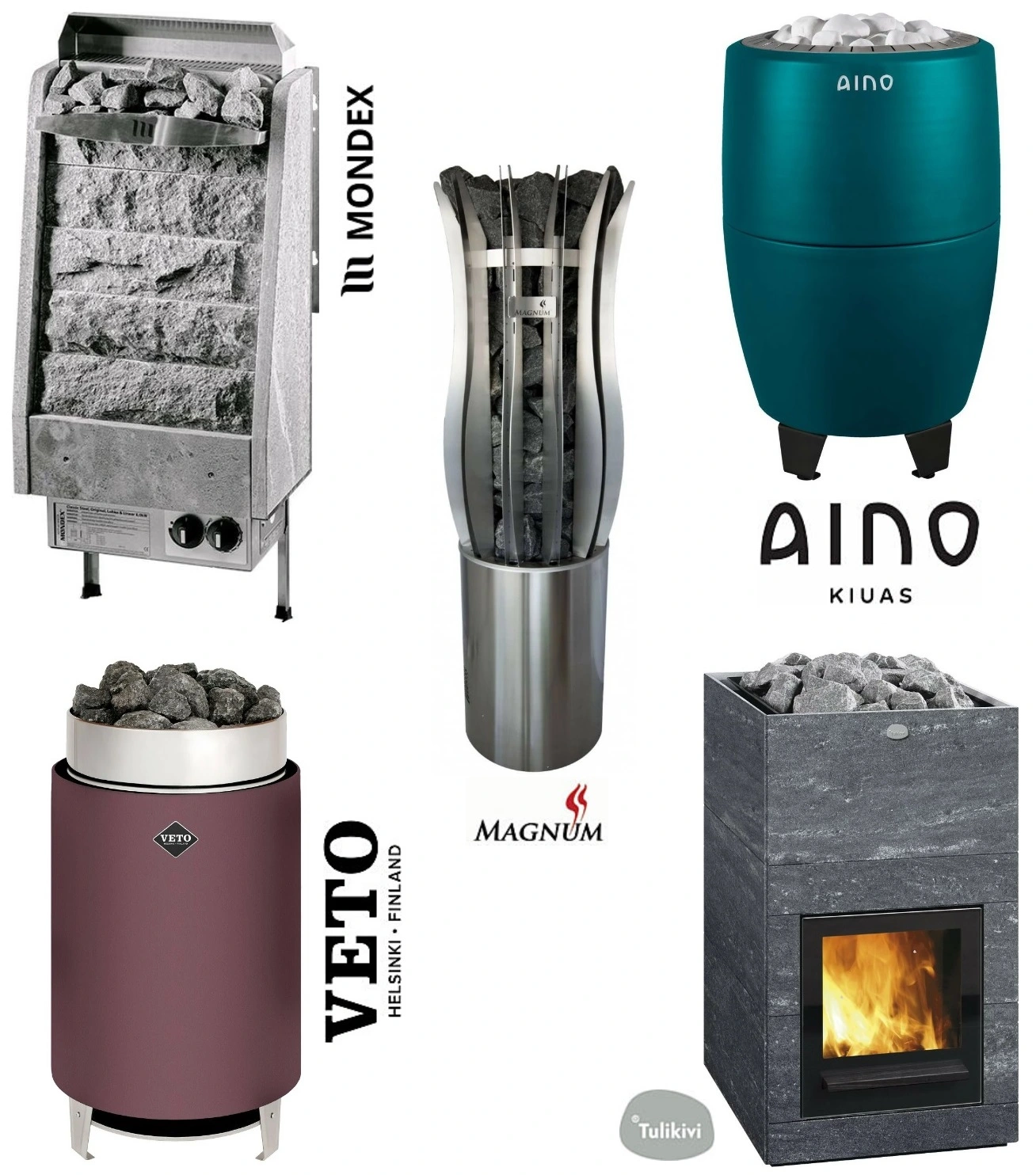
VETO, for instance, offers a 5-year warranty for their wood-burning stoves and a 10-year warranty for their electric sauna heaters! How many other brands can say the same?
This is, of course, reflected in the price as well: in Finland, a VETO electric heater costs nearly nine times more (!) than a Harvia KIP, for example, so it’s not a realistic choice for too many people.
What I’ve been toying with as a future business idea is selling these five brands through my website, offering shipping to the US and Canada.
It may never happen, though, since having bulky items like sauna heaters shipped across different countries is extremely expensive, not to mention customs fees, taxes, etc.
Regardless of whether this plan ever materializes, I wanted to let you know these sauna heaters exist and are legit!