Best Sauna Kits: 3 Design Wins (+ 8 Disastrous Fails)

Most people know that whichever home sauna you buy, be it an outdoor or indoor sauna, it’s delivered to you as a sauna kit that you either assemble yourself or hire builders to do for you.
But how to recognize the best sauna kits? In other words, how to know what features truly are a must to justify your sauna’s price, and conversely, what are the features you should avoid and learn to see as obvious red flags?
Maybe you thought there are no red flags when it comes to sauna kits: some just have more of everything (room, features, accessories…) while others have less, right? Unfortunately, the truth is more grim and less simple than that.
Why is that? It’s because the standards for sauna kits in North America are so much lower than in countries with established sauna culture, such as Finland and Estonia.
This shows in practice as unbelievable ignorance: your sauna kit either has a solid wooden floor and no drain (and the instruction manual advises against water use), or your kit is sold without a floor all the while the manual states “placing the sauna on carpet is not recommended.”🤦 You think?!
I could understand this kind of nonsense with infrared heat rooms, but not with traditional saunas. If your traditional sauna isn’t built to handle water, it’s the equivalent of your car not being able to handle driving.
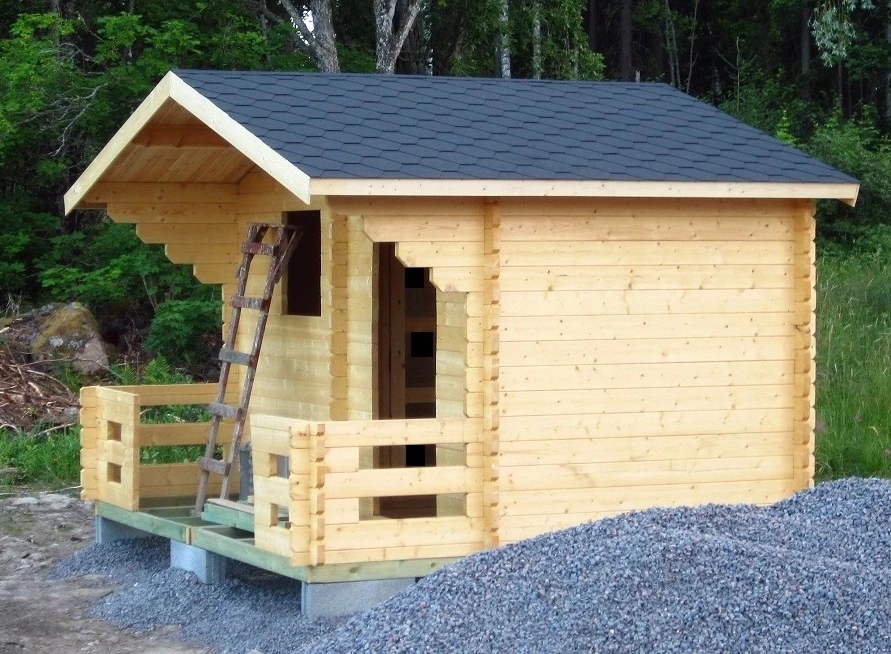
In this article I’m going to show you what kinds of sauna kits to avoid because of their lacking features and complete disregard for what a sauna is.
Then I’ll introduce the best sauna kits sold in the US that have even me impressed.
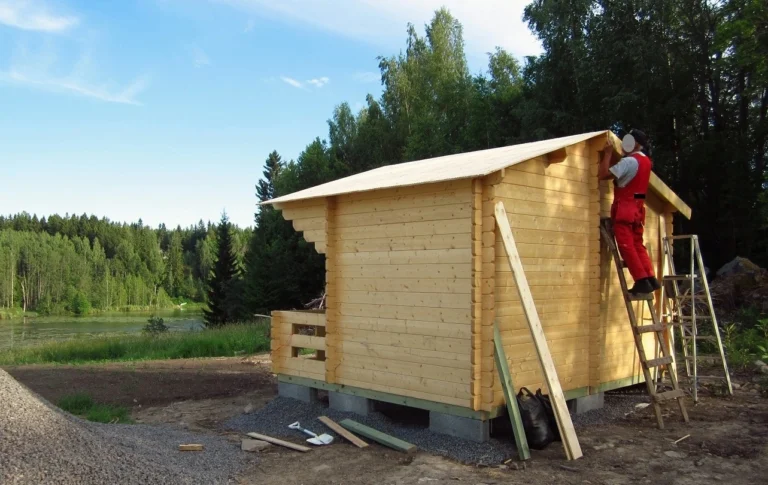
One of them is the outdoor sauna kit I bought in 2018 and have loved ever since!
This post contains affiliate links. If you buy something through them, I get a small commission at no cost to you.
The WORST Problems with Sauna Kits: The 8 Disastrous Design Fails to Avoid
1. No roof on outdoor sauna
This should be unheard of but on the contrary, it’s extremely common in the US: outdoor sauna kits are consistently sold without a roof or it’s considered optional (which it never really is!).
This is always a bad sign. When a roof isn’t included (not even for additional cost), it means you’re being sold an unfinished product.
If a sauna brand is willing to sell you an outdoor sauna without a roof, what else are they skimping on? Since they consider a roof optional, what other crucial elements are they treating as unnecessary?
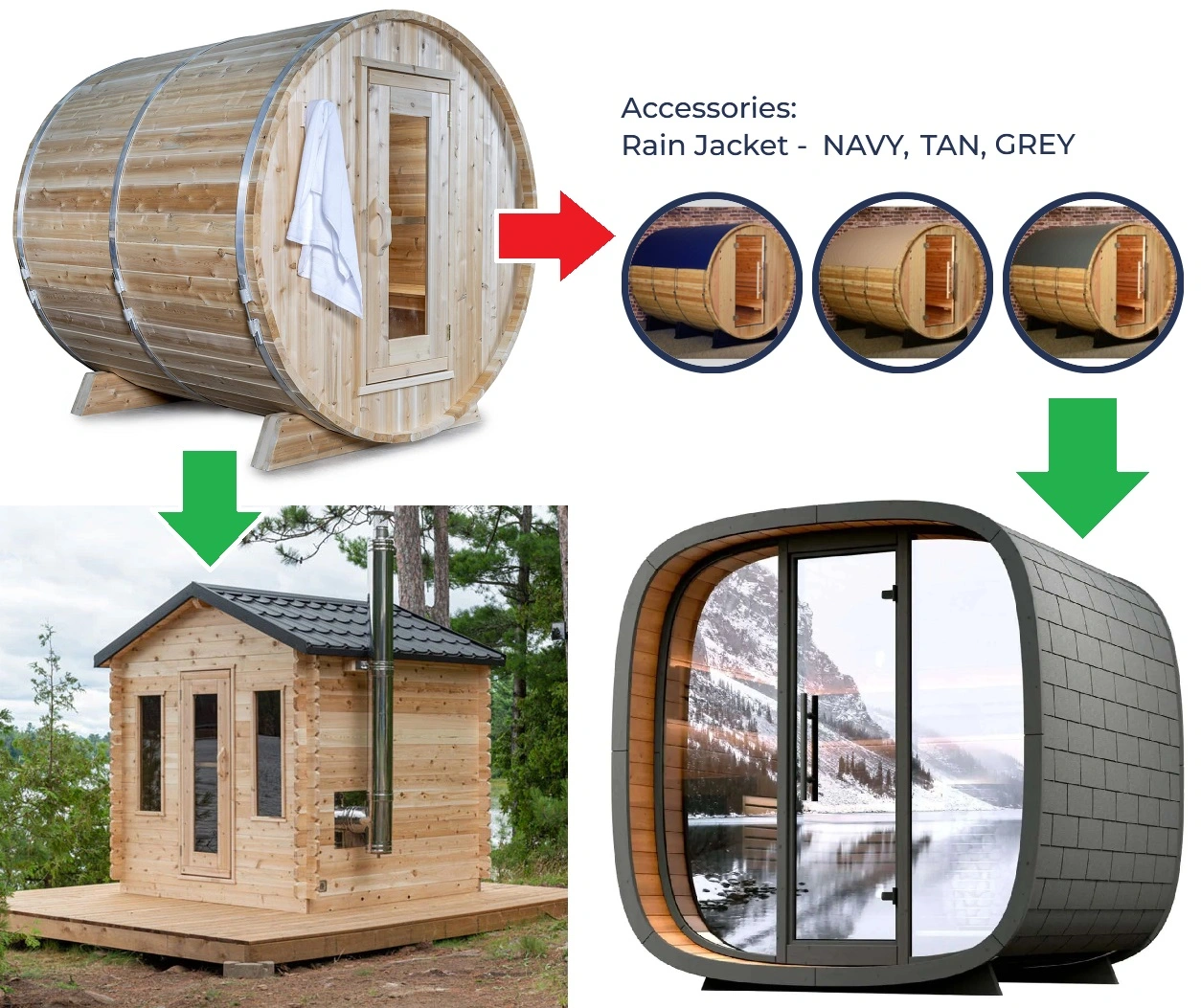
In a worst-case scenario, your outdoor sauna has no roof or protection, period. A slightly better – but still pretty inexplicable – solution is a rain jacket. The best option is, of course, a proper roof that’s made of asphalt shingles or metal.
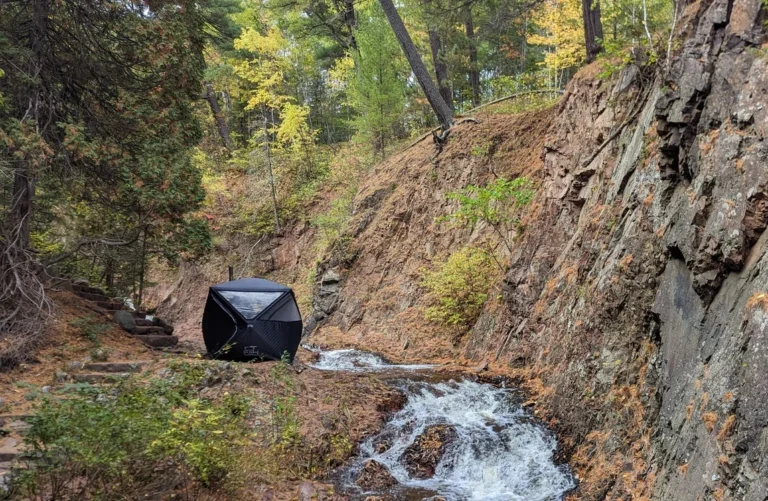
A rain jacket is a great addition to a sauna tent; since the whole sauna is packable and portable, a rain jacket makes perfect sense. But a solid sauna on a solid foundation? It needs a solid roof as well.
2. Indoor sauna = outdoor sauna – they’re the same, right?
In North America, surprisingly many sauna kits are treated as if they are interchangeable: “this sauna can be placed indoors or outdoors.”
When a sauna manufacturer can’t decide whether their sauna is an indoor or outdoor sauna, it’s most likely neither. Why is that? It’s because indoor and outdoor saunas have to address specific needs that are often the opposites of each other.
This is what proper indoor sauna kits should address:
🔶 humidity and moisture: when you pour löyly, most of the water evaporates, turning into steam, but some of it always drips on the floor; where will that water go if/when there’s no drain (not to even mention if you were silly enough to install your sauna on a carpet?)
🔶 indoor saunas aren’t often placed in the middle of a room, for instance, but instead, near walls or in a corner: this means a vapor barrier is needed: it protects the building structure by not letting moisture get inside walls
🔶 indoor saunas nearly always have an electric sauna heater, which means you won’t get the chimney effect: what you need instead is mechanical ventilation (easiest to achieve in the bathroom)

And here are the most important considerations with outdoor sauna kits:
✅ it’s simpler in many ways: no vapor barrier needed, water is easy to direct outside when foundation is built correctly, fresh air is always much nearer (= natural ventilation is more than enough), no electrical installations needed when choosing a wood-burning stove and battery-operated lights, BUT
⚠ the building needs to be sturdy, have a proper roof, and have walls treated; even if you live in a nice climate, your sauna is still exposed to the elements, which translates to more maintenance: besides, sun actually damages the sauna more than snow, for instance
💧 will you be needing a water tank (for water you potentially carry yourself), will you hire a professional plumber, or is there a shower room close enough (indoors)?
🌡 insulation needs considering especially if you’re going for an electric heater

I find it dumb we’re pretending an indoor sauna is also an outdoor sauna and vice versa when even the sauna sellers themselves don’t really think so, despite their claims. When you read the manual your sauna kit comes with, often you’ll find something like this:
“This sauna is for indoor use or outdoor use. […] Any damage due to direct exposure to outdoor weather elements such as rain, snow, sun, wind or extreme temperatures will not be covered by this warranty if your sauna was not designed to be directly in the weather elements.”
Why would my outdoor sauna not be designed to face weather elements when it’s the sauna company itself who sold it to me as an outdoor sauna?!
Disclaimers like these are a sneaky trick some sauna sellers use to avoid responsibility and to place the blame on you even though it was them who didn’t bother to build an actual outdoor sauna in the first place!
3. Too small saunas & exaggerated sizes
These are among the worst design flaws as they’re impossible to fix: most 1–2 person saunas are so small that even a slim person can’t sauna in them, which means these saunas shouldn’t exist:

Sauna bathing always requires a certain amount of space, illustrated beautifully above by the Building Information Foundation’s (RTS) book published in 2008.
The Redwood Outdoors 1-person solo sauna featured above commits all possible sauna crimes:
- far too little space overall even for one slim sauna-goer
- you’re not able to sit nearly high enough: your whole body, feet included, are ideally above the level of sauna rocks
- no other seating levels available, you can’t lie down
- you’re forced to sit dangerously close to the sauna heater, especially during pouring water (löyly) that gets boiling hot once it hits the stones and splashes
- not enough space in any direction for bathing and sauna whisking
How should sauna size truly be measured? BZB summarizes it perfectly:
“The capacity of a sauna is not about how many people can fit inside but rather how many people can comfortably enjoy the sauna at once.”
But what if you were smart enough to not get or never even consider this small a sauna? That’s great, but don’t be fooled by the other end either. Does this look like a 6-person sauna to you:

When a “6-person sauna” doesn’t look a tad too big for two fit people, that’s a tell-tale sign it’s not a 6-person sauna. Notice the hunched up postures and how they had to mix males and females to try to make the scene look less crammed.
I’m glad at least one reviewer decided to comment on the size (the “six dudes” above). If you really need space for six people, it’s unfortunate to fall victim to false marketing and only realize after your purchase that the sauna can’t be used functionally by six people at the same time.
This sizing problem isn’t limited to just barrels, so pay close attention to the actual measurements. I’ve seen countless 3-4 person saunas sold as 6-person saunas and could give you an endless amount of examples.
Accurate sizing is much rarer than exaggerated sizing – in the US, that is.

4. One-level sauna bench
When your sauna kit only comes with one bench, it’s likely it’s also placed too low and that there isn’t enough space to have it raised higher.
This kind of set-up leaves your toes (that are touching the floor) cold while the heat and steam rise up and essentially go to waste since you’re sitting too low.
Two-tier benches are always better than one, and three-tiered ones even better; usually with three levels the lowest bench is more like a wide stool you can move.
If you get two benches, make sure the lower “bench” isn’t just a stepping stone for you to reach the higher bench: all benches should function as seats as lower benches are ideal for kids and the elderly since their heat tolerance is lower than the average adult’s.
If your sauna is tall enough, you can easily have the benches higher than what’s shown in the manual, but most barrel and pod shapes won’t allow this as the walls are curved in.
If you really love barrel saunas and are fine with having one-level benches, some models still have the benches slightly raised, meaning your feet are not at barrel floor level but have proper footrests up to 10 inches higher (= better design).

5. Dysfunctional floor: where will water go?
This is where we start to see serious misunderstanding from some sauna manufacturers, which is made clear when reading the instruction manual they provide:
“Your existing floor will serve as the floor for your sauna. Your sauna can be assembled on any surface that is firm and flat, including concrete, ceramic, vinyl, laminate or tile. Placing the sauna on carpet is not recommended.”
This farce continues as you keep reading the manual:
“You may wish to sprinkle small amounts of water onto the stones to create bursts of steam. If water spills through the heater to the FLOOR, you are using too much water, though this will not hurt the heater or the sauna.”
This is not only completely incorrect but what makes this so funny to me is that this manual is by Almost Heaven Saunas, nowadays owned by Harvia who says the opposite:
“It is necessary to throw water on the heated stones to reach a suitable level of humidity. […] Small pieces of stone are washed down on the sauna room FLOOR along with the water thrown on the rocks.”
Harvia obviously knows best how their own heaters are used, and I’m sure would’ve gotten the message through to Almost Heaven by now, but that doesn’t help because of the humongous underlying problem: while sauna heaters are built for water use, American saunas (= the structures themselves) are not.

While sauna heater manuals speak of throwing and pouring water on the hot rocks, clueless sauna kit manufacturers speak of sprinkling water. Sprinkle is not the right verb here: why have a 5-liter bucket full of water in the sauna if you were meant to just sprinkle it?
Now think of those five liters of water (I, for instance, always use all the water and sometimes have to refill the bucket if I still have enough energy for more sauna sessions) and see the typical examples of problematic floor solutions above.
A solid wooden bottom panel won’t work as it doesn’t address water in any way: water absorbs into the wood that starts to mold and rot as it’s not able to dry in between uses. Even if the panel had a waterproof coating, water wouldn’t have anywhere to go, leaving it to leak out.
A slatted floor works great only in an outdoor sauna where water gets to fall freely into the ground. You need to have your sauna on a raised foundation (like on concrete blocks) for this to work, otherwise the water will just pool around the base.
So, do you need a floor drain in a sauna? Yes. If drainage isn’t taken care of somehow, you’re not able to use the sauna heater the way it’s intended (= throw water on the rocks).
In an indoor sauna, you can have the drain in the sauna room itself (see picture above) or in the shower room right next to your sauna. In an outdoor sauna, a slatted floor or a sloped floor with a gutter are wonderful solutions.

6. Too thin walls
This matters with outdoor sauna kits: the thicker the walls, the sturdier and more insulated your sauna is.
Floor and ceiling boards are almost always thinner, which is fine: they’re never so thin that the floor would bend under your weight, for instance. (Fortunately no manufacturer is that foolish.)
If you know your outdoor sauna will have a wood-burning sauna stove, I wouldn’t worry too much about wall thickness. When the stove is properly sized for your sauna, it will work ideally even with slightly thinner walls.
But if you want an electric sauna heater in your outdoor sauna, a popular choice in the US, then I’d stay away from the thinnest options: running an electric heater in an outdoor sauna in wintertime is bad enough (= your electricity bills will be huge), so there’s no reason to add to that by having thinner than average wall boards.
So what is this average, you might ask. Some sources say the industry standard in the US is 1.65 inches (41,9 mm). That sounds fair enough; for reference, the wall timbers in my sauna have a thickness of 44 mm.
The thinnest wall boards I could find are 30 mm thick. There are, however, many listings that say nothing about wall thickness, so if the specifications or the description don’t mention it, and even the manual doesn’t help, it’s possible the walls are so thin the manufacturer doesn’t want to advertise it.
Note that bigger sauna buildings, especially the ones that include up to three rooms in total, often have thicker walls: the examples below all have 2-3/4″ (70 mm) walls.

7. Questionable combination: outdoor sauna kit + electric heater + no insulation
Traditionally and historically, an outdoor sauna has always had a wood-burning sauna heater. That’s how it’s still done in the absolute majority of cases in the Nordic and Baltic countries: most people don’t even consider an electric heater when building an outdoor sauna, nor do sauna sellers recommend them.
But we already know many sauna-related things are done differently in the US and Canada as many people opt for this combination: outdoor sauna kit + electric sauna heater + no insulation.
Even though this combination makes very little sense structurally and financially, I can see the logic and reasoning behind it: people have more space in their (back)yard than inside their home and they want the convenience only an electric heater can bring.
It’s definitely a better idea in states like Arizona and Florida, but a far less great idea in states and provinces with proper winters.
Here’s what a Scandinavian guy from Minnesota had to say in his review after buying and using a Redwood Outdoors sauna + electric heater for a year:
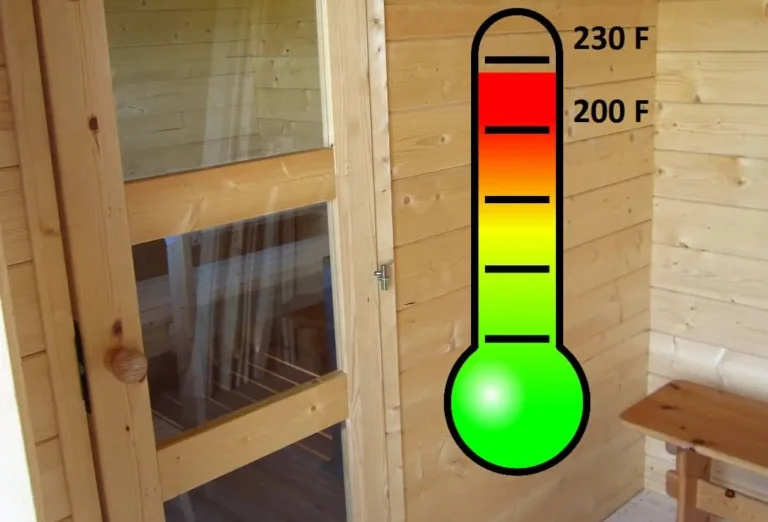
“If I had any issue it would be that it DOES use a lot of power, but that is to be expected when you are getting something to 200 degrees in a MN winter.”
He also specified that the coldest outside temperature he had witnessed during his sauna use was -10 F (-23 C) and that he “added a piece of trim between the bottom of the door and the doorframe to not allow as much cold air in through the door” although he suspected that gap was intentionally there for ventilation. He blocked it anyway to help the sauna stay hot.

Obviously all this is far from ideal, but if you know you can afford the electricity bills and you’re fine with your heater having a shorter lifespan (= it’s much more taxing for the heater to go from freezing temperatures to sauna hotness than if the starting point was a normal indoor temperature), then this combination is more realistic.
I’d still give a lot of extra thought to insulation as that’s the only thing working in your favor in a situation like this.
A fun fact: when you heat an indoor sauna during winter, the warmth keeps emanating to your home, potentially for hours after sauna use has ended, which is nice and helps with heating costs. A less fun fact: the same situation, but in an outdoor sauna, means you won’t get this benefit.
Not to even mention ventilation: the vents in outdoor saunas are designed to work with wood-burning stoves (because of the chimney effect), so when you have an electric heater in an outdoor sauna, venting never works as ideally as it should.
8. Infrared sauna kits sold as hybrid saunas
Hopefully this won’t be too surprising at this point: almost all “hybrid” saunas sold in the US are just infrared cabins including a traditional sauna heater that you can’t use the way it’s intended.
Below we have an example of such a “hybrid:” Finnmark FD-4 Trinity Infrared & Steam Hybrid Sauna. The owner’s manual it comes with doesn’t even try to hide that it’s just an infrared heat room: it includes the word infrared 17 times, but zero mentions of steam and humidity.

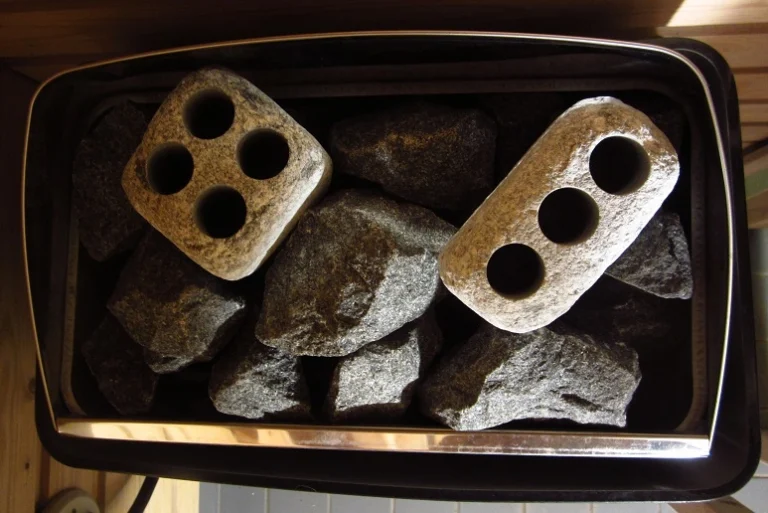
This “hybrid” comes with a Harvia Vega sauna heater shown above, and all the excerpts with green markings are from Harvia’s manual for that exact heater.
As you can see, the parties involved have the opposite requirements: “thoroughly dry” versus necessary water use in a room that’s even meant to be “thoroughly washed” occasionally!
What this shows is that you can’t make an infrared heat room a hybrid just by adding a traditional sauna heater in it.
In the sauna world, a real hybrid ideally means a home steam sauna kit with traditional heater + infrared heat that you’re able to enjoy simultaneously.
If that’s not possible, at least these both functions (traditional steam + infrared) have to work separately, meaning you’re truly getting a traditional sauna AND infrared panels with your purchase.
If you’re interested in a true hybrid, a traditional sauna has to come first, and infrared panels second, never the other way around. At least Harvia and Duetto offer infrared panels that are specifically designed for humid environments and are splash-proof with an IP rating.

Best Sauna Kits: The TOP 3 Rare Finds
Finally we’re ready to move on to introducing the best sauna kits on the market.
Now that you know the numerous problems with most sauna kits, you can appreciate the rare great kits even more.
1. Best Outdoor Sauna Kit Overall: W2
This looker won the whole race: it not only has none of the problems discussed above but includes everything you need, even the heater of your choice, sauna rocks, chimney kit, and air vents.

This DIY outdoor sauna kit offers the most value for what you’re paying:
- roof shingles included
- not too small for 4 people & size isn’t exaggerated
- has a changing room
- has two-level, pre-assembled sauna benches that are also long enough for lying down: 6’2″ and 6’7″
- spectacular floor design: has a built-in drain (!)
- walls are thick enough: 1-5/8″ (42 mm)
- includes heater (either wood-burning or electric) and chimney kit
- depending on your choice, includes 90–180 lbs of sauna rocks
- oval shape offers more space and headroom than a typical barrel
- easier to assemble than cabin-style saunas
There’s no question the features of this BZB sauna set it apart from competitors, but how did that come to be? It’s because the founder of BZB Cabins and Outdoors, Sigmar, is Estonian, operating in New Jersey and shipping sauna kits all across the US.
Finland and Estonia are the leading sauna countries in the world, and in most cases, you either need to be Finnish or Estonian or otherwise have strong Finnish or Estonian connections to truly get saunas.
This is what true sauna understanding behind the W2 sauna looks like:
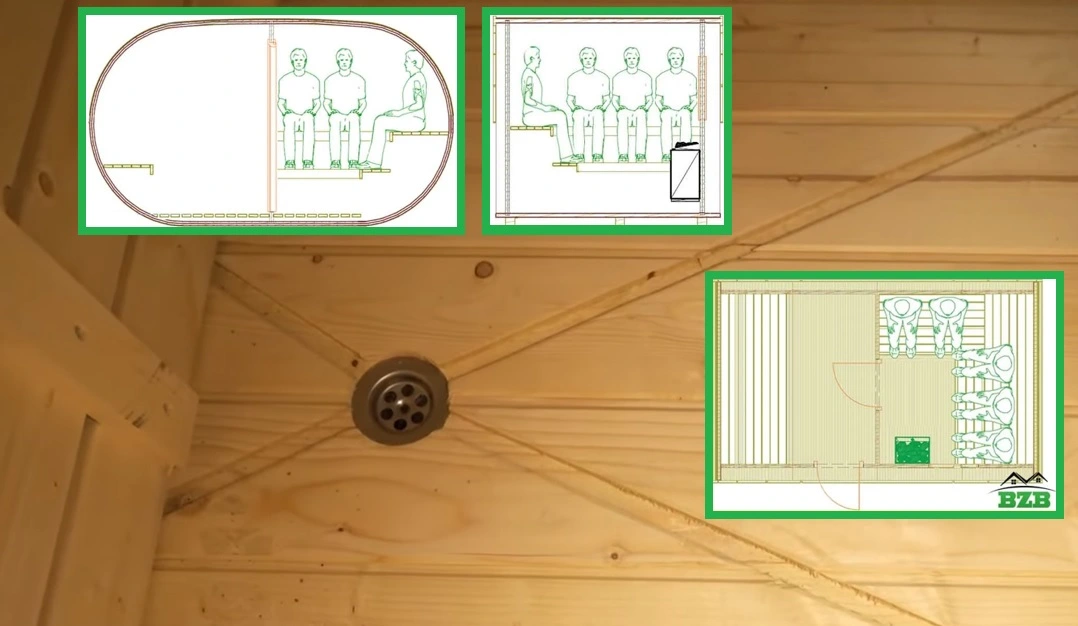
There are pre-made channels for water to easily reach the drain, placed exactly where you’ll be throwing löyly! What a beautiful sight in a world where puzzled competitors don’t forbid carpet installations (Almost Heaven) and say things like:
“Sprinkle water on the rocks. […] Half a cup every 5 minutes should be enough. Too much water will just cool off the rocks and you’ll get less steam.” (by: Dundalk LeisureCraft)
(There’s a massive difference between sprinkling and pouring bucketfuls (= that’s what would be too much) of water on the rocks. But when throwing several ladles at a time, you definitely get more steam that way than by throwing less!)
Now that we’ve deemed BZB the best sauna kit company, let’s take a closer look at their sauna heaters: your sauna kit will include either a Stoveman 13, Harvia M3, or Finlandia/Harvia electric heater (8 kW).
(Alternatively, you can choose a different heater with WiFi for additional cost, or leave the heater out, which will be deducted from the total.)

I’ve already covered Harvia M3 (extremely popular and loved choice) and Harvia KIP (reliable and widely liked) in my sauna heater article. Finlandia FLB80 is the same heater as Harvia KIP80; Finlandia is a Harvia brand specifically used in the US.
But what about Stoveman? I was aware of this brand when crafting my sauna heater article but left it out deliberately because of its limited availability in the US.
But since BZB is so wise to sell it, I can finally introduce Stoveman.
Stoveman is an Estonian brand that, unlike Huum, even Finnish people praise (the 50 reviews above, totaling a 4.4 star rating, are from verified Finnish customers).
Stoveman 13 is a robust heater with a 220-pound stone capacity. Considering its size and weight, it’s still compact according to several reviewers, which means it won’t take up much space. It also means the fire chamber isn’t big and doesn’t require a lot of firewood.
Heaters with lots of rocks always take longer to heat than heaters with less rocks, but because Stoveman has special airflow channels, it gets hot quicker than these types of heaters usually do.
As to be expected from Finnish users, they love Stoveman 13 for the steam it provides: the löyly you get with this one is “amazing, soft, long-lasting, and moist,” but the heater also “handles intense heating very well,” bringing you feisty löyly.

(A few reviewers mention the iron handle gets very hot and wish it was made differently/of some other material, so remember to wear a glove.)
To help you choose, here’s a final tip: never get a sauna heater with emphasis on huge rock mass if all you want to do is sit in a dry sauna! 😭 Those rocks are there for maximum steam (löyly) production and loved for that exact feature.
So, what is the best home sauna to buy? If you want to get good value for money, then W2 is undeniably the best outdoor home sauna.
2. Best Sauna Kits for Tighter Spaces: small & insulated
Let’s say you’re interested in everything the #1 sauna kit has and includes, but your small yard doesn’t have enough space for a sauna + changing room combination.
Then your best bets are modern outdoor saunas Allure XS and thermowood Cubo XXS:

Despite their names, they’re not too small but perfect for tighter spaces: 6’7″ x 6’7″ and 6’3″ x 4’11” (inside dimensions). As too small sauna kits are one of the eight disastrous design fails discussed above, I wouldn’t get or build a sauna much smaller than the XXS model featured here.
What you get with either one of these DIY sauna kits:
- two-level benches
- large windows
- everything is included (except for roof shingles) just like with sauna #1: heater & chimney or an electric heater, always with the amount of rocks needed for that heater
- floor drain
- insulation between ceiling and roof 👍 (Allure: SPU insulation, Cubo: EPDM insulation, both ideal for saving energy)
What you get with thermowood Cubo sauna:
🔶 the wood is thermally treated: this process involves heat and water vapor, making the wood rot-proof and resistant to decay; water won’t absorb into it, allowing the wood to maintain its shape
🔶 using wood oil will preserve the warm hue, but you can also leave the wood untreated, which is a viable option with thermally modified wood and leads to graceful graying over time

I would consider these insulated saunas especially if you want an electric heater and live in a cold climate. They also come in larger sizes in case you like the look and features but the sauna doesn’t have to be small.
(If you’re interested in Allure XS sauna and wonder why the description doesn’t mention drain, ventilation, and insulation, don’t worry: Allure L comes with all that, and it’s said that the XS model, too, includes “all the extra features of our larger saunas.”)
3. Best Sauna Kit with Covered Terrace = my own sauna!
You might wonder why I didn’t rank my own sauna #1 even though I’m very happy with it and its paint job.
The reason is straightforward, though: its higher price, over $10,000, isn’t easy to justify as many items aren’t included but have to be bought separately.

The features of this sauna, officially called model 1E:
- three-level benches 👍
- sauna room, changing room, and a covered deck
- roof shingles included
- separate ceiling and roof boards allow you to insulate the sauna room ceiling 👍
- made in Finland
(Since I bought mine in 2018, and BZB’s description of it is limited, I would confirm this sauna kit still includes roof shingles, three benches, etc., before ordering.)
The kit doesn’t include the heater, chimney, rocks, any heat shields (either for the heater itself OR the walls) nor foundation materials.
If you want a sturdy sauna with a changing room and terrace for decades to come, I can wholeheartedly recommend this one, but if money is tighter, you get more for your buck with the #1 sauna.

Best Indoor Sauna Kits: Do They Exist?
For weeks it looked like I wouldn’t be able to recommend any indoor sauna kits sold in the US.
It isn’t surprising given the design fails discussed earlier: saunas not built to withstand water, not having a vapor barrier, no proper ventilation, and sauna manufacturers burdening unsuspecting customers with floor construction they’re given no instructions for.
I also think most indoor sauna kits are expensive considering all the lacking features.
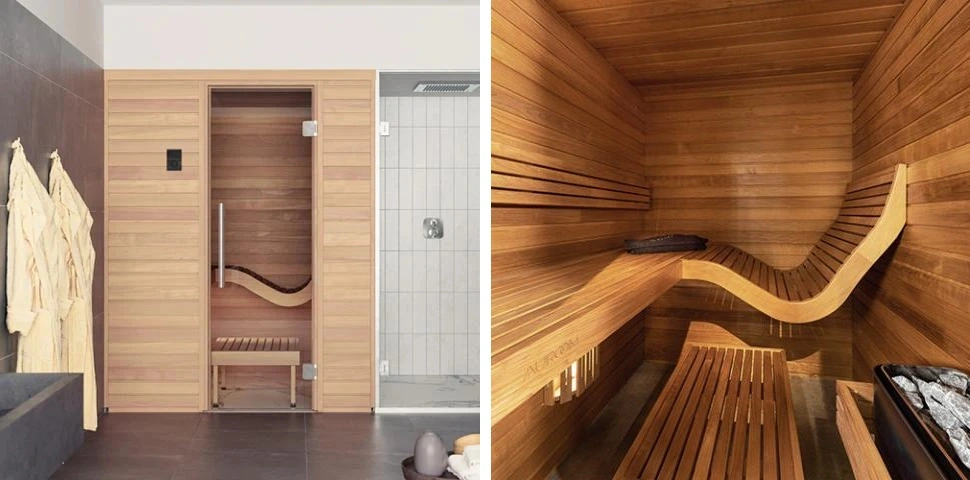
Luckily I finally found one indoor sauna kit that was able to impress me. It’s called Auroom Baia:

I’ve seen hundreds of saunas and can confirm how rare such a cool and ergonomic sauna bench design is!
Auroom is an Estonian brand, which explains why their sauna knowledge and craftsmanship is so strong. This is the only sauna I could happily buy myself AND place it in the bathroom – the only right place for indoor saunas!
This sauna kit includes:
- pre-assembled wall elements
- ceiling elements
- cladding on two side walls
- 2-level benches + ergonomic bench
- backrest with LED light
- heater guard
- floor grid (not needed in bathroom installations)
- made of thermo-aspen, which makes it water-resistant 👍
Auroom features this sauna in bathroom-like settings, a brilliant sign, but you can also install it in your garage or basement if it has a concrete/tile/vinyl floor and a drain.
Final Thoughts
When considering sauna kits, some people ask whether they should get a kit or build from scratch. I always find that question a little silly: suddenly everybody’s a builder!
What I mean is that while many people will be able to assemble a sauna kit when they have at least one family member or friend helping, and the instructions are clear and detailed, significantly fewer people will be able to build as functional a sauna from scratch.
If you’re an avid builder, whether professional or amateur, by all means build your own sauna from scratch. Then again, a builder like that wouldn’t ask anything about pre-made sauna kits.
So, if you’re someone who is pondering whether to build or go with a kit, meaning your building enthusiasm and/or skills aren’t necessarily that strong, then a sauna kit is the correct answer.
Just because so many kits reach the shops and end-consumers half-baked, there’s nothing inherently wrong with sauna kits. On the contrary, the absolute majority of people will get a much more professionally built quality sauna with a DIY sauna kit than with a stack of wood they don’t know what to do with.
You only need to know which kits are the best, and I already did that work for you! Let’s conclude with an interesting price comparison:

The saunas themselves are as comparable as can be: neither has a changing room or a covered deck, the benches are almost identical in length, and the number, shape, and placement of windows is exactly the same (it’s important since additional windows cost extra).
Both kits also come with the same Harvia M3 heater and a chimney kit that’s compatible with it.
I chose the cheapest price I could find for Dundalk Harmony sauna (it cost $5,772–$6,992 in other stores) and for all the other items as well. Still, it undoubtedly lost to BZB sauna W20 that’s superior in design and sauna understanding and that costs $2,500 less.
(In case you can’t recall, Dundalk is the company that said “you get less steam” if you throw more than half a cup of water on the sauna rocks every five minutes, which is incorrect.)
I also wanted to show you just how easy and care-free it is to get a kit that already includes all the right things!
Book source:
Rakennustietosäätiö RTS (2008). Saunan suunnittelu. Karisto.