Sauna Elf: A Kind OR Evil Spirit? (+ 3 Myths Explained)

Once you’ve seen enough saunas, either in real life or online, it’s likely you’ve come across a tiny and often cute sauna elf.
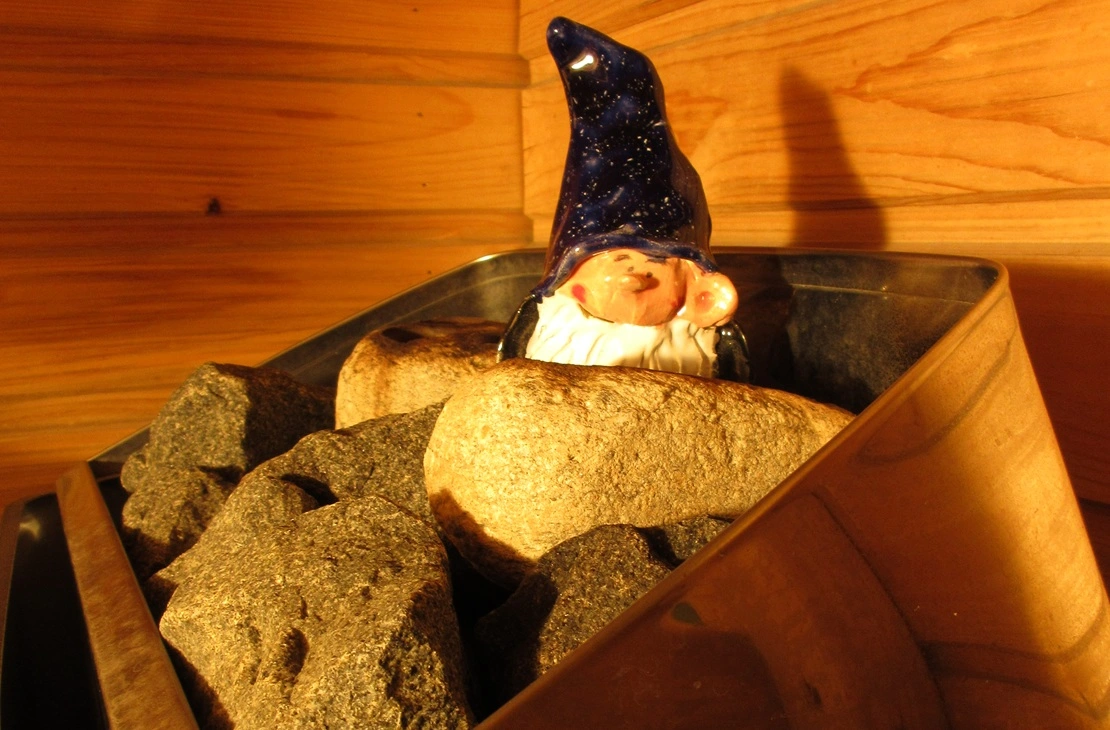
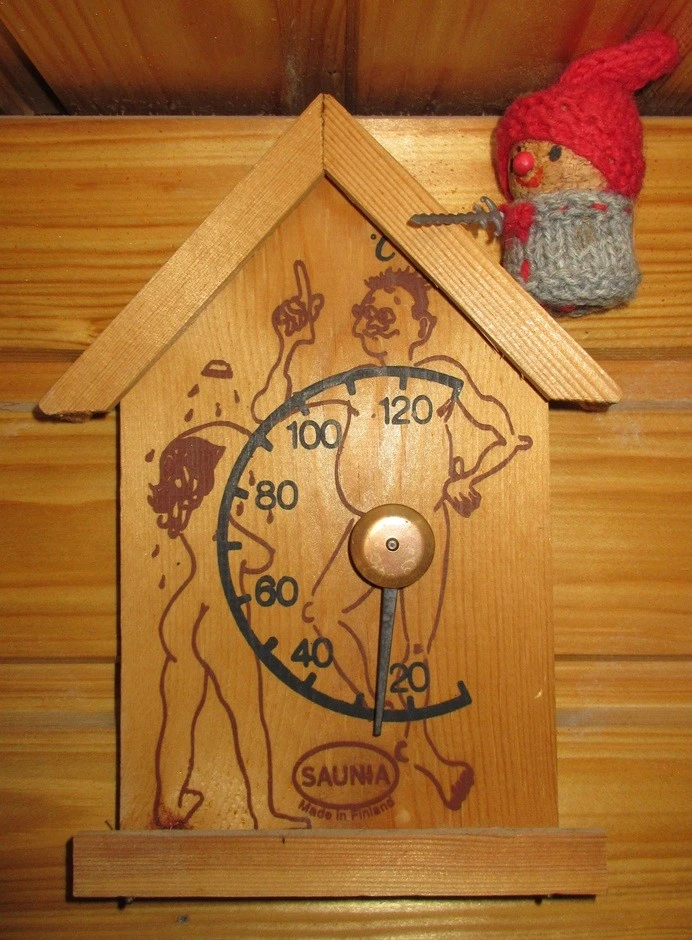
You may have seen this sauna elf (saunatonttu in Finnish) as a sauna stone placed on top of other sauna rocks, as a stand-alone figure – maybe holding a small cup where you can add a few drops of essential oil – or as a decoration on the thermometer, for instance.
Because the sauna elf has such positive connotations, it’s a popular sauna accessory in many forms.
But all this leads you to ask the inevitable: what is a sauna elf, what’s the story behind this beloved character, and what does it symbolize nowadays?
In other words, is the sauna elf something you should care about and incorporate into your own sauna somehow or gift a friend who has a sauna?

There are actually no English sources online that answer all these questions, and not a ton of information in Finnish either, so I’ve turned to a book (Pulkkinen 2014) that specifically addresses elves as part of Finnish folklore.
So, let’s finally see what the sauna elf is all about!
What Is a Sauna Elf & What Is the Folklore of the Saunatonttu?
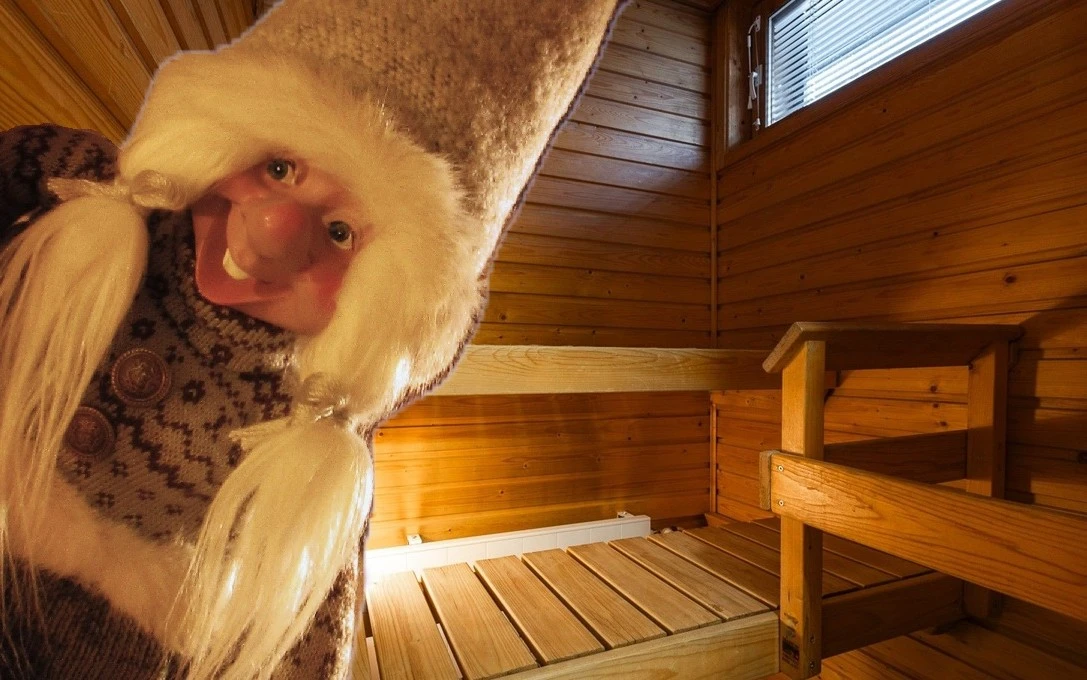
The sauna elf, also referred to as sauna gnome or fairy (saunatonttu and saunanhaltija in Finnish), is a small spirit that’s believed to live in the sauna, usually in between the sauna heater and the back wall.
In folklore, the sauna fairy can be male or female, young or old (Pulkkinen 2014, p. 83), and even a mix of human and dog, depending on the sighting. It can also transform or take the form of one of the sauna-goers.
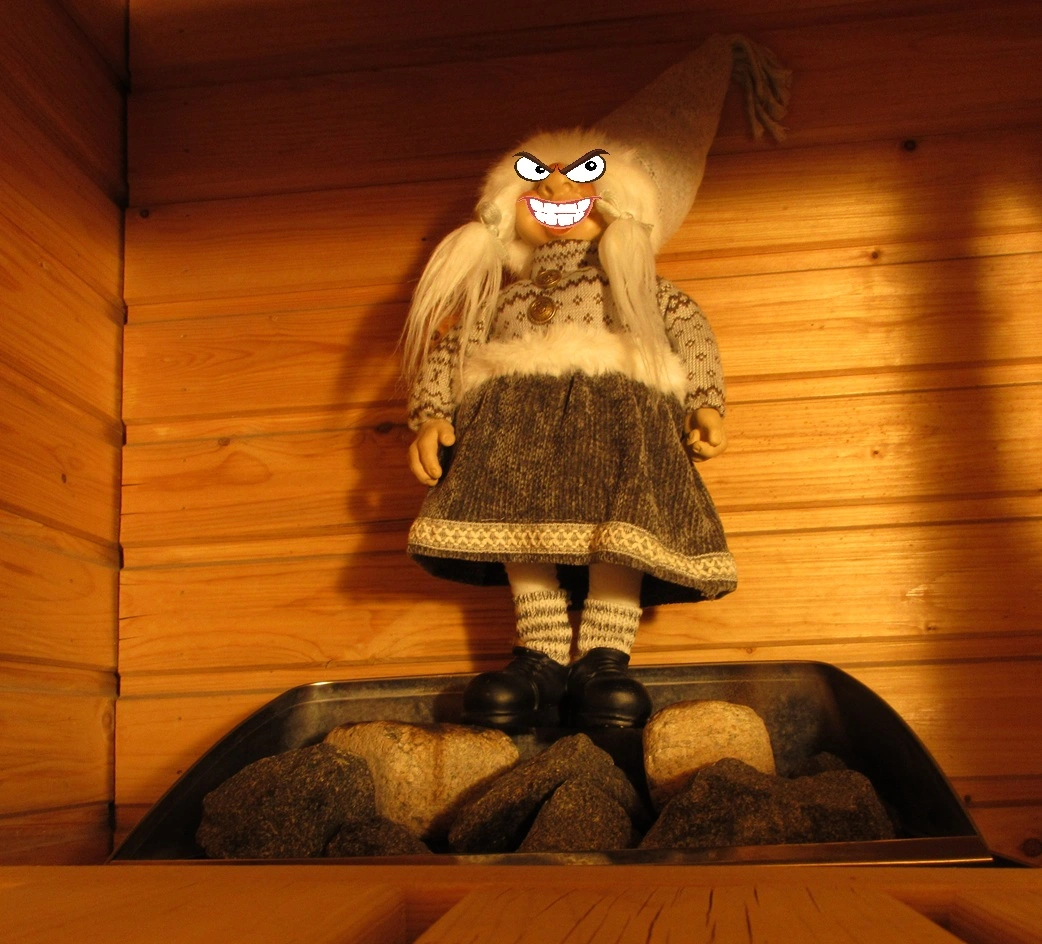
Even though perceptions varied a lot in the past, most typically the saunatonttu was described as a tiny geezer wearing a gray dress (Pulkkinen 2014, p. 82).
But what is the meaning of the sauna elf? He is a benevolent being most often seen as kind, good-hearted, and good-humored. It’s a guardian spirit that protects and looks after the sauna and all the people who sauna in it.
When you are on friendly terms with your saunanhaltija, everything goes smoothly: he makes sure the sauna functions properly, the löyly is fresh, sauna bathers feel safe and well, and that the sauna won’t burn.

But is there a flip side to the saunatonttu’s gracious behavior?
Yes. It demands respect and that you follow proper sauna etiquette. If you fail to please and respect your sauna gnome, well, you’re the one to blame for the consequences.
Minor mishaps on your part will make the elf grumpy, but if you manage to anger it even more, that typically shows as long and fierce löyly that stings and has you begging for mercy.
If you really disrespected the sauna elf, that could lead to illnesses, accidents, and even deaths. In the past, several deaths in many parts of Finland were thought to be caused by the sauna elf.
Several stories emphasize how dangerous sauna bathing was during the night (Pulkkinen 2014, pp. 136–137). A sure way of provoking the sauna gnome’s wrath was to bathe past midnight on a Saturday evening (especially on the eve of a special holiday) and mock him while at it.
In folklore, that nearly guaranteed you getting killed by the sauna elf who wanted you to see his devilish side.
How to Please Your Sauna Elf = Proper Sauna Etiquette
Since the sauna fairy is rather conservative when it comes to norms and rules, he won’t tolerate bad behavior. There are several things he expects from you:
🔶 saunatonttu loves peacefulness; avoiding loud conversations, swearing, and arguing in the sauna is a great idea
🔶 sauna is a sacred place that you should keep clean: urinating and farting in the sauna is strictly forbidden, and even eating and drinking alcohol is frowned upon
🔶 when you go to sauna, you should have good posture to show your respect, not slouch or be hunched up
🔶 you should greet the elf upon entering the sauna, and say goodbye when you leave
🔶 when you return to the main house/apartment, you should send everyone sauna gnome’s regards
🔶 the sauna gnome prefers all four – heat, water, löyly, and a sauna whisk – but the least he expects is löyly, so no dry sauna nonsense is allowed
This archived story, told originally in dialectal Finnish (Pulkkinen 2014, p. 83), shows how to keep the sauna gnome happy:
A woman was bathing her child in the sauna. Suddenly she saw a hairy-legged gnome sitting next to her on the sauna benches. He asked the woman to not be afraid as he only came in to warm himself. That’s when the woman realized he was a sauna elf, so she wanted to be polite, left the benches herself, and threw water on the hot sauna rocks. The gnome was impressed by her löyly-throwing skills and thanked her for good löyly.
How to Get Rid of a Difficult Sauna Elf
If you built a new sauna in place of an old one, the sauna elf usually moved to your new sauna.
Sometimes people wanted to ensure this would happen, so they used some of the materials of the old sauna, such as logs or cornerstones, when building the new sauna. Occasionally the move was successful just by bringing the ashes from your old sauna heater’s ash box to the new sauna.
If you happened to have a difficult sauna elf in your old sauna, you might have gotten rid of it by building the new sauna from completely new materials.
3 Sauna Gnome Myths Explained
1. Is the sauna elf real?
Sauna elf is a fantasy creature that people still viewed empirically, meaning there were sightings of sauna gnomes that weren’t questioned by the public (Pulkkinen 2014, p. 83).
Documents from the 1500s prove that the church fought against elf mythology, but didn’t manage to make elves disappear (Pulkkinen 2014, p. 84). The elf tradition lived on for a long time, well into the 20th century.
The written stories about the sauna gnome that still exist today are archived and available to researchers: the newest I could find was reported in Vihti, Finland, in 1961 (Pulkkinen 2014).

2. Should you leave food for the sauna elf?
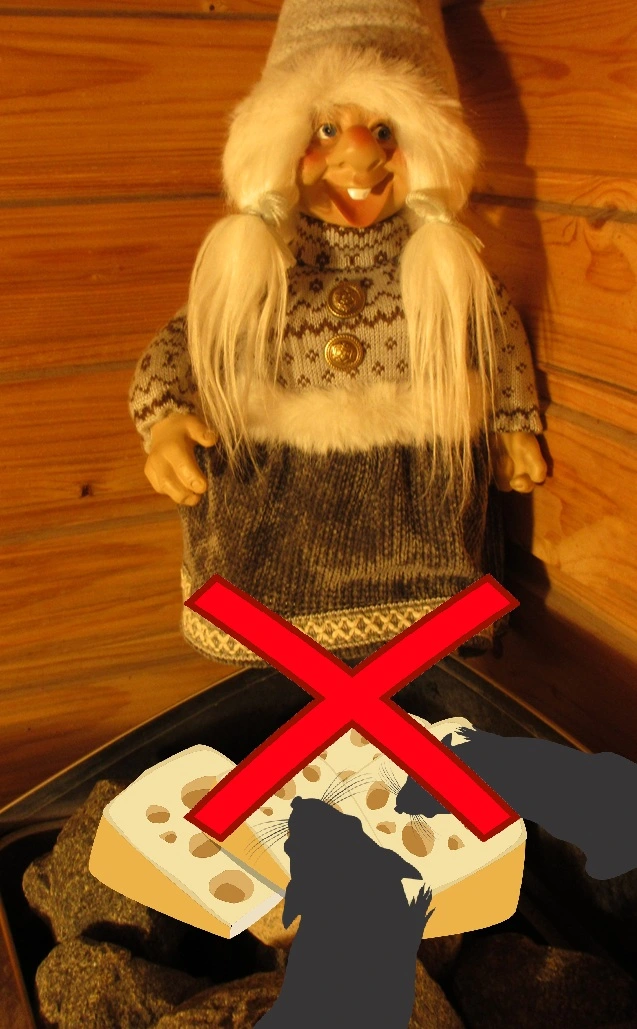
Some English online sources claim, with little to no references, that it was customary to leave offerings, specifically food and drink, for the sauna elf, at least during Christmas.
This sounded a little suspicious to me, so I did some digging and couldn’t find evidence for this in Finnish sources: sauna was a place to offer food for the dead during kekri, an ancient Finnish harvest festival, but nowhere is it suggested that “the dead” in this case would’ve meant sauna elves (Pulkkinen 2014, p. 137).
It seems that out of the many elves in folklore, such as home elves, barn elves, and grain mill elves, sauna elves specifically were the least interested in food. According to several archived stories (Pulkkinen 2014, pp. 83 & 136), the sauna elf does appreciate offerings but instead of food and drink, it wants heat, löyly, water, and a sauna whisk:
The sauna had to be heated so well that you were able to offer leftovers for the sauna elf: heat and water. Once all the members of the household had gone to bed after sauna, it was the elf’s turn to sauna. You could hear grunting and sauna whisk slapping. Next morning it was evident someone had, indeed, been sauna bathing after others had left. (A story told in Nurmes, Finland, in 1937.)
Pro tip: If you like saunas, folklore, and elves, and wish to have that show in your sauna somehow, leaving food is the last thing I would do. Food attracts pests like mice and rats that otherwise have no interest in your outdoor sauna. Surely luring them in isn’t what the sauna fairy wants?
3. Did the sauna elf really skin people alive?
If the legend of the sauna elf was already somewhat familiar to you, you might have heard versions where the elf brutally murders the sauna bather, often with no “good reason” either.
Are these stories modern interpretations that you can only find on Reddit, or are they part of actual folklore? I’m sad to report it’s the latter: in archived stories, the sauna gnome really does kill people, and over nothing, too.
In one of the most famous and quoted stories (Pulkkinen 2014, pp. 136–137), the woman who was skinned alive made fun of the sauna elf and was too late to sauna (= past midnight on a Saturday evening). Those were her deadly crimes.
It has to be noted that the stories never depict the violent act: the person in question goes to sauna, and when they never return, others go looking for them and then find the person dead in the sauna. No detective work is needed as it’s always the sauna elf who did it. It doesn’t need proving because everybody just knows it was him.
In earlier folklore, the sauna gnome’s kind side was much more pronounced (Pulkkinen 2014, p. 82), while darker tones became more common in some later versions. Still, most stories present the elf as a protective guardian.
Final Thoughts + What Made the Ancient Sauna Gnome Vanish
In many ways, most saunatonttu’s teachings are true even today: essentially he teaches you how to sauna and makes sure you never forget what you’ve learned.
His mission is to remind bathers of how sacred the sauna is. Why is that? For centuries, saunas were used for childbirth as well as washing the dead (Pulkkinen 2014, p. 136), which made them places for healing and magic.
Sauna bathing was like a rite of passage, symbolizing old things dying and new being born.
The word löyly (steam) itself is also otherworldly. Finns’ ancestors called the soul or vital force that kept their body alive löyly. This explains why löyly is nowadays referred to as the soul or heart of the sauna.
Since the sauna gnome cares most about proper löyly, it makes sense his spirit is nowadays represented in sauna rocks:
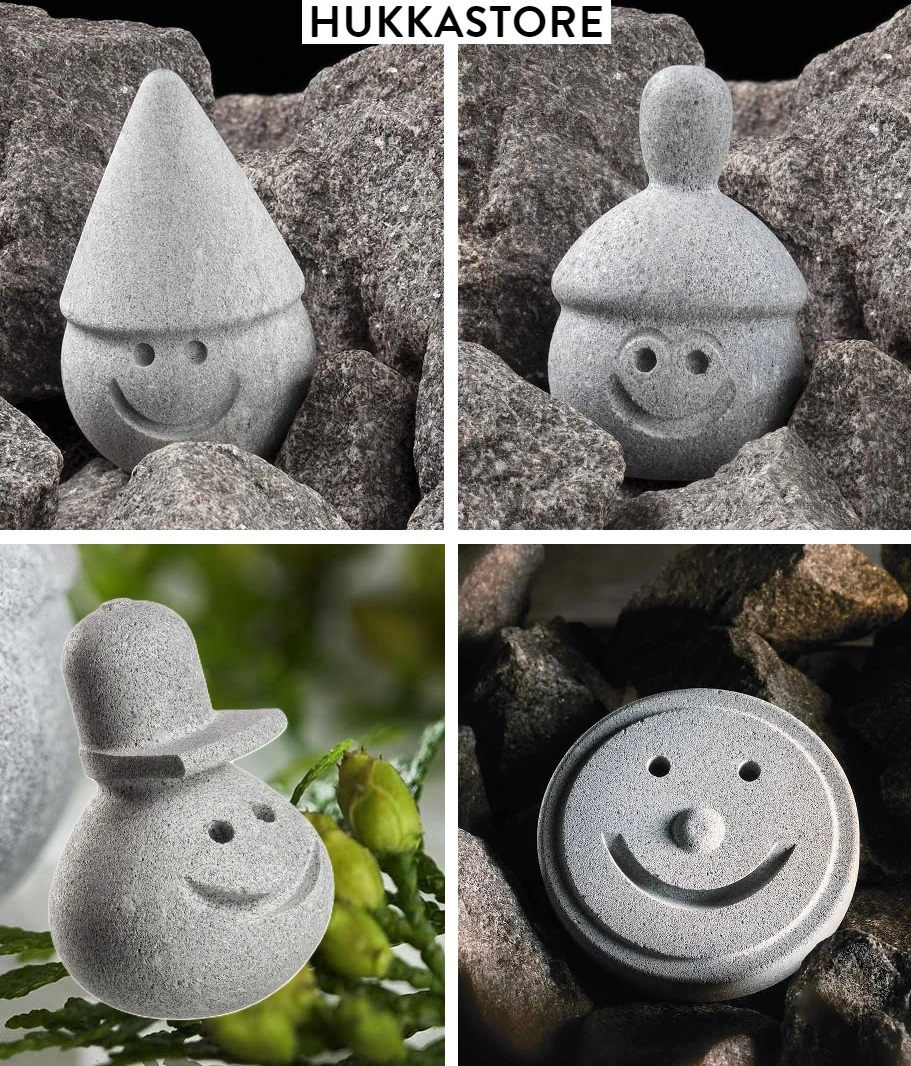
Since sauna gnomes were such a big deal before, why don’t (as many) people feel their watchful presence in the sauna anymore? There are several explanations (Pulkkinen 2014, pp. 84 & 354):
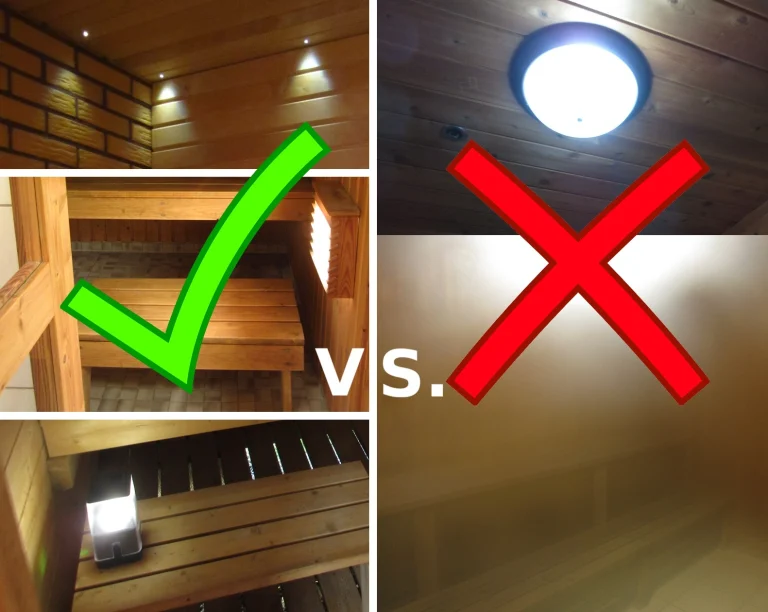
🔶 in the past, sauna gnomes most often appeared later in the day or early in the morning when it was dim and dusky, so when artificial lighting became a thing, it spooked the dusk-loving elves
🔶 many people reported elf sightings just before they were about to fall asleep: when conscious thinking started to subside, but you weren’t asleep yet, that state acted as a breeding ground for shamanic visions that were thought to be external
🔶 the modernization of agriculture, which led to farmers getting tractors, combine harvesters, and milkers, didn’t sit right with any home and courtyard elves, the sauna gnome included
🔶 it’s likely that mild carbon monoxide poisoning explained at least some elf sightings; when more and more people no longer used wood-burning stoves of the time but opted for electric sauna heaters, elf sightings became less common
Despite these developments, even today some people still sense the sauna elf more strongly than others. His physical manifestations are often not just cute and functional but also help to keep the ancient stories alive.

Sources:
Pulkkinen, Risto (2014). Suomalainen kansanusko: Samaaneista saunatonttuihin. Gaudeamus.
Sauna elf in Finnish: Saunatonttu