Sauna Water Tank: My Literally Hot DIY Setup (2026)

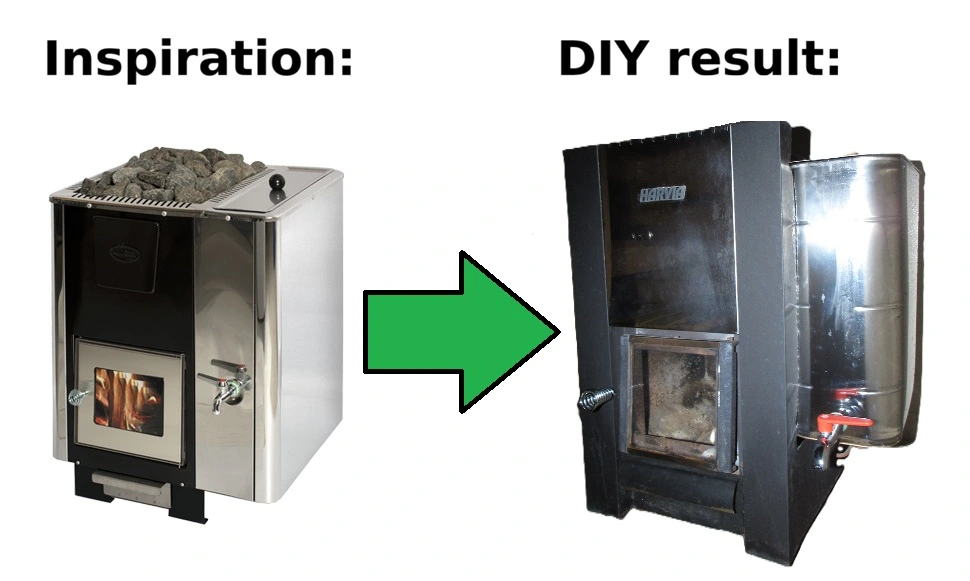
Today I’m going to show you how my dad and I attached a sauna water tank to my sauna heater in my outdoor sauna. It didn’t fit initially, so we had to create our own DIY setup.
But first, what does a sauna water heater even mean and why would you need one? This Reddit thread shows that sauna water tanks are not well understood (I can’t say I’m surprised), so let’s see what they’re actually for.
A sauna water tank or sauna water heater (sometimes also called a sauna boiler) is a container that you fill with water that the wood-burning sauna stove or the chimney then heats. When you are done with your sauna session, you mix this hot water with cold water and use it for bathing.
This is done because there’s no shower and therefore no electrically heated water nearby.
This means that if you’re not going to bathe in the sauna (and you have no other use for scalding hot water), you don’t need a sauna water tank for any purpose.
Despite what few, most clueless sources claim, sauna water tanks are never used to bring steam into the sauna room (that’s why they have lids or are otherwise closed structurally) or to provide löyly water (= water you throw on the hot sauna rocks). You can use any clean water as löyly water that’s ideally warm or lukewarm, never boiling hot, as that would be dangerous to use.
Now that it’s clear what a sauna water tank is, I’ll tell you why I personally wanted one and show you my current setup.
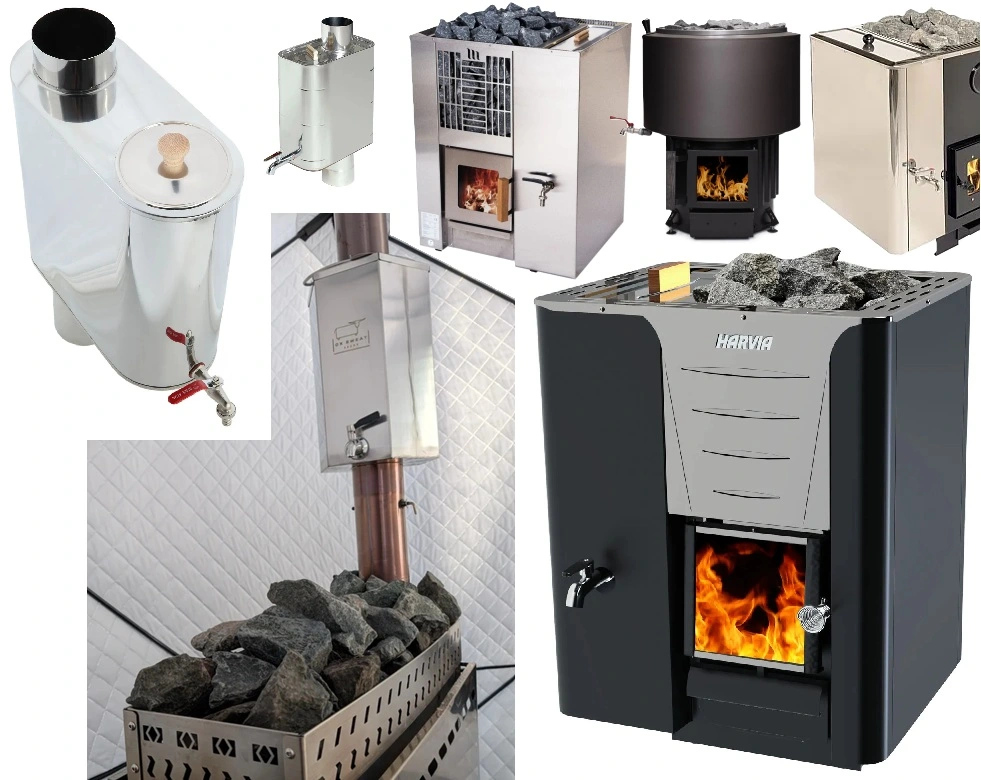
2–3 Reasons for Wanting a Sauna Water Tank
Although my outdoor sauna doesn’t have plumbing and thus no shower, water is still nearby: the sauna building is situated right next to the main house that has a modern bathroom with shower.
That’s actually why I previously felt I didn’t have any use for a sauna water tank: after saunaing, I walked into the main house and immediately showered there. This is the most common scenario for most people who have a sauna in their (back)yard.
Still, I started feeling something essential was missing. After all, it’s called sauna bathing for a reason, and traditionally and historically, people always bathed in the sauna after (or even partly amid) löylying. That warm and steamy environment after your skin is already prepped (= dead skin cells have peeled off) is just perfect for bathing. This also meant saunas were clean places that never smelled of sweat after everyone had bathed.
That element of saunaing really spoke to me and reminded me of how I used to sauna bathe when I was a child visiting loved ones in the countryside. Nobody there had a decent bathroom, let alone a shower in their home, so bathing naturally happened in the sauna. Only city homes, like the one my parents lived in when I was born, could have new indoor saunas with electric sauna heaters and a shower room right next to the sauna room.
Yet, it wasn’t just history and old traditions that made me yearn for a sauna water tank. After all, going to sauna is a very practical act, so it took a practical reason to convince me: I wanted to be able to wash, condition, and untangle my curly hair already in the warm sauna, not after it in a cold bathroom, shivering for 10 minutes straight.

Shivering in the bathroom would be inevitable because I don’t want to waste water when I’m showering in the main house. It would be nice to leave the water running while shampooing and conditioning your long (enough) hair, as otherwise you start to feel cold, but I personally can’t justify such water usage.
If the shower water you use isn’t for washing or rinsing, but just to bring warmth, that’s an excellent cue for any sauna owner and only means one thing: you should’ve bathed in the after-heat of your sauna.
Also, as sauna leaves you feeling very relaxed and pleasantly drowsy, it’s not an ideal state for any work or task. Scrubbing yourself from head to toe, or having to condition your unruly hair for ages at a time, can be such a task for some people. That’s why it makes sense to do all that work before leaving the sauna.
How We Installed Our Sauna Water Tank
After I knew I wanted to start bathing in the sauna, all my dad and I had to do was to figure out how to utilize an old sauna water tank I already had but that wasn’t compatible with my current sauna heater.
N.B. If your sauna stove is relatively new, and especially if you’re not completely sure you want a sauna water tank, DON’T MODIFY your sauna stove in any way, as that will void the warranty.
I no longer had to think about the warranty of my sauna stove, which meant I was willing to mutilate it for greater good. We actually had no doubts about what we were about to do since this exact sauna water tank wasn’t compatible with the old sauna stove either.
With that stove, one of the outer sides was completely removed to make required space for the water tank, but my current model is different, so we decided to make a slot for the tank.
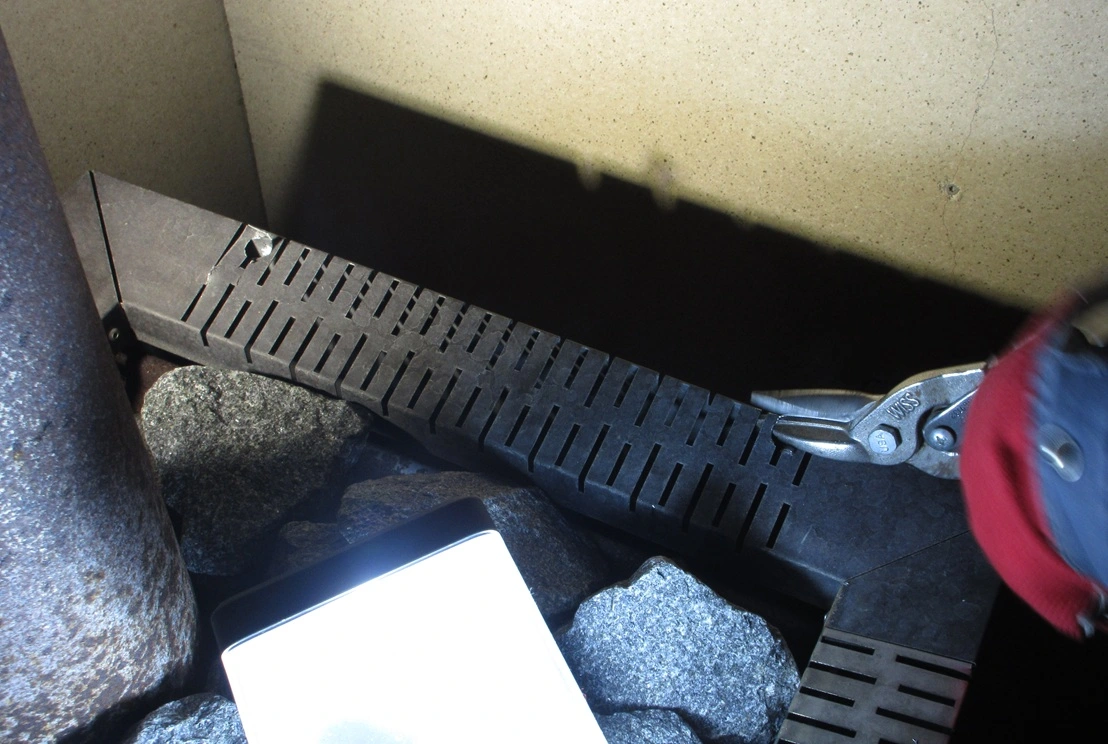
Who would’ve known American-made WISS snips work so great on a Finnish sauna stove! These quality snips made the steel feel like butter.
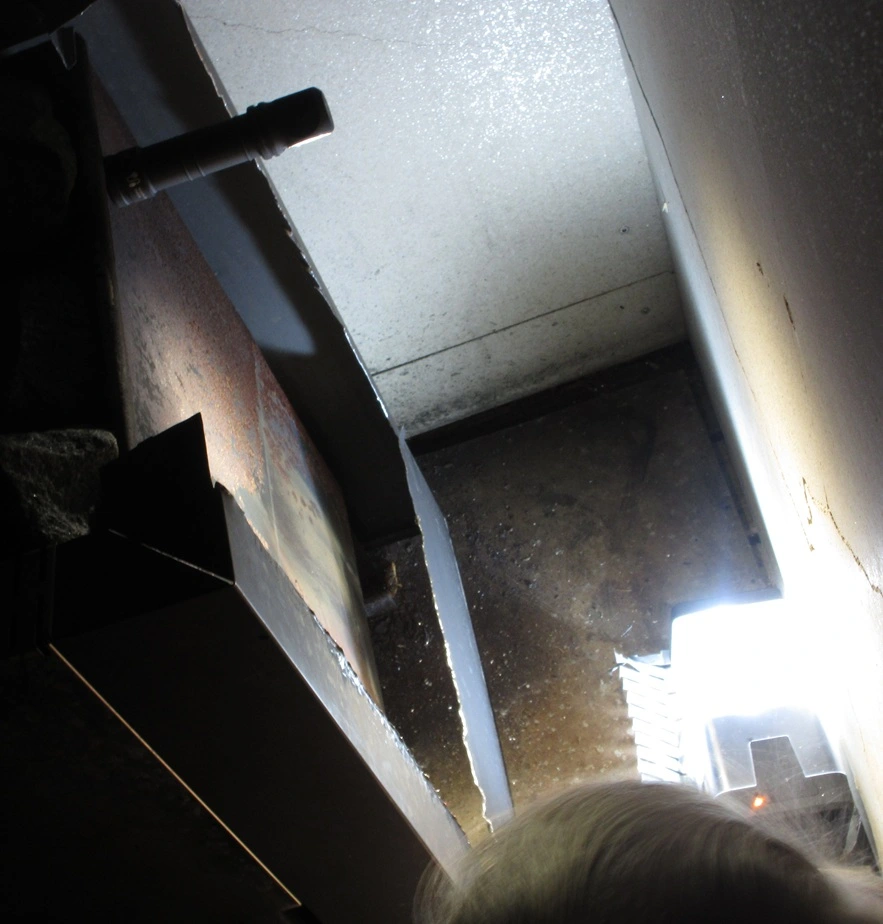
Of course the spot itself made the job more difficult, as we had to work in a tight corner, but the tools and lights we had were just the right kind.
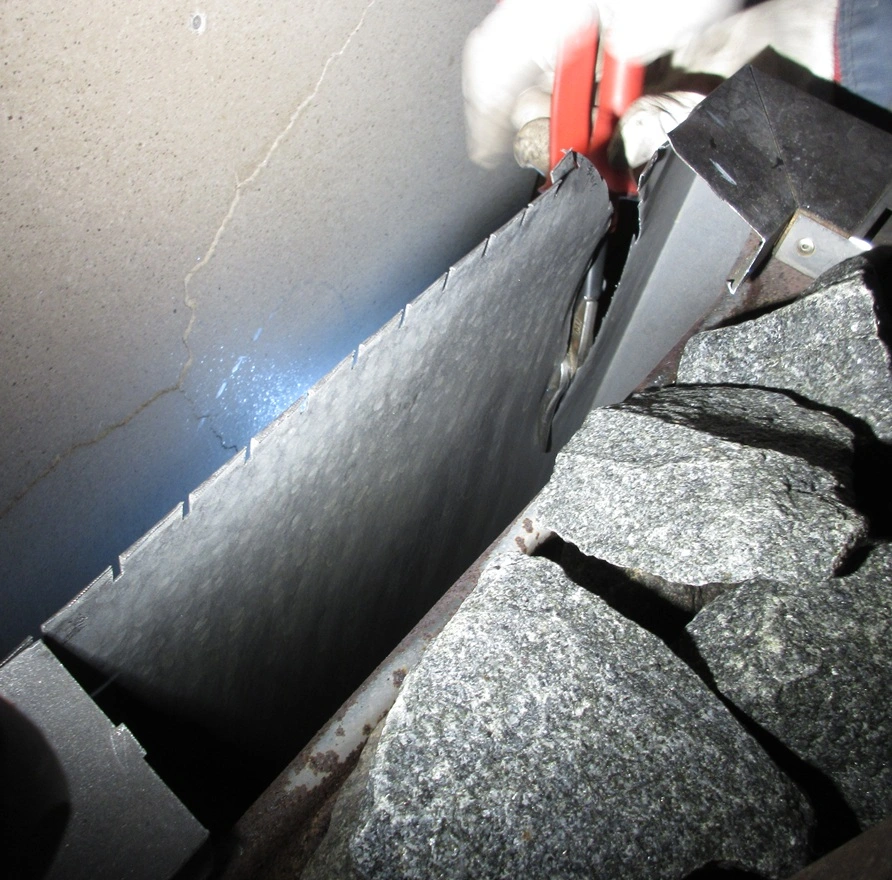
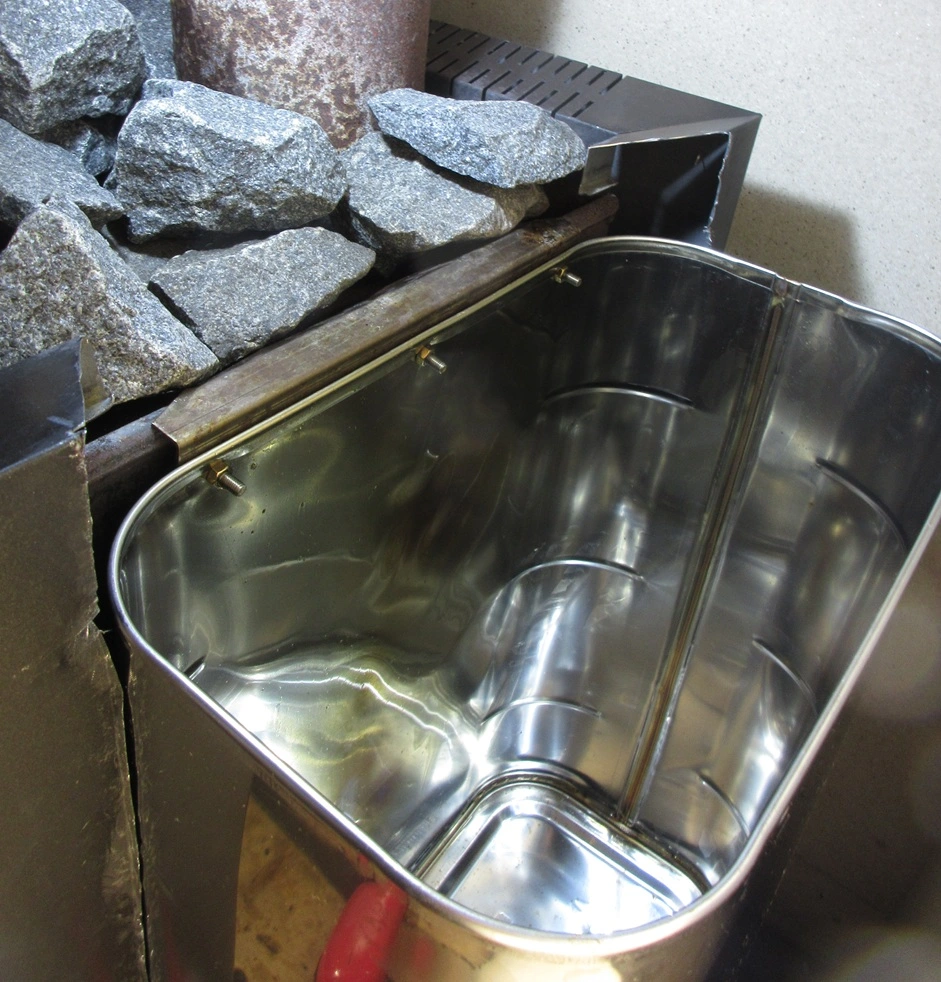
The picture below shows two relevant things: you can see the lip the sauna water tank has, which tells you how it’s supposed to be installed.
The second thing it shows is the gap between the core of the sauna stove and its outer wall. Even if the outer steel wall were thick and sturdy, you couldn’t hang the water tank on it: the tank has to touch the stove fully or the water won’t heat effectively.
We only hung the tank here temporarily to take measurements and to see how much more metal we had to snip off.
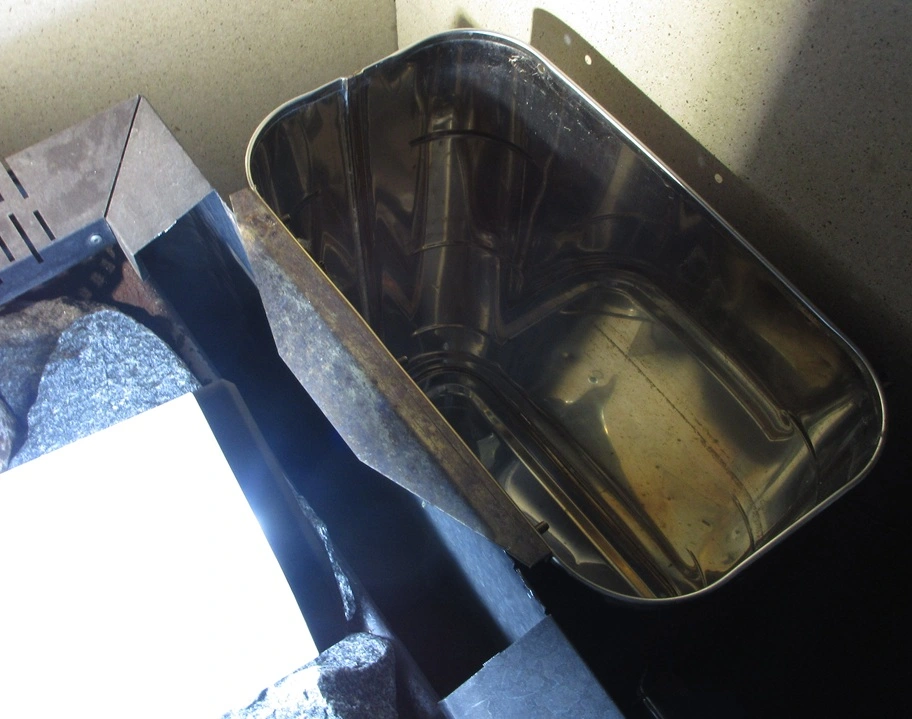
Below, the slot itself is finished, meaning all the snipping was done.
We didn’t like the upper “wings” that protruded unpleasantly (as seen above), so we snipped a little more for a cleaner look.
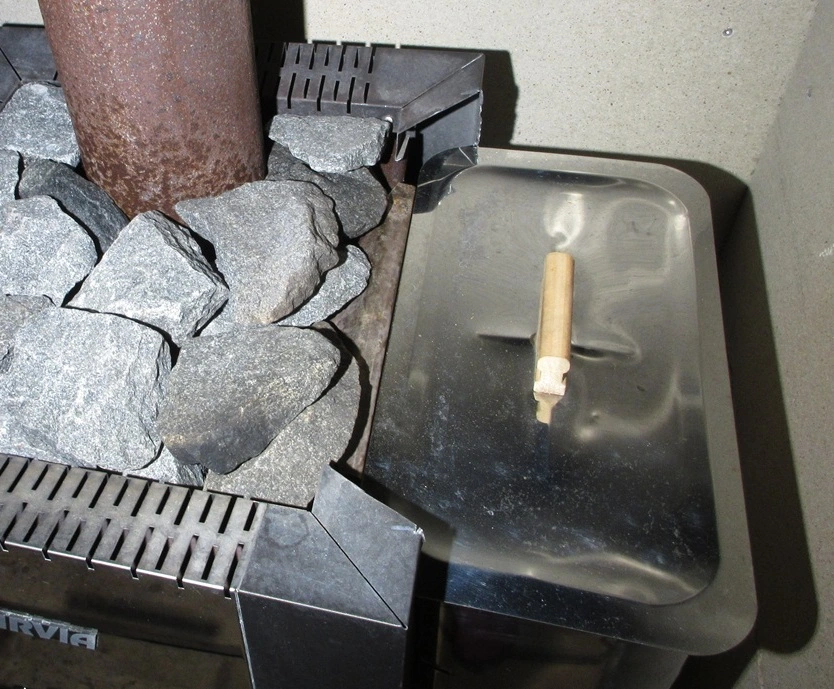
My dad made a few more snips into where the lid meets the sides so that the lid is easy to slide open. Then the installation was done!
We didn’t sand any of the raw edges, as you’re not supposed to touch any of these parts of the sauna stove anyway.
Final Thoughts
After the sauna water tank installation, I have used it every time I sauna. It’s like saunaing without washing water isn’t an option anymore: being able to bathe after all the sweating is just wonderful.
It’s so steamy and warm in the after-heat (ideally around 140 F (60 C)) that it’s giving vibes of a luxurious spa that meets a sauna that’s 500 years old. The tradition truly is as old as time, but the experience is so amazing even for the modern human that it makes you feel happy to be alive.
(It’s so steamy and dusky that it’s impossible to photograph, which is why you’ll have to use your imagination, or better yet, try it for yourself!)
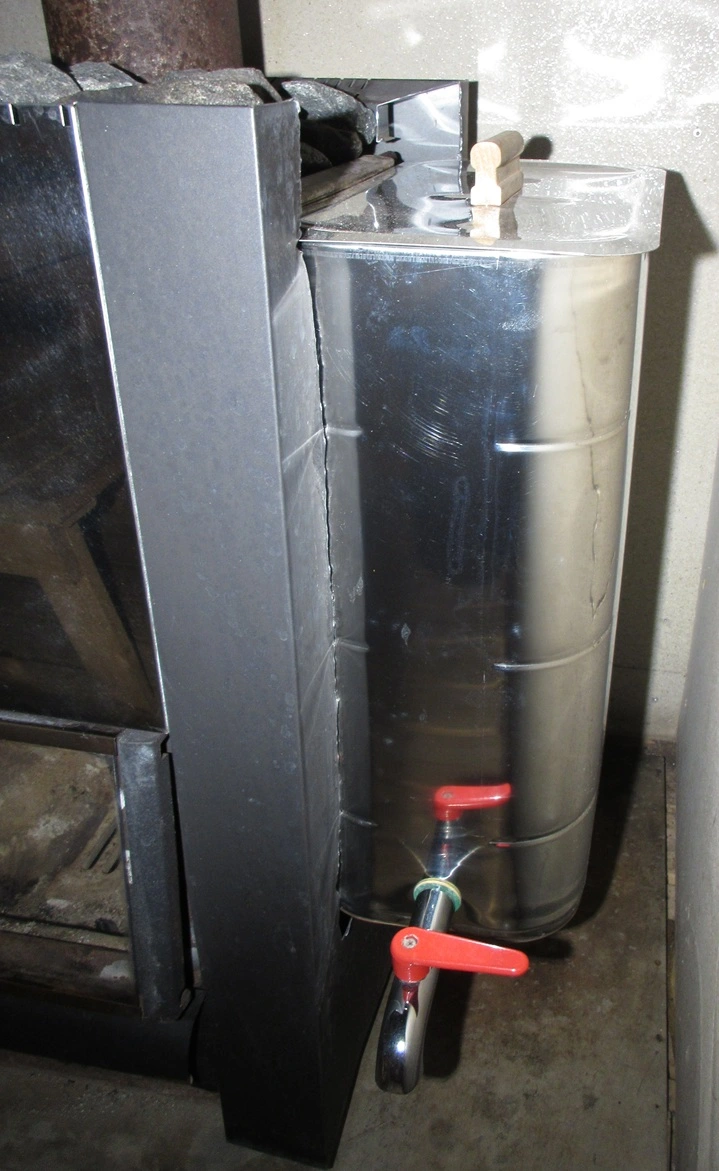
I have three more things I want to add before calling it a day.
I’m not the only one using our sauna, and everyone else has loved the water as well, even a bald guy 😍, so it’s definitely not just for people with (unmanageable) hair.
Secondly, if you happen to have or get a portable sauna water heater, but for some reason you’re not using it every time you sauna, then remove it when not in use. This is to protect the (stainless) steel from movement that heat can cause as it makes metal expand.
Thirdly, when you sauna bathe, it never means taking a bath (in a bathtub). That is how it was never done, it would require a ton of water, and most importantly, you wouldn’t have the energy to take a traditional bath after saunaing that has exhausted you in a good way.
When you bathe in a sauna after your sauna session, you mix hot and cold water in a wash bowl like the one on the lowest sauna bench below, reflected from the sauna stove. You repeat that process a few times until you’re completely washed and rinsed. You use the same shampoo, shower gel, soap, etc., that you always do. You use a ladle or a scoop to pour the water on you.
And that’s how it’s done. 100% recommend!
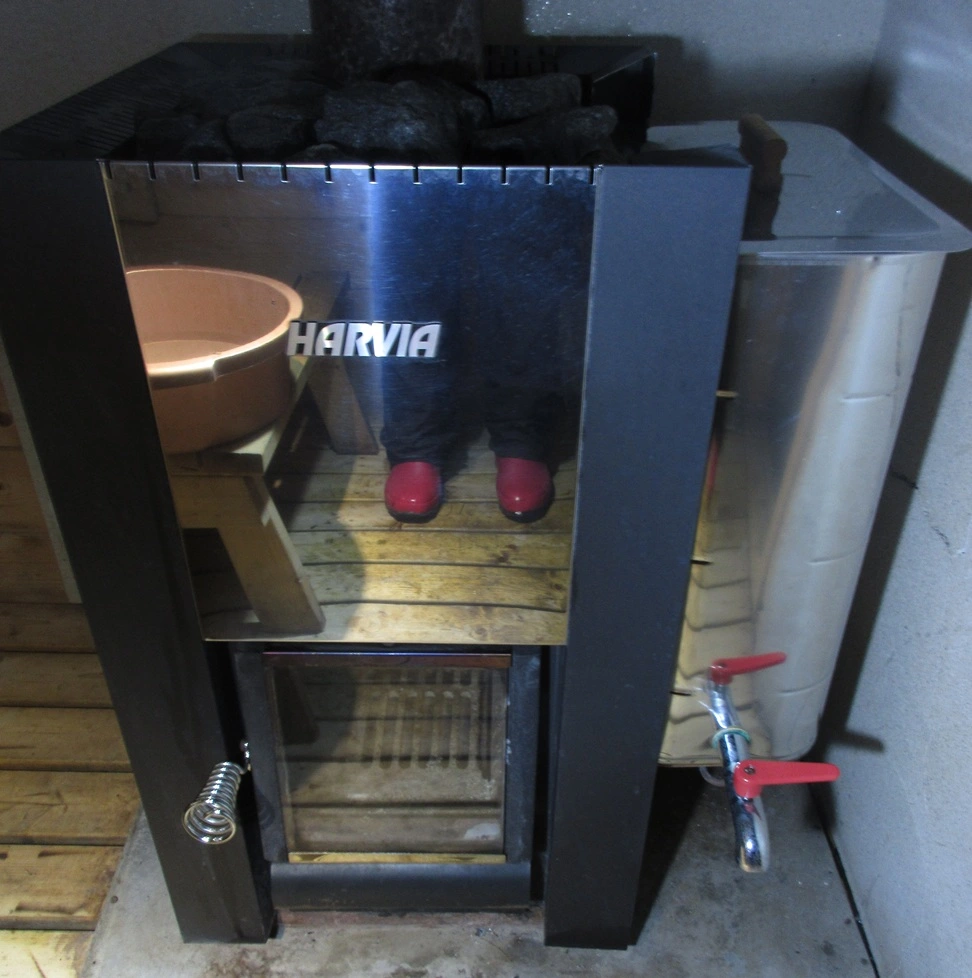
One last thing: remember that in order to enjoy your sauna water tank the way it’s meant to, your sauna floor has to be built for water use.