Best Sauna Heaters & Stoves: Withheld Info Exposed (2026)

So, you need a sauna heater.
Either for the first time ever, or you’re replacing an old sauna heater.
That’s great, as the heater really is the heart of the sauna, but how are you supposed to know which heater or stove to choose, in what size and capacity, or even the main features, since the names sound like gibberish and don’t tell you anything?
Harvia, Narvi, Kastor, Helo, Huum… names like these really don’t make shopping any easier! How do you even assess which heater brands are the most reliable?
No worries, as I’m here to help! I’ve been saunaing for over 40 years, currently have two saunas, an outdoor and an indoor one, and have bought and installed several sauna heaters in my life.
Most sauna heaters sold in the US and elsewhere in the world are Finnish. I’m of Finnish origin myself, so I’m well versed in this topic.
Let’s rank the best sauna heaters below, answer all your questions, and debunk some commonly held beliefs about certain sauna heater brands.
Step 1: What Type of Heater is Best for a Sauna?
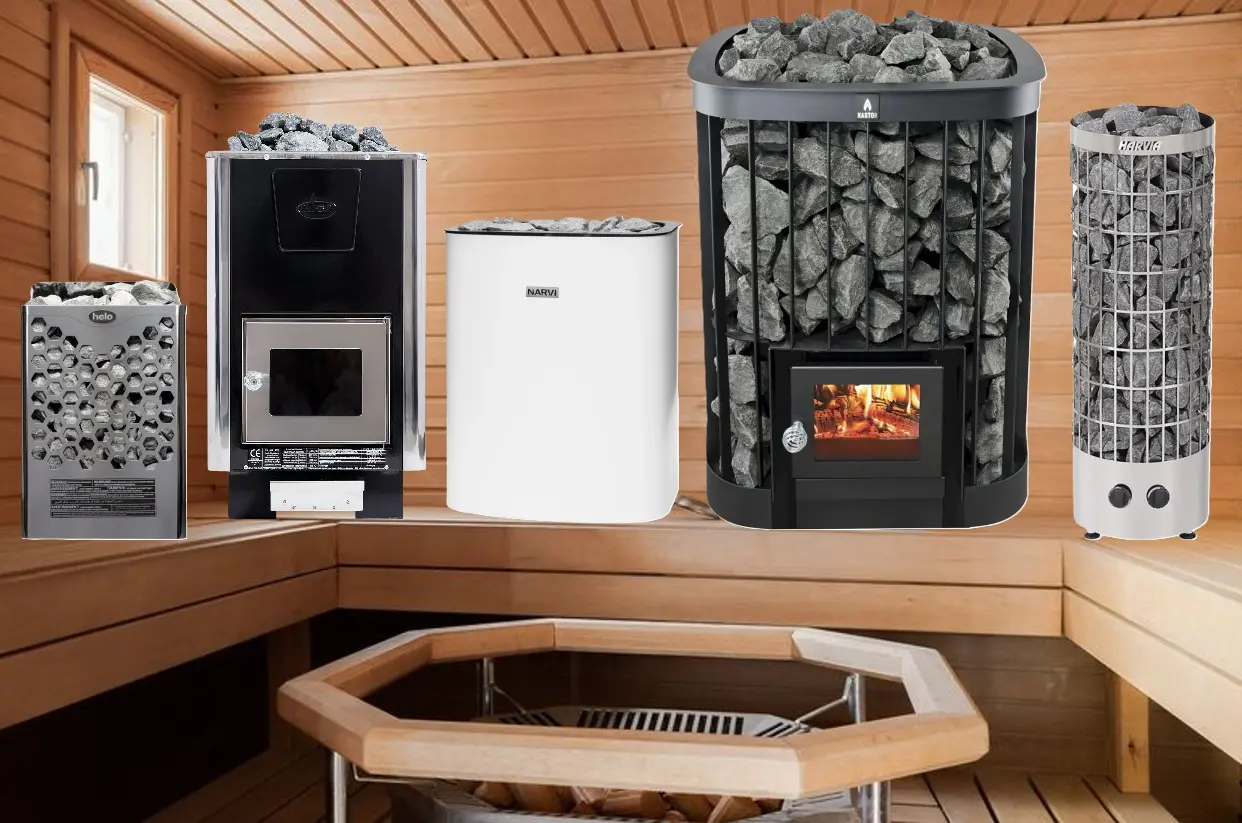
There are three types of sauna heaters on the market: electric, wood-fired, and gas-run.
(Just to make sure we’re on the same page: infrared saunas, in reality infrared heat rooms, don’t have sauna heaters, as they’re not saunas.)
Since all heater types can be equally good technically, what really determines what is the best one depends on your preferences and habits.
Why is that? Let’s say you’ve read somewhere that wood-burning sauna stoves are the best. But what if you’re someone with a fireplace in your house but you never use it? Is it then realistic to expect you’d enjoy lighting fires in your sauna? Probably not.
An electric sauna heater would then be a better match for you.
But if you happened to be someone who definitely wants an outdoor sauna, has easy access to firewood, and the idea of not needing any electricity intrigues you, then a wood-burning sauna stove would be the most ideal.
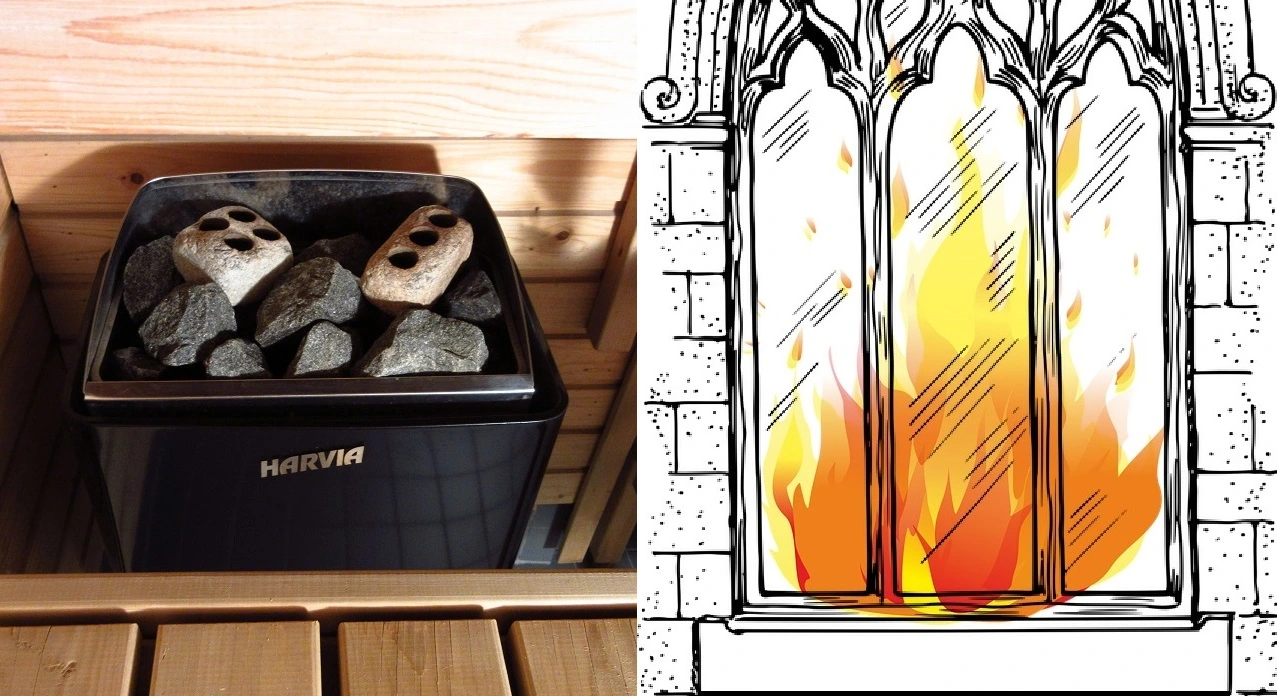
If you’re still undecided, below you’ll find helpful tips.
When to choose an electric sauna heater?
💡 you want the convenience only an electric heater can bring: no work needed on your part
💡 you want a more affordable heater; oftentimes, wood-burning sauna stoves are more expensive than electric heaters although the lifespan of both can be similar (depends heavily on the model)
💡 you know you need fewer/no permits for an electric sauna heater installation in your area, whereas a wood sauna stove would mean more hassle: in (sub)urban areas, zoning, fire, and environmental regulations affect wood stoves and can be restrictive
💡 you want to “hide” your outdoor sauna for privacy or any other reasons: if your sauna looks like a shed, for instance, and has an electric heater in it, nobody even knows it’s a sauna (a wood-fired sauna is the opposite, as it has a chimney poking through, neighbors can complain about the smoke, etc.)
💡 you appreciate the freedom a remote control system gives you: with the newest sauna heaters, you don’t even have to be at home, as you can set the timer remotely on your phone
💡 you need an easy & space-saving installation: closed-sided (and wall-mounted) sauna heaters require minimal/no clearances to combustibles; the sauna room walls don’t need any fire-proofing either
💡 you want or already have an indoor sauna
Although an electric heater usually goes hand in hand with an indoor sauna, many Americans like having an electric heater in an outdoor sauna, as they want the convenience and have more free space in their yard than house.
Depending on which state you live in, your sauna building then benefits from or even requires insulation (that’s not needed with wood stoves) to guarantee your electric heater doesn’t freeze and that you won’t need to warm it up with a hairdryer before being able to turn it on.
The opposite scenario is also possible: you can have a wood-burning stove in an indoor sauna, but then you’ll also need a chimney which may be difficult and costly to install.
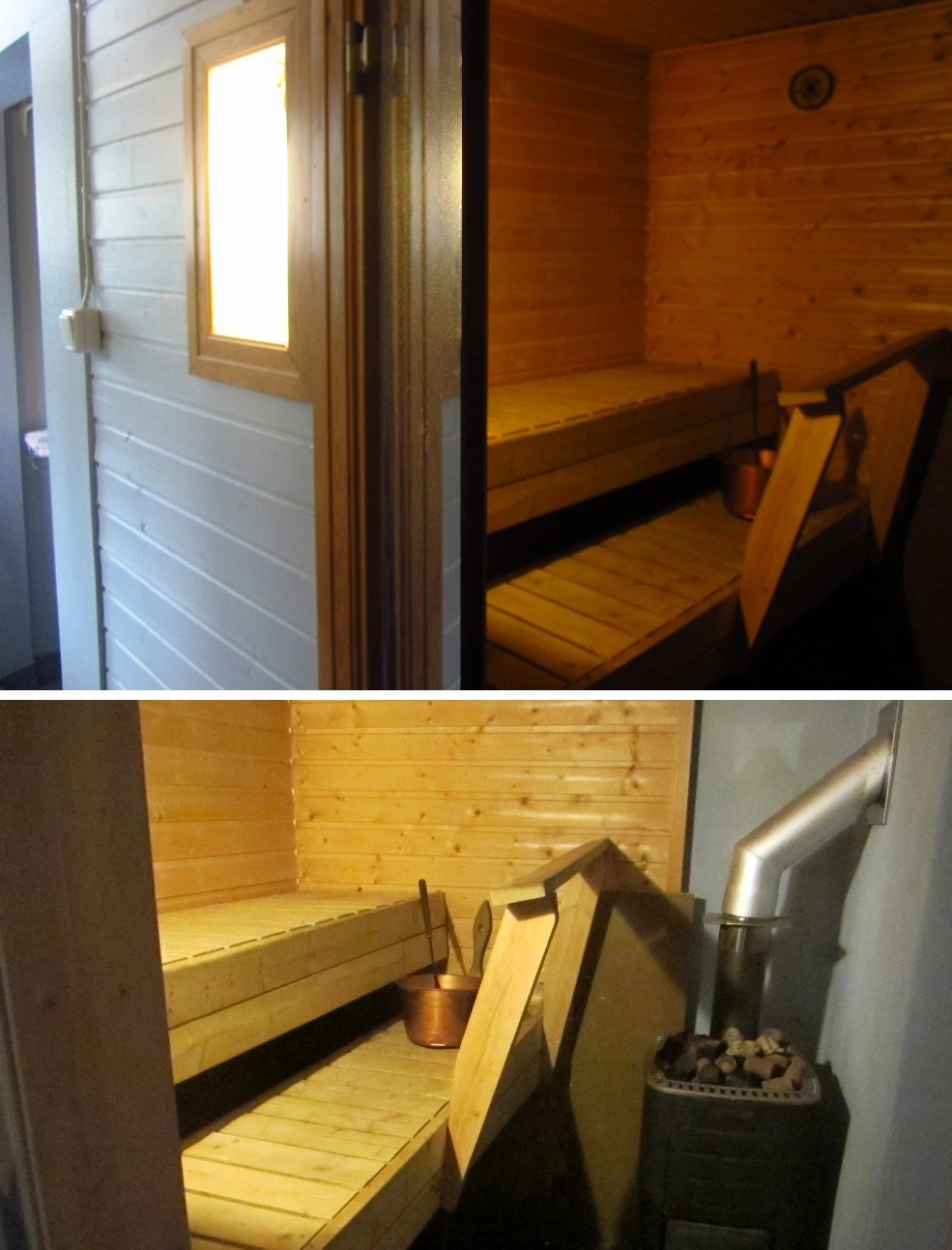
When to choose a wood-burning sauna heater?
🔥 you want or already have an outdoor sauna
🔥 you appreciate the authentic and traditional feel and smell of a wood sauna, with crackling fire in the background
🔥 you don’t mind the work: a wood-fired heater always means more work and effort than an electric heater
🔥 you own a woody property or otherwise have easy access to firewood: if that’s the case, it would save you money because the sauna is more affordable to run
🔥 you don’t have access to electricity (or gas): a wood-burning sauna can function entirely without electricity, as the stove itself requires none and even the lights you have can be battery-operated
A wood-burning sauna stove is the best match for people who not only like the wood-burning aspect but who find it a meaningful phase in the entire sauna-going process that also brings them closer to nature.
A wood stove is the only heater type you’re allowed to install yourself without it voiding your warranty. It saves you money if you’re capable of doing such work.
(With electric heaters, you need to hire a professional electrician, whereas with a gas heater, you need a certified plumber or HVAC technician.)
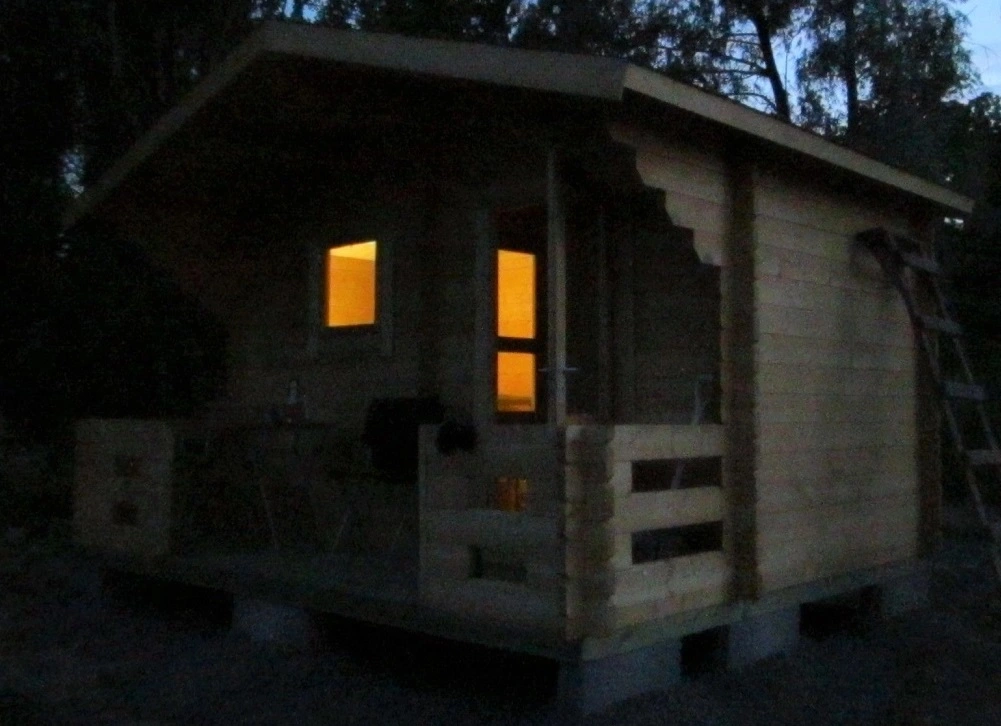
When to choose a gas sauna heater?
This is the least popular and least sought-after option, so it’s the best choice only for some people:
💨 you have easier/cheaper access to natural gas or liquid propane than electricity or wood
💨 you can afford the installation cost: a gas heater is the most expensive type to install, as gas lines are often much further away from the sauna location than electric lines; this adds to labor and material costs
💨 you’re not afraid of gas stoves in general, as this is the most dangerous heater type if used incorrectly: while saunaing, if you smell gas, you’re not to touch any electrical switches and can’t even use your own phone to call your gas supplier; instead, you have to use your neighbor’s phone for safety reasons (= to avoid a fire or an explosion)
Gas heaters are much more common in outdoor than indoor saunas, but some models are still suitable for indoor use as well.
If you know you have easy access to gas, the operating costs of a gas heater can be lot lower than with an electric heater. Scandia is the most sold gas sauna heater brand.
Natural gas is so much more affordable than propane that if you only have access to the latter, the savings won’t necessarily be that significant when compared to running an electric heater.
It’s likely that as we keep moving away from fossil fuels, and electricity becomes the more environmentally friendly option in more countries, gas sauna heaters will become even less common than they are now.
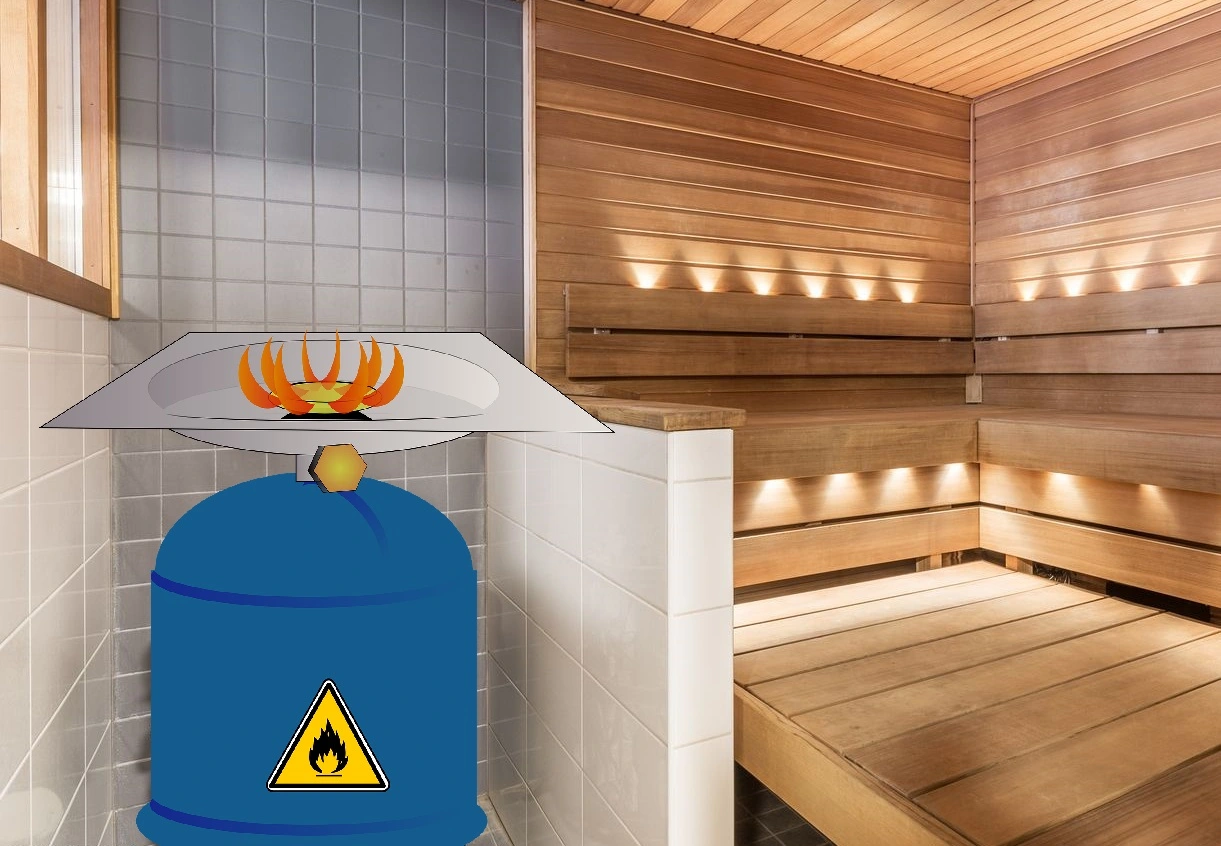
Step 2: How Big of a Sauna Heater Do I Need?
The main reason why picking the right size might feel difficult at first is because you think of your sauna room in square feet while sauna sellers use cubic feet with their heaters.
But don’t worry, as you don’t have to convert or calculate anything yourself: there’s a calculator that does all the math for you.
The dimensions you’ll need for the calculator in inches are the width, depth, and height of your sauna room + glass width and glass height.
The reason why glass is measured is because it allows heat to dissipate unlike wood that is more insulating. This means that if your sauna has lots of glass surfaces, you’ll need a more efficient heater than the space would otherwise call for.
Using the calculator, you also get to see how insulation affects the results by assessing whether your sauna room’s insulation is good, average, or poor.
When comparing different heaters, you can see most sellers specifying what room volume is ideal for each heater. This is great, since it allows you to see how powerful your heater actually is; let’s use mine as an example:

My sauna is 171.33 cubic feet, and the heater I have, Harvia KIP60 (6KW), is meant for saunas ranging from 170 to 300 cubic feet. As the same heater would be ideal even in larger saunas, it’s no wonder it heats my smaller sauna so efficiently and fast even on lower settings.
These numbers are perfect, as it’s always better to have a heater with “room to spare” than a slightly too weak heater that you always have to have at maximum capacity to barely get the temperatures you’re after.
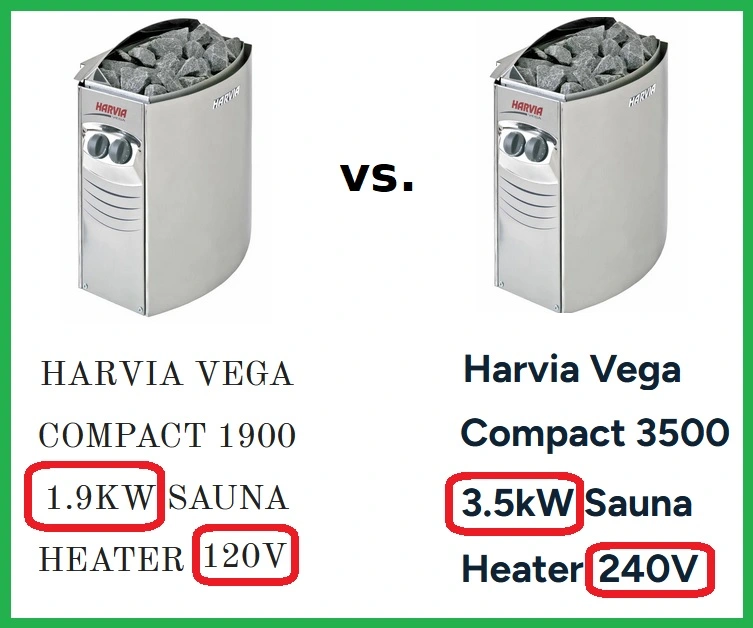
What about voltage, is that something you have to think about? What’s the difference between electric heaters of 110V and 120V, and will an electric sauna heater of 240V even work in the US?
Luckily you can almost forget about the voltage when sauna shopping: 230–240V is by far the most common voltage found in heaters for home use (208V/3PH is meant for commercial saunas) and is compatible with US 240V split-phase power.
(In Europe, the most common voltage for sauna heaters is 400V, which means such heaters don’t work in US homes, but it doesn’t really matter, as such heaters are not sold in the US anyway.)
The smallest heaters with voltages of 110V or 120V have gotten increasingly rare or completely removed from different sellers’ selection. Nowadays even the smallest heaters seem to require a 230–240V network.
Step 3: Choose the Best Sauna Heater or Stove for Your Needs
Now that you have a much clearer idea on what type of heater you’re interested in and the size required, you are just one detail away from knowing everything you need to know to make an informed decision.
Let’s discuss that detail right away and make sure you are up-to-date on the three different ways an electric sauna heater can be controlled.
Built-In Controls vs. Remote Control vs. Sauna Heater with WiFi
Choosing a new sauna heater becomes much easier once you know how you plan to control it: are you happy with built-in controls, or do you prefer a remote control unit with or without WiFi?
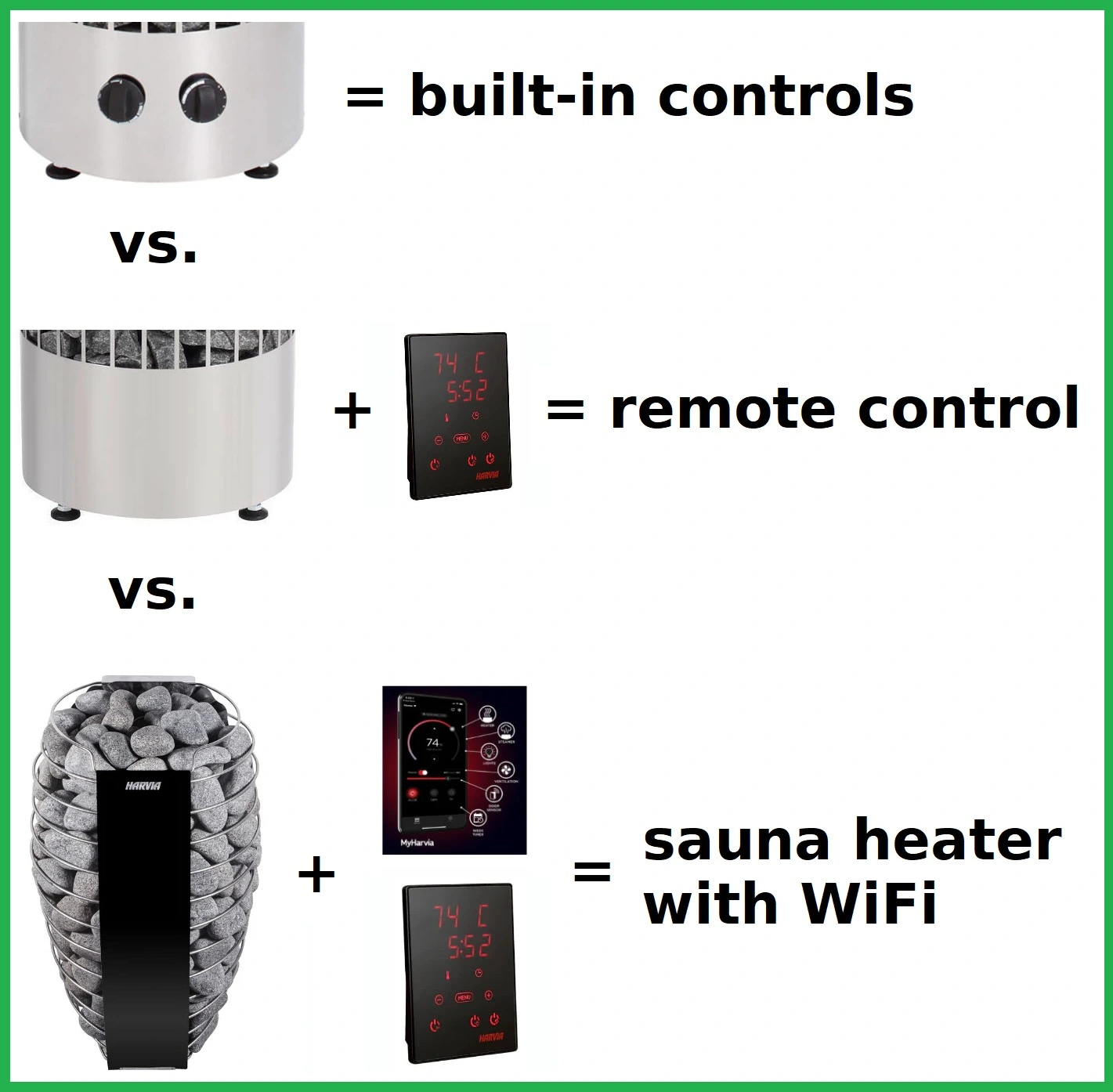
Built-in controls are the most self-explanatory and the “old-fashioned” way of controlling a heater: you can turn it on and off and adjust the settings only when you’re physically present.
Even with this option, you get a timer switch that allows you to delay the heater turning on usually for up to 8 hours.
Remote control, on the other hand, means a digital screen that can be installed anywhere in your home except for the sauna room in some cases.
The most important thing to know about remote control is that it doesn’t automatically include WiFi, meaning you can’t necessarily control your heater through an app on your phone.
(In reality, a more accurate name for such limited “remote” control is digital control, as it’s not truly remote if you can only control the heater from your home, but some sources/sellers mix these two concepts, i.e., digital control vs. true remoteness).
It’s only when you buy a sauna heater with WiFi that you can control it fully remotely. This kind of system comes with the same screen/remote as the previous option and has WiFi connectivity as an added feature.

The cheapest option is built-in controls, but many still prefer digital and remote control.
When using a sauna heater with WiFi, some ground rules are needed unless you live alone and are the only one using your sauna. You don’t want anything or anyone being in the sauna room when you remotely turn the heater on when you’re away.
Many times the safety features won’t even allow misuse, meaning the heater is automatically turned off if someone opens the sauna room door when it’s not supposed to be opened, for instance. You won’t be able to turn the heater back on remotely before the sauna room has been checked.
***
Finally we can move on to introducing the best sauna heaters on the market. Most of the models I’m going to show you have previously not been available in the US, so be prepared for something new and exciting!
If you’re interested in any heater in greater detail, just click the image: it’ll take you to the official product page.
1. Narvi / Misa
The reason I’m grouping two completely different brands together is because I want to highlight Narvi’s new electric sauna heaters, while turn to Misa for their efficient wood-burning sauna stoves.
Let’s start with Narvi.
Narvi was founded in 1937 in Finland, manufactures both electric and wood-fired sauna heaters that are 100% made in Finland, and is known for their quality and robustness.
Narvi has grown substantially in recent years, with international markets in their radar. Kota and Aitokiuas are Narvi’s brands as well.
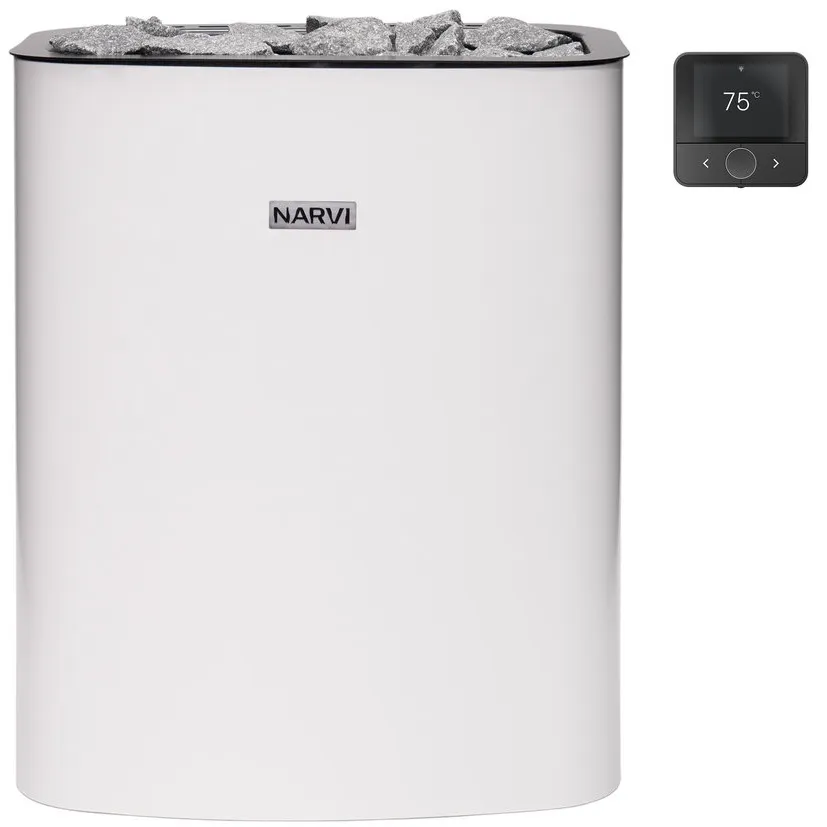
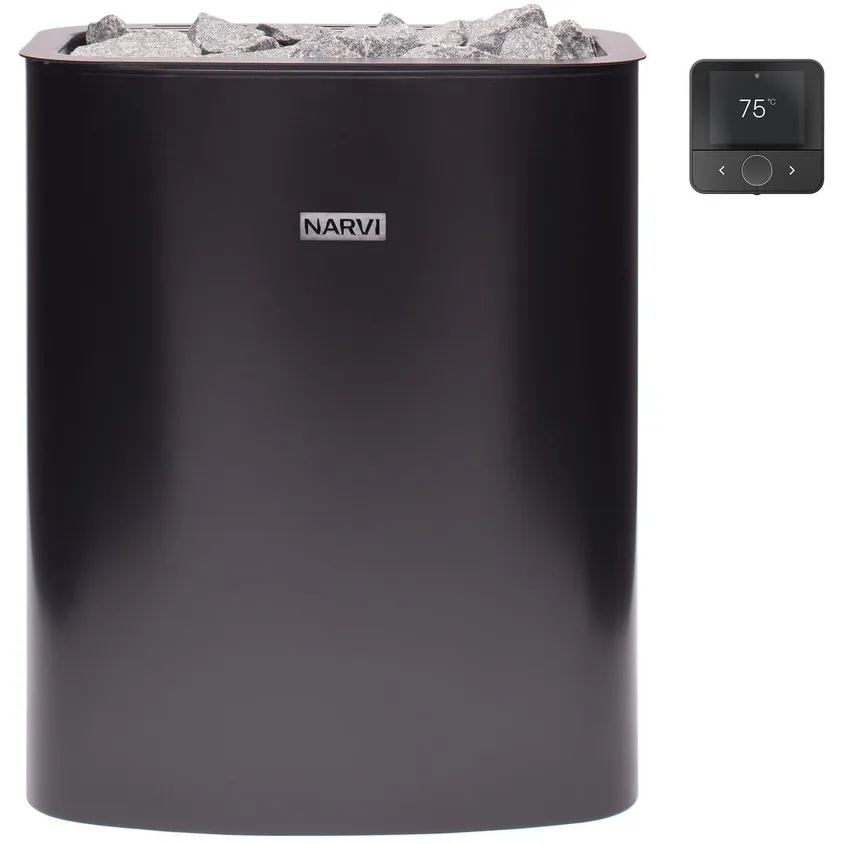
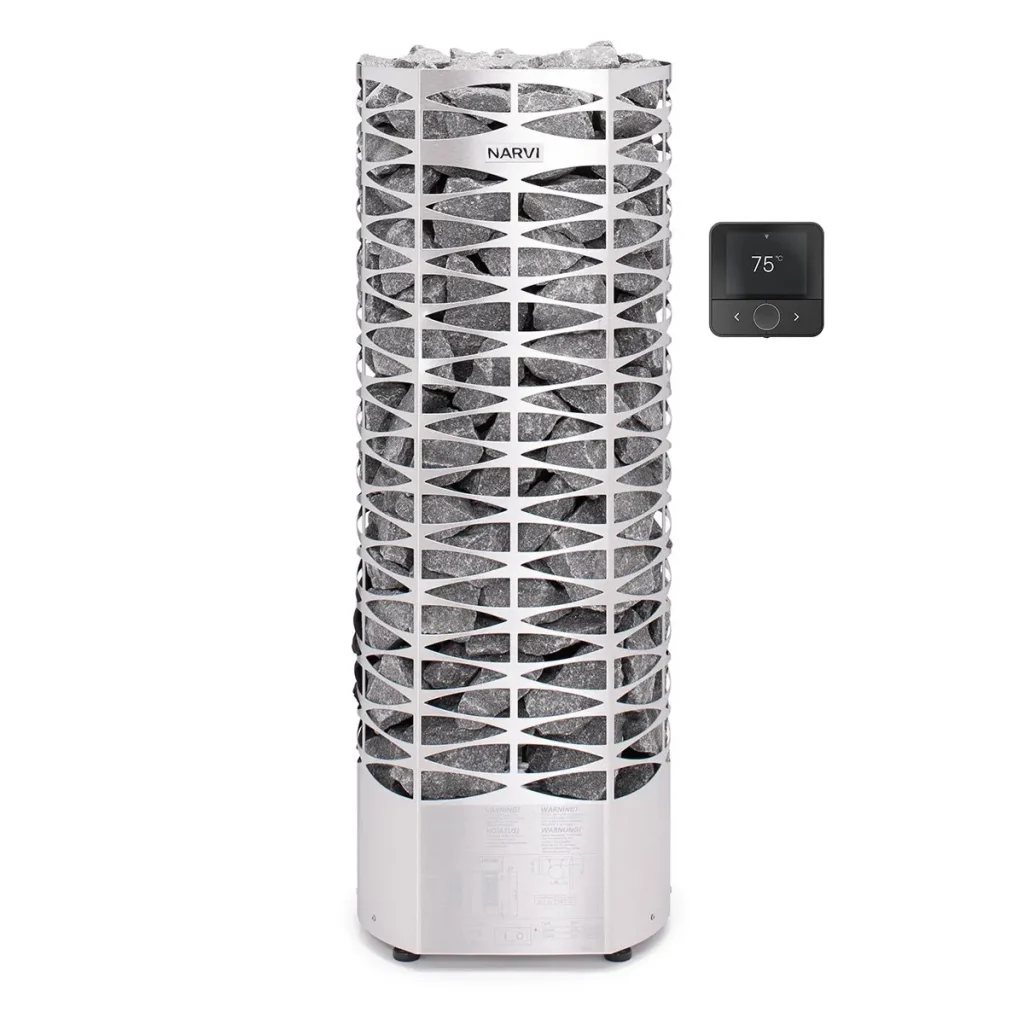
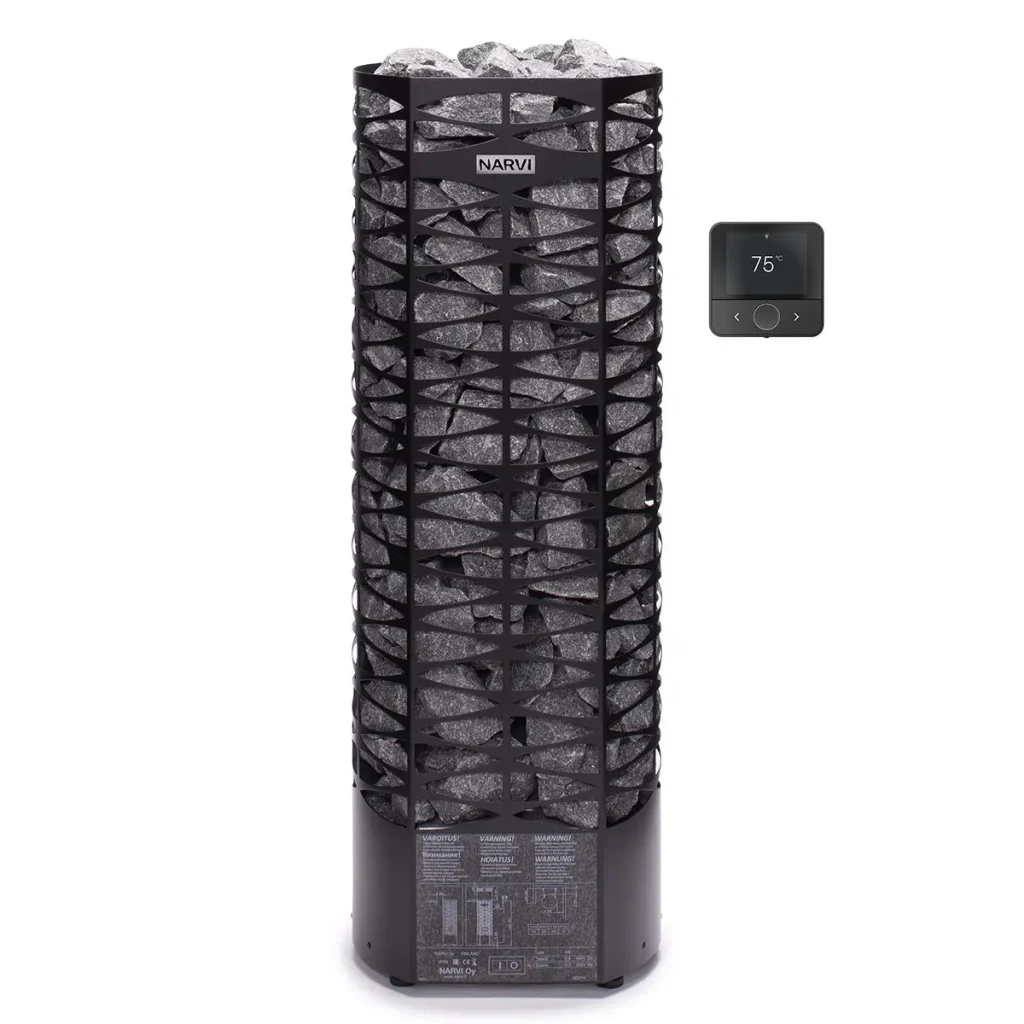
Most Narvi’s electric heaters require 400V, making them impossible for US home installations, but their new Flow (WiFi) series includes 230V 1N~/2~ as a wiring option, making all Flow heaters compatible with US 240V split-phase power. The frequency is also correct, meaning the heaters work equally well in 50 and 60 Hz grids.
NC Electric Flow
Saana Flow
Ultra Small Flow
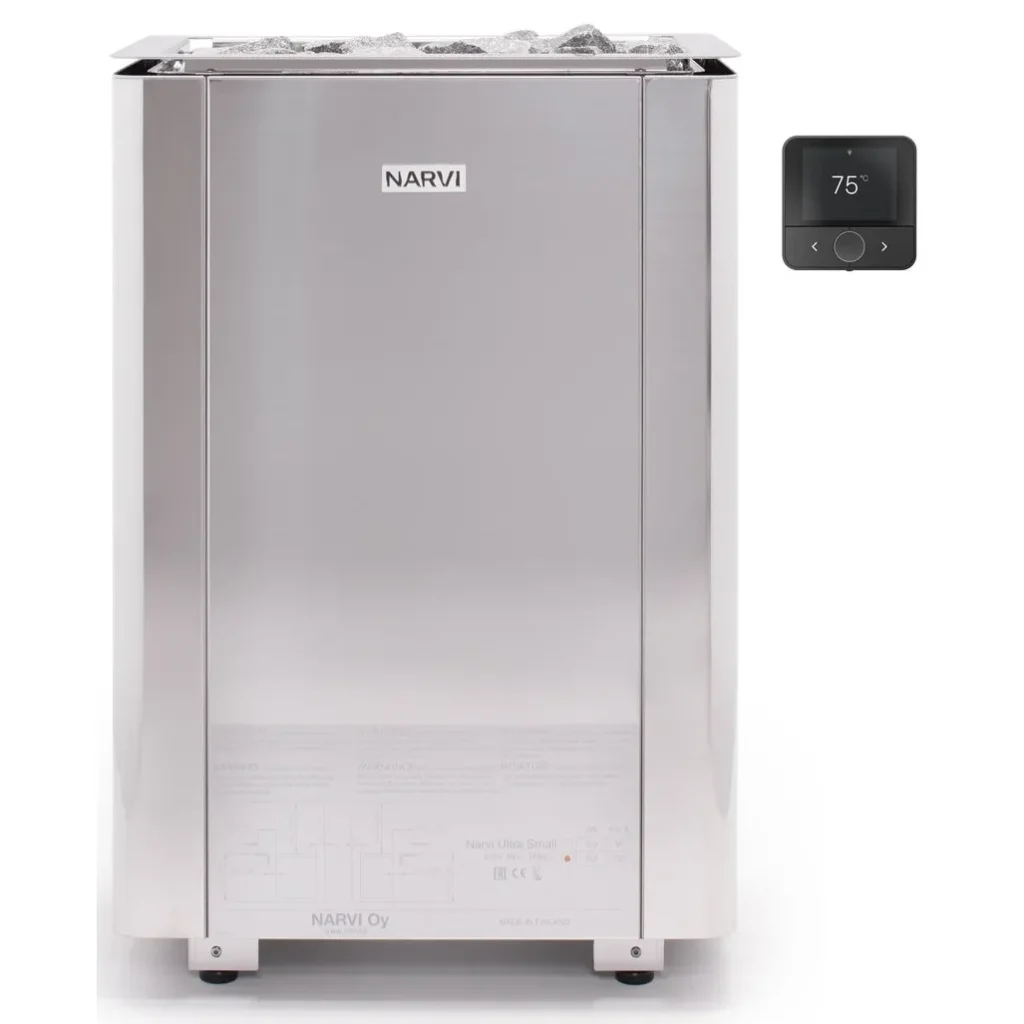
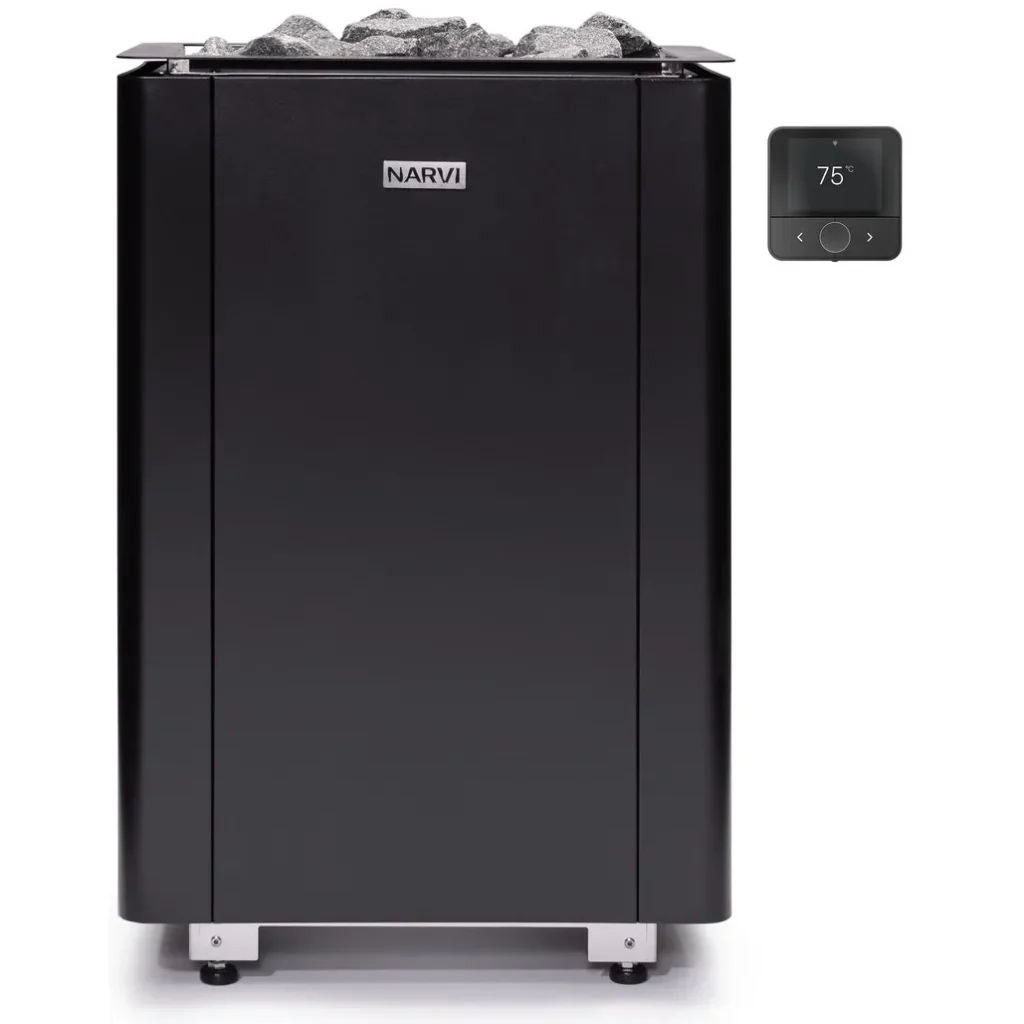
All the heaters in the Flow series come with digital control either with or without WiFi, depending on which variant you choose. You can adjust the temperature between 105 and 240 F (40–115 C), and have the heater running up to 4 hours continuously.
What’s equally cool is that the power unit is integrated into the heater and that the control unit is low voltage. Gone are the days when your electrician had to wire a separate control box, install it to a different room, and it possibly even requiring higher voltage than what’s available to you.
Regarding electric heaters, no other brand offers anything this sophisticated while also being extremely logical and easy to use, which is why Narvi won the race.
Moving on to wood-burning heaters, Narvi’s selection is great there too: it’s like the heavy-duty big brother of Harvia (introduced later) and meant for demanding use.
The only reason I don’t highlight Narvi’s wood stoves here is the fact that it’s the only brand requiring an adapter for the chimney installation. All other brands work with the standard sauna chimney size, the flue connection diameter being 4.5 in (115 mm), but annoyingly, Narvi must make theirs 4 mm bigger (119 mm), which sounds insignificant but, in reality, is just enough to make no standard sauna chimney fit.
(This is not a big deal if you are going to DIY your sauna chimney anyway, but for anyone wanting a proper sauna chimney kit with a 10-year warranty, Narvi’s stoves force you to buy an adapter as well.)
That’s partly why the #1 sauna stove brand is Misa.
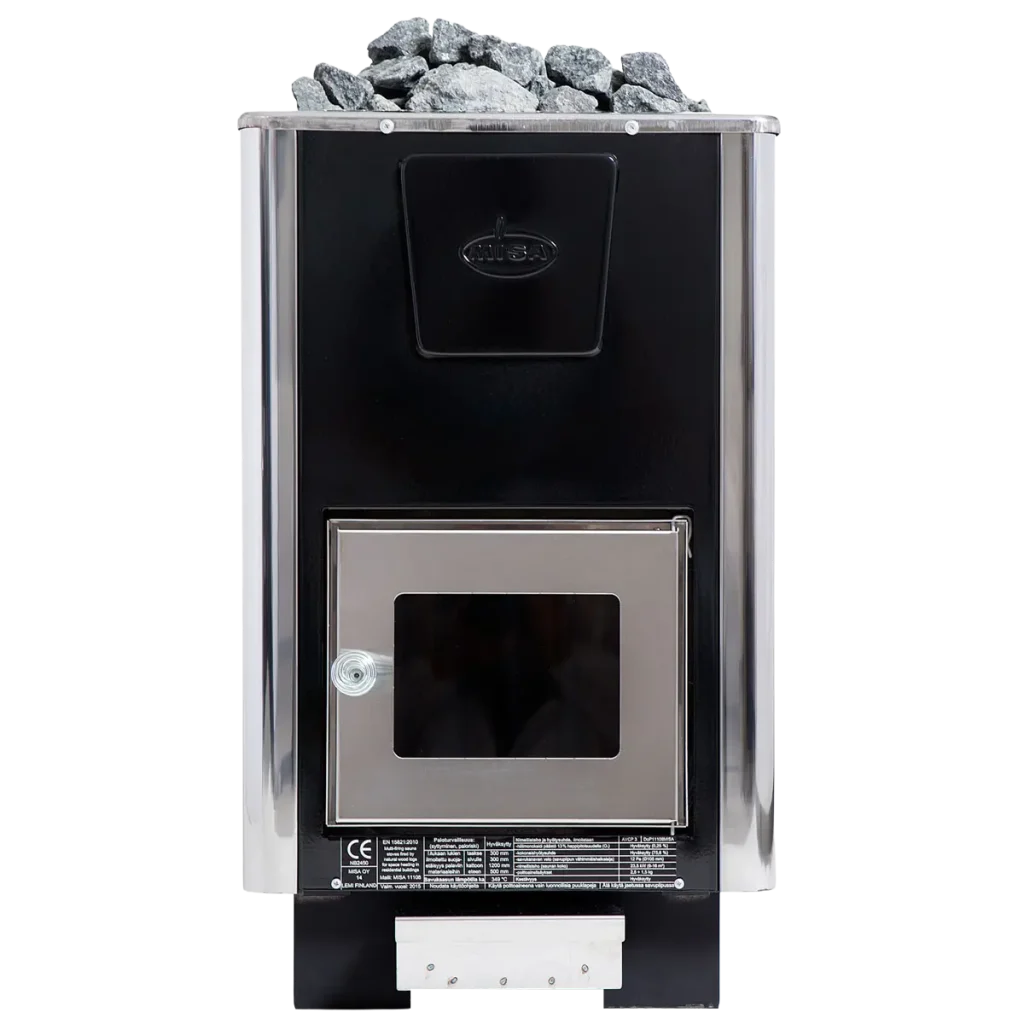
Misa 111–113
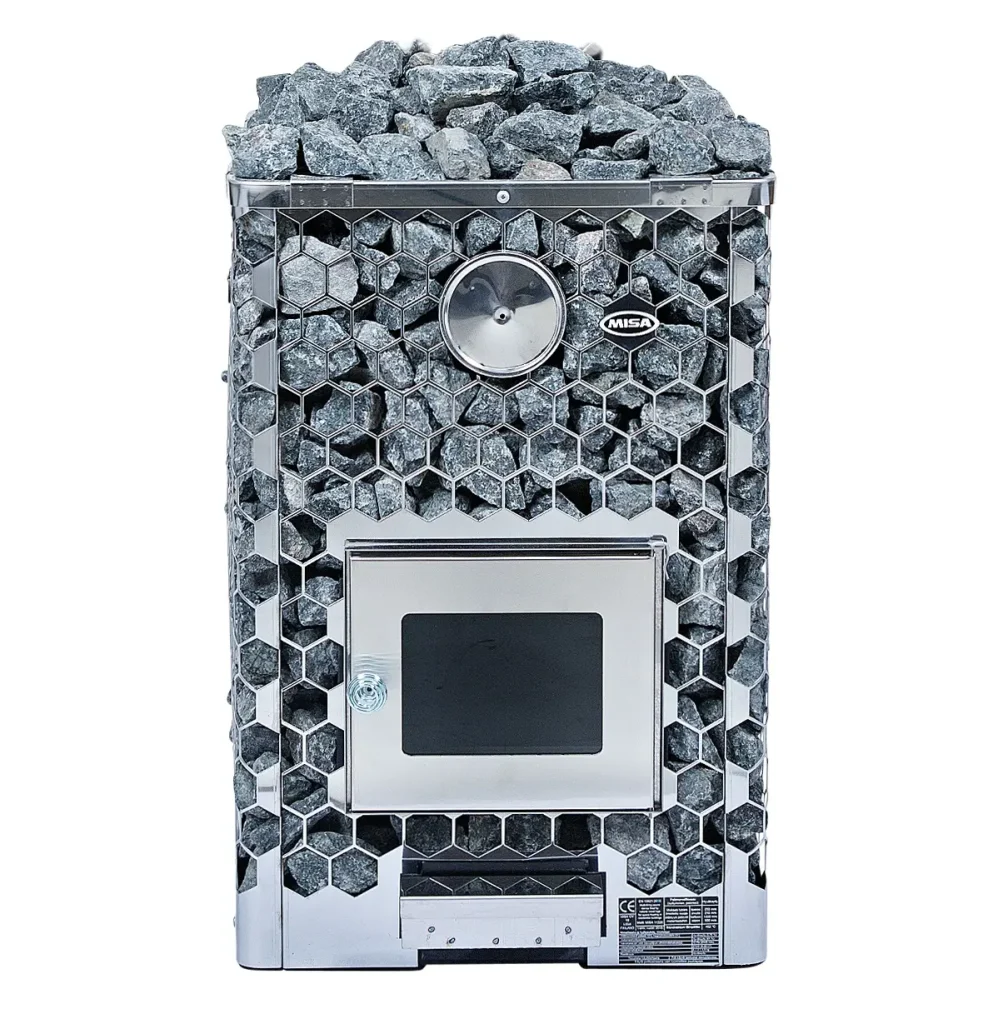
Misa Kiviset
Misa HEV1
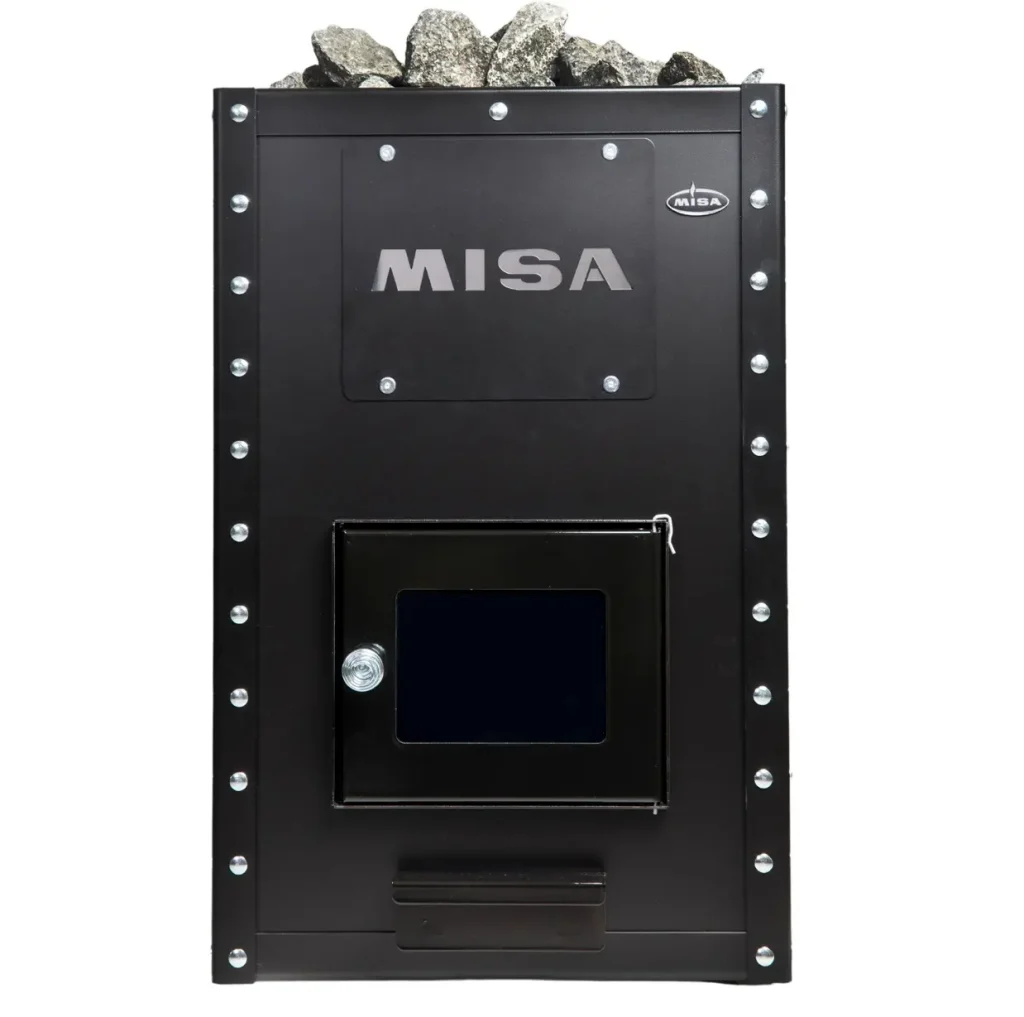
Made in Finland since 1956, Misa’s wood sauna stoves are known for their superior efficiency, up to 75.6%, which is higher than with any other sauna heater brand and means your heater requires the least amount of firewood possible.
In comparison, none of Harvia’s sauna stoves reach 70s at all, with some models’ efficiency being less than 63%. I’ll discuss efficiency more when we get to Harvia.
Users report Misa stoves are sturdy, don’t ask for much wood, and heat up quickly while also staying hot with less wood.
Recently, my brother-in-law’s dad replaced their family’s old Misa stove with a new Misa, which he had never had to do before because the old Misa was nearly 40 years old! It’s no wonder why he wanted to stay loyal to the brand.
On how Misa stoves are made: Welding the seams of a Misa stove takes around 6.5 lbs of welding wire. The firebox seams are welded on both sides, and thanks to the rounded firebox design, the sides and top don’t have any weld seams, leading to best possible durability for years to come.
2. Helo / Kastor
Helo is the oldest sauna company in Finland/the whole world, founded in 1919, and makes electric heaters and sauna stoves in Hanko, Finland. They use the brand name Kastor for their wood-burning sauna stoves.
I used an electric Helo sauna heater for hundreds of times during my childhood and teenage years when I still lived with my parents (and my dad still used it in 2025, which means it was 37 years old (!) before it was replaced in 2026).

For a while, Helo had an identity crisis, as it acquired other businesses. Even nowadays a “Helo” heater in the US is sometimes identical with a Finnleo and Amerec heater or even with Swedish Tylö, since Helo bought them in 1991, 1998 and 2008 respectively.
That was confusing, as according to Helo, all their heaters were made in Finland, while Tylö claimed all their heaters were made in Sweden. Then where was the below heater made, since it’s a Helo, Tylö, and Amerec at the same time?

Even if you didn’t mind a confusion like this or didn’t care about the origins, this kind of rebranding fails to tell what makes Helo/Amerec/Tylö special. How do you stand out favorably from the crowd when you’re so blended in that people can’t tell your heaters apart?
As years passed, Helo no longer bought other companies but agreed to being sold itself. The merged TylöHelo brand was renamed to Sauna360 and has been acquired at least twice since, the American Masco (Watkins Wellness) being the latest acquirer in 2023.
While corporate history like this can bore some readers, all this is actually good news. As Helo is no longer expanding, and TylöHelo has been buried, Helo is finally able to shine simply as Helo again. The identity crisis is long gone, the Helo heaters I know and see being made in Finland and most of them not sold by any other brands.
Helo heaters also clearly have their own defining features, meaning Helo is doing things other sauna brands aren’t. For example, some of their heaters come with an adjustable stone compartment, integrated lights and/or a steamer that you can remove and replace with more sauna rocks.
Hanko (chrome)
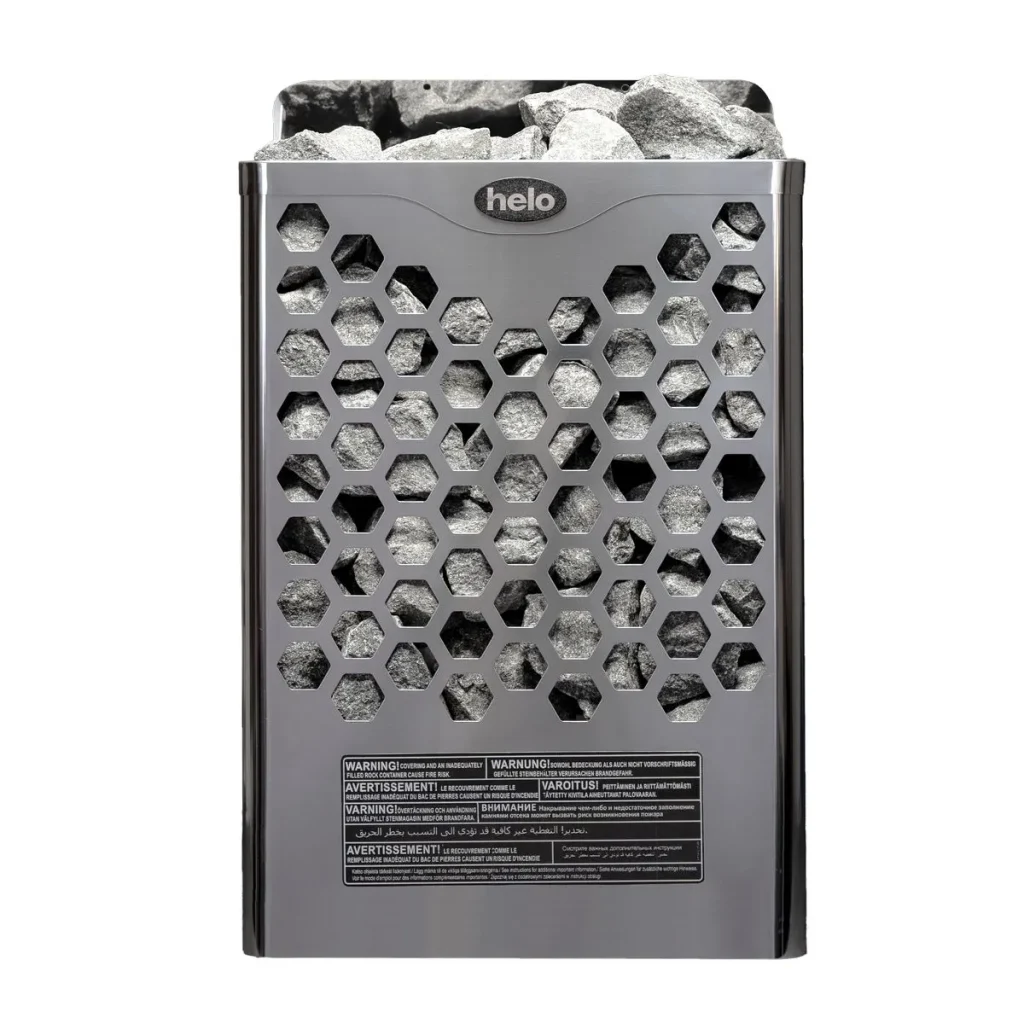
Vienna LED
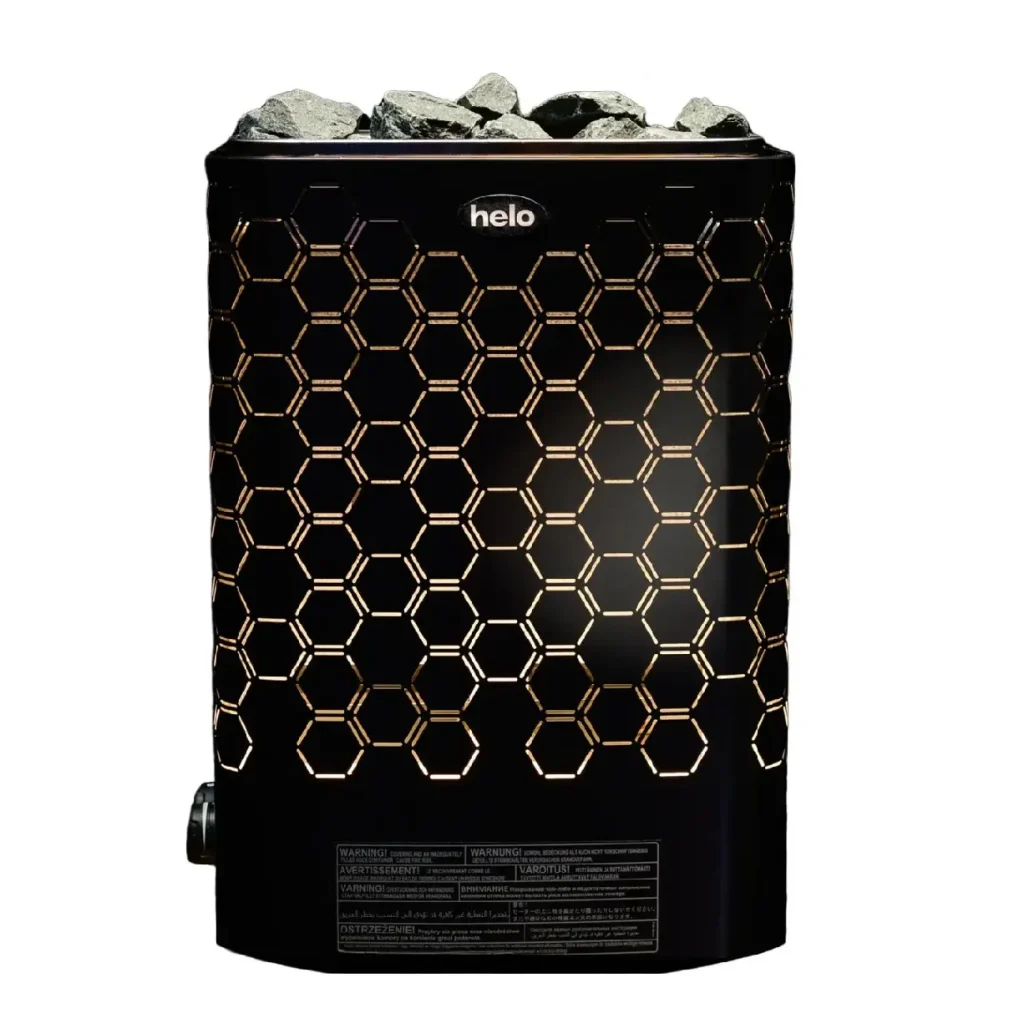
Hanko (black)
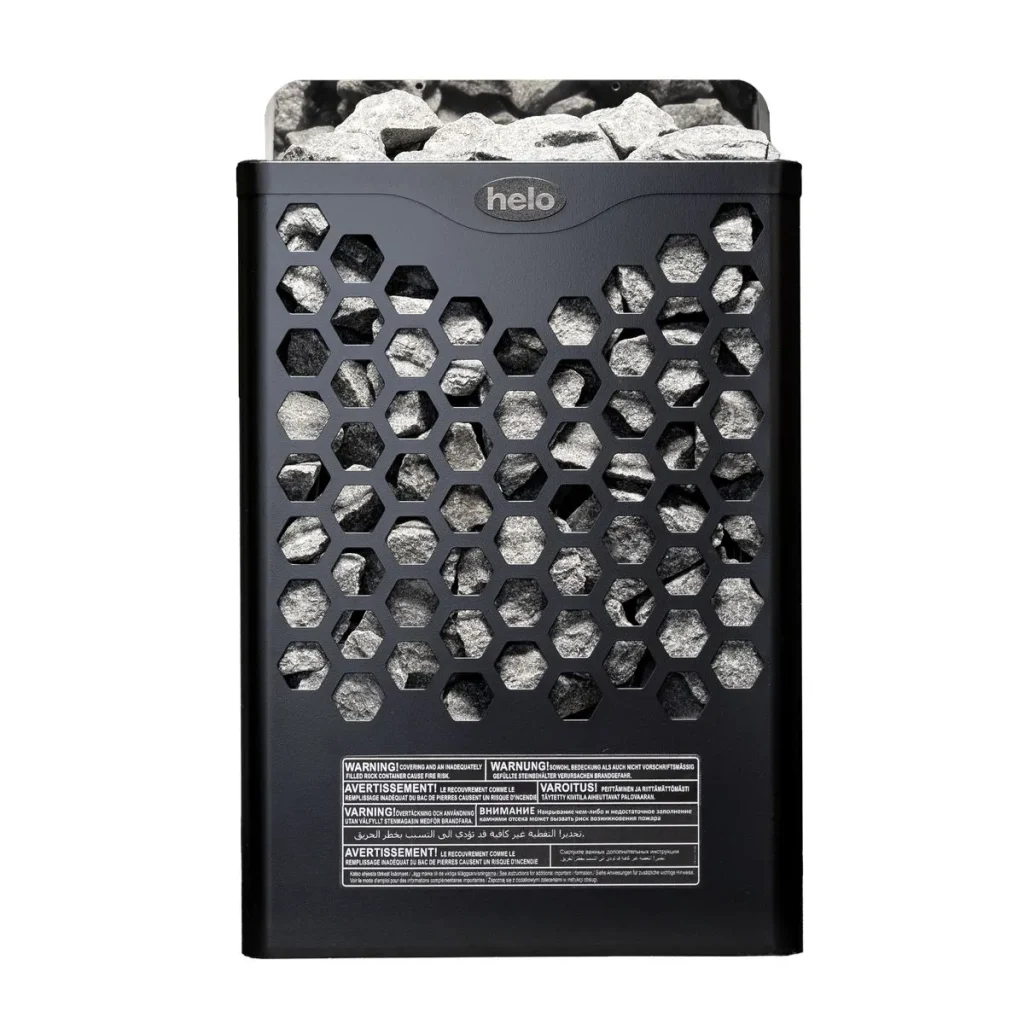
How does the handmade Helo Hanko sound with its built-in controls, a 12-hour timer, and a continuous operating time of 3 hours?
Even though it’s light and compact, the stone capacity is 70 lbs, which is very nice for a seemingly small wall-mounted heater.
If your sauna room layout asks for it, the heater controls are reversible, which means they can be moved from one side to the other.
Or what about the beautiful Vienna LED, also with built-in controls, bringing you warm 2700K glow through its honeycomb-patterned front and side panels?
All this in US-friendly wiring of 230–240V 1N~/ 2~.
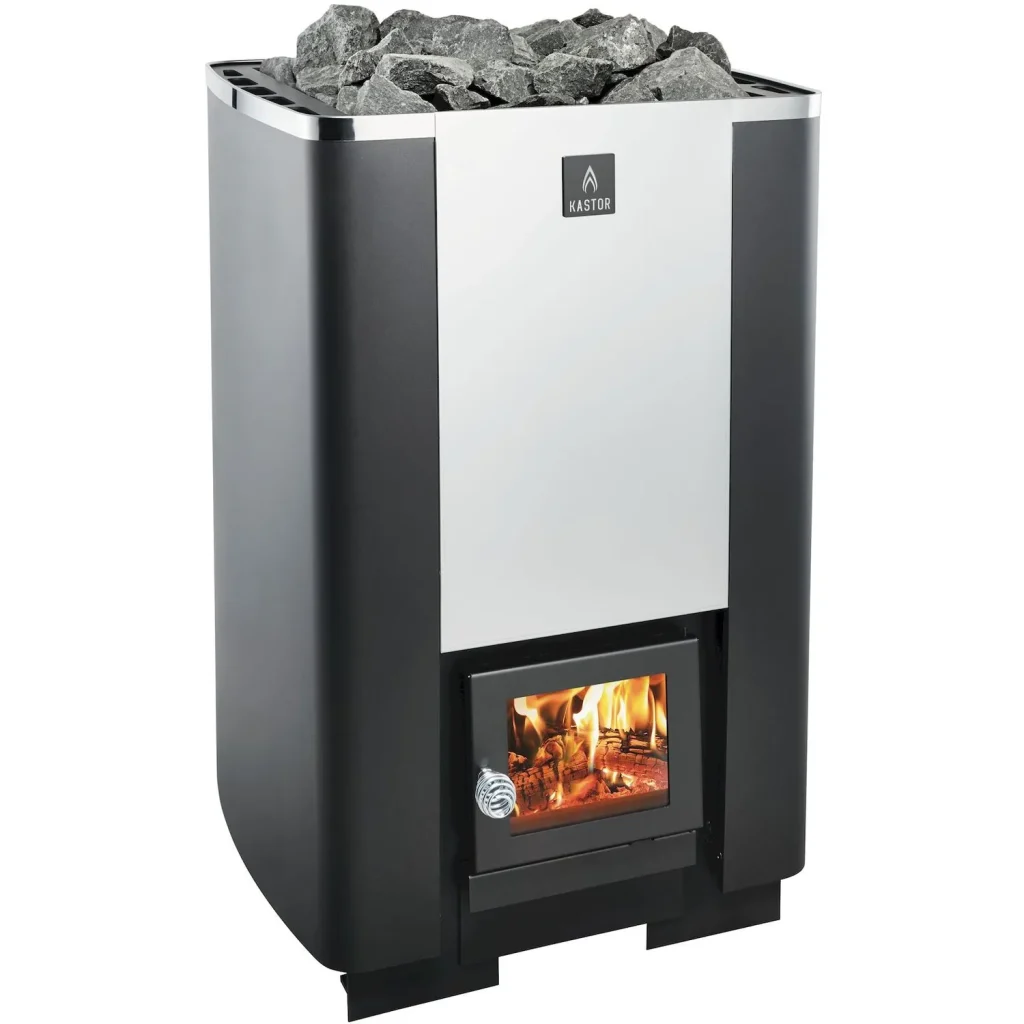
Moving on, what about Kastor, Helo’s wood sauna stove brand? Kastor has an amazing reputation, is made in Finland, and is known for quality, longevity, and great design.
Kastor Karhu 30 & 40
Kastor Saga 22 & 30
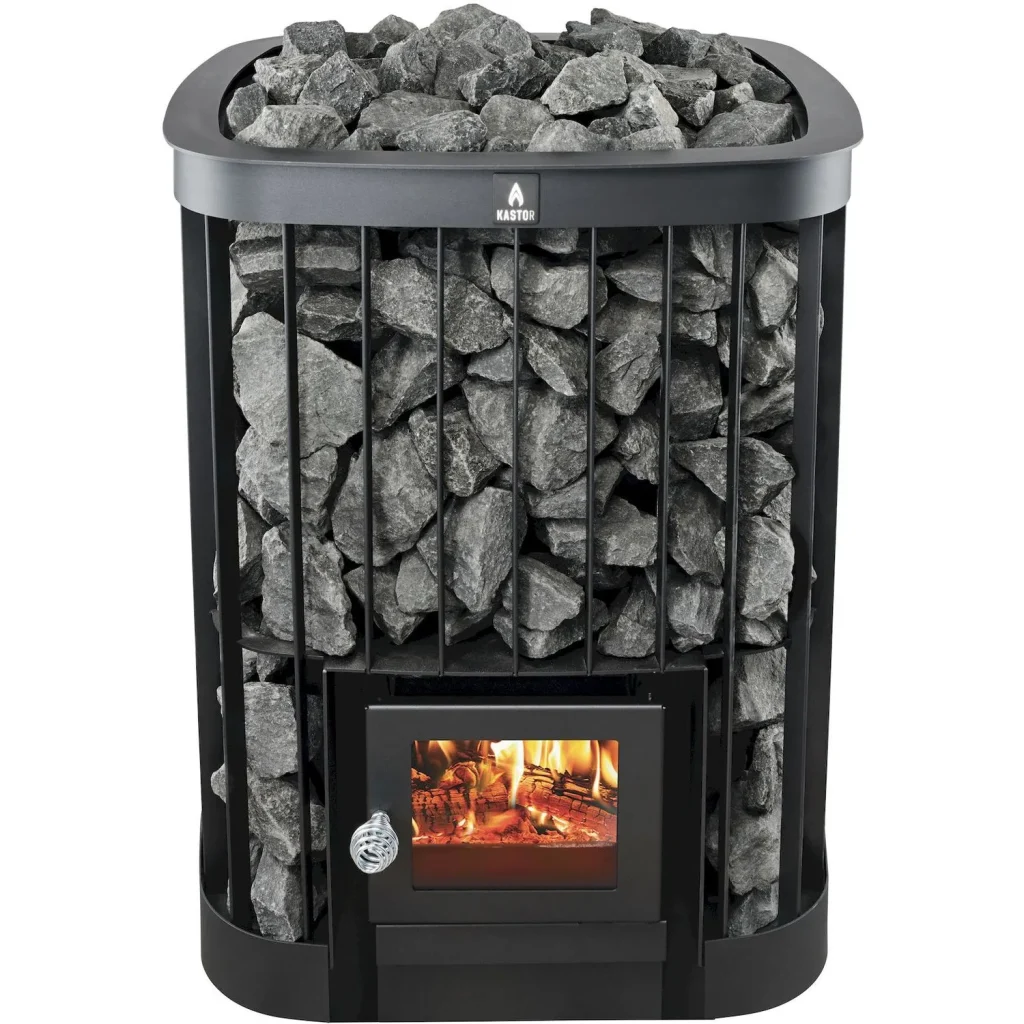
We have an old Kastor stove on our cabin property, and it feels like we’ve been using it forever. Similarly, I had an Irishman comment on one of my posts, and got the impression he was pleased with his Kastor as well. Without a doubt, Finnish users hold Kastor in high regard and equate it with quality and durability. I have heard countless stories on how great Kastor is and can only agree.
The reason Kastor stoves might not be your choice, however, are their prices. They are (much) more expensive than other similar sauna stoves. In Finland, where both Kastor and Harvia stoves are made, Kastor Saga stoves are nearly 40–80% more expensive than the most similar Harvia stoves (Harvia Legend 240 & 300).
The same is true for Kastor Karhu heaters and their closest equivalents from other brands: there’s a considerable price difference. But if it’s not an issue for you, Kastor is a beloved and heavyweight champion with a long lifespan.
“An impressive piece of hardware” is what one reviewer wrote in their 5-star review for Kastor Saga 22, which is well said.
3. Harvia
Harvia, founded in 1950 in Finland, is the most known and most sold sauna brand in the whole world. They have a wide selection of electric sauna heaters and wood sauna stoves.
Even today, they still make around 80% of their heaters in Finland although most of them are sold overseas, with the US being the biggest market (and Japan and even China showing new-found interest).
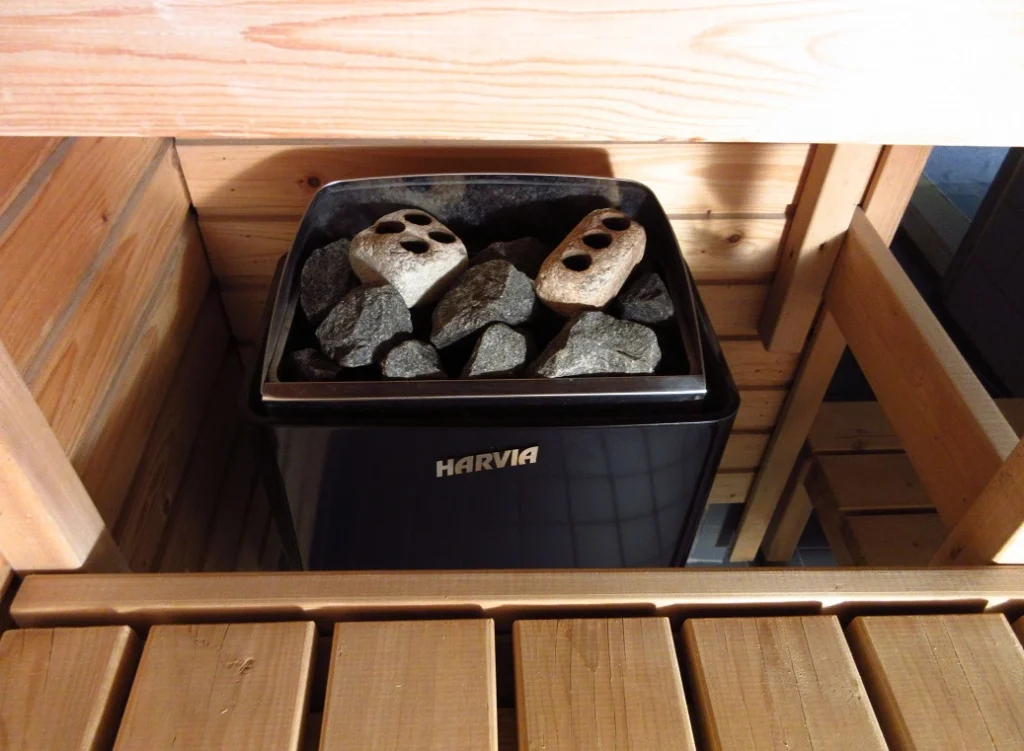
This is what Harvia sauna heaters mean to many Finns: they’re legitimate, dependable, combine tradition with innovation, bring back memories, and just feel right.
When you walk into any sauna and see it has a Harvia sauna heater, there’s nothing else to do but just nod in agreement and start saunaing. That’s how reputable Harvia is.
Only those Finns who have more experience with other sauna brands can be a bit more critical: just because Harvia is everywhere, it doesn’t mean it’s the best. It simply means they have the most streamlined production chains, which also translates to more affordable prices. Others can’t compete with that volume, so instead, they make fewer and better products.
I see some truth in those views. When you dive deep into different sauna heater features, you can see that Harvia rarely offers the strongest products: thickness of the firebox is thinner than with other brands and as discussed above, efficiency is lower, which means you need more wood to heat the sauna.
The firebox is significant, as that’s where sauna stoves most likely break: one day, often after 10–15 years of use, your sauna stove dies, and when you go examine it, you notice there’s a huge hole under the sauna rocks. The firebox ceiling had thinned so much that fire finally burned through. That’s exactly how my old Harvia stove died as well.
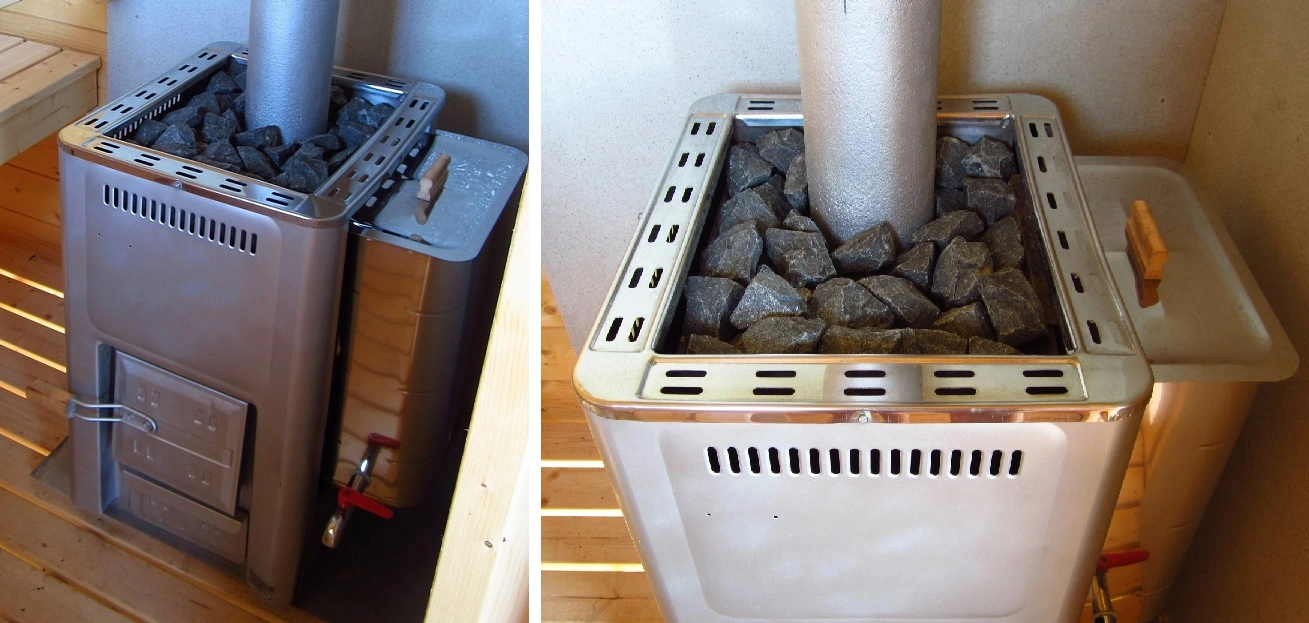
The lack of efficiency, on the other hand, you don’t even realize at first because the stove works great and your sauna is getting hotter as we speak. It’s only after saunaing that you wonder why it took so much wood to heat your not-that-big sauna (even in the summer) and why the ash box is so full even though you empty it after each use:
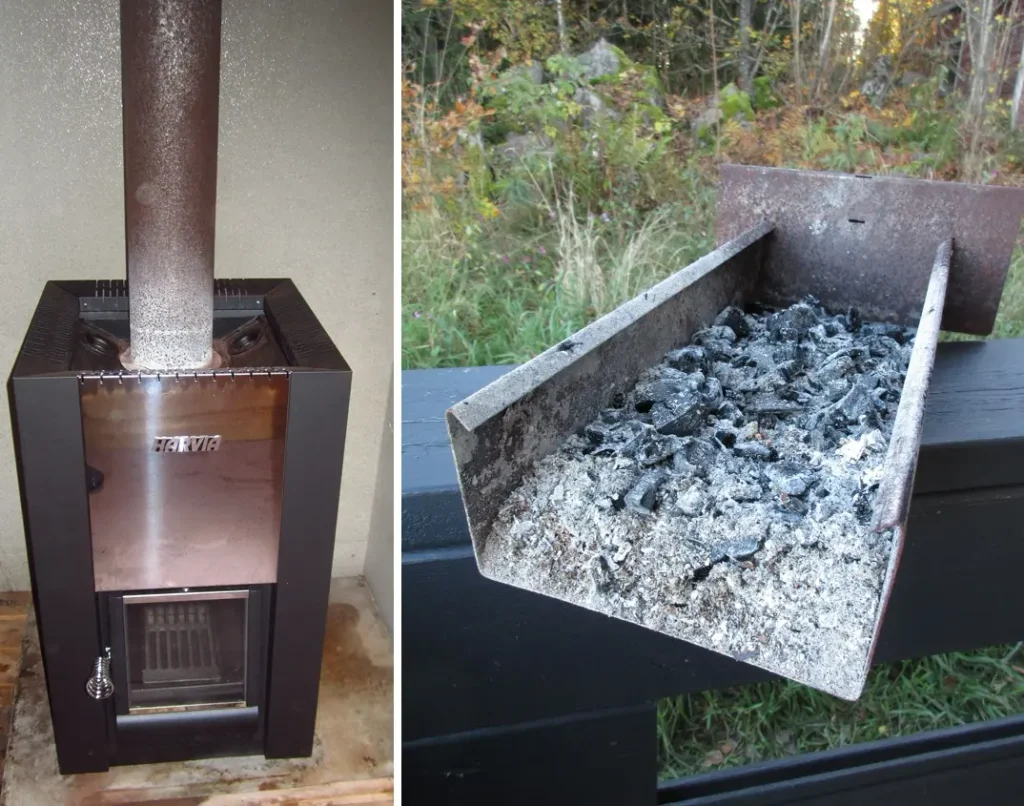
So yeah, this is what it looks like when your sauna stove (Harvia Linear 16) is totally fine, but nothing special. When I bought it in January 2024, I originally got it for my tenants. It’s only in 2025 that I started using it myself. It’s certain I will be replacing it with a Misa, Kastor, or Mondex in the future (or maybe even Harvia Legend), but I expect that moment to be very, very far away.
To sum up, Harvia as a brand is genuinely very good, just not the very best of the best, and many or even most people are more than fine with ‘very good’ and don’t need anything better, especially when that ‘something better’ costs (a lot) more.
Let’s move on to those specific Harvia heaters that are worth raving about. (Harvia KIP, by the way, is not among them, as it’s very “basic” even according to Harvia’s own words.)
Cilindro
Forte
Legend 150–300
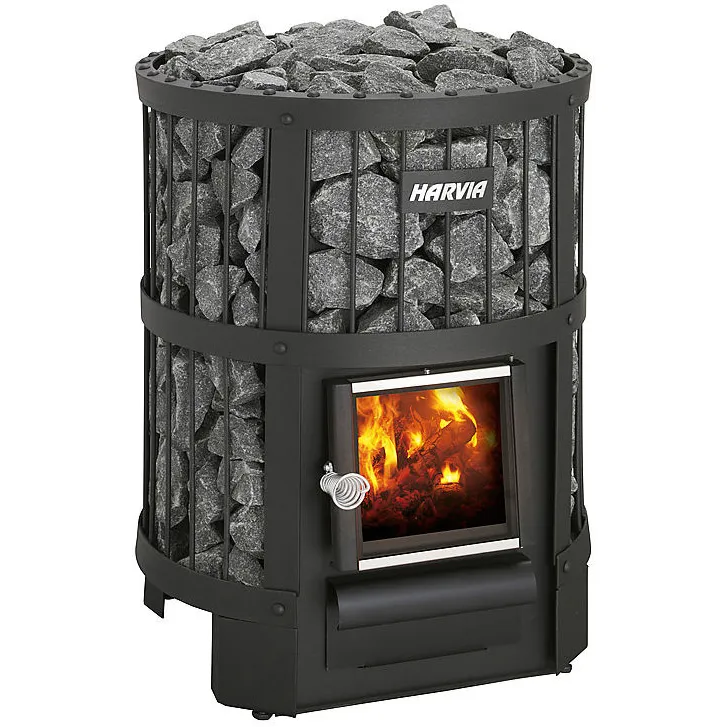
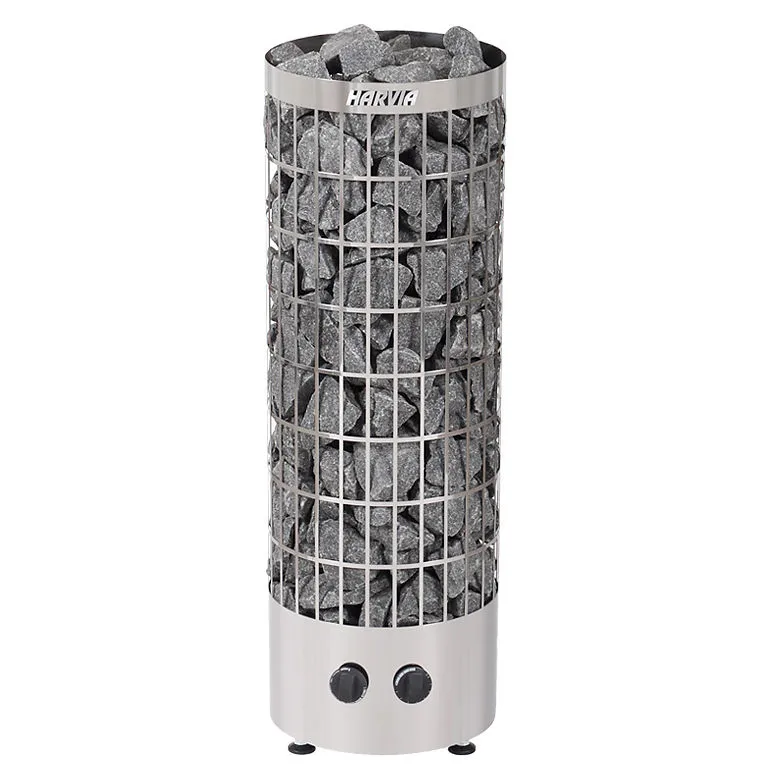
Harvia Cilindro with built-in controls is deemed the best electric sauna heater according to hundreds of Finnish reviewers. (It’s also the exact heater I surprised my dad with, so I will review it soon.) The main benefits of a rock-heavy and freestanding pillar like this is that it offers the most long-lasting löyly and even heat.
A stone capacity of 176 lbs simply gives you much more intense löyly than a traditional wall-mounted heater with 44 lbs of sauna rocks ever can, there’s no escaping that. In addition, the steel grid allows the hot stones to spread heat more evenly than an enclosed heater that mostly radiates heat from the top.
You get the most out of a pillar heater when you’re able to pour water on all of the rock surfaces: you get feistier löyly when pouring water on the top, and softer steam when pouring water on the sides.

As heaters with more sauna rocks have become more popular in recent years, many people think they’re always better or even the best heaters out there.
I personally agree with that view (Cilindro definitely wowed me in a way Harvia KIP never can), but it’s not for everybody. Especially for those who prefer quicker sauna sessions (and maybe more frequently), a heater with less rocks heats more quickly and gives you higher temps more effortlessly. It also produces less löyly.
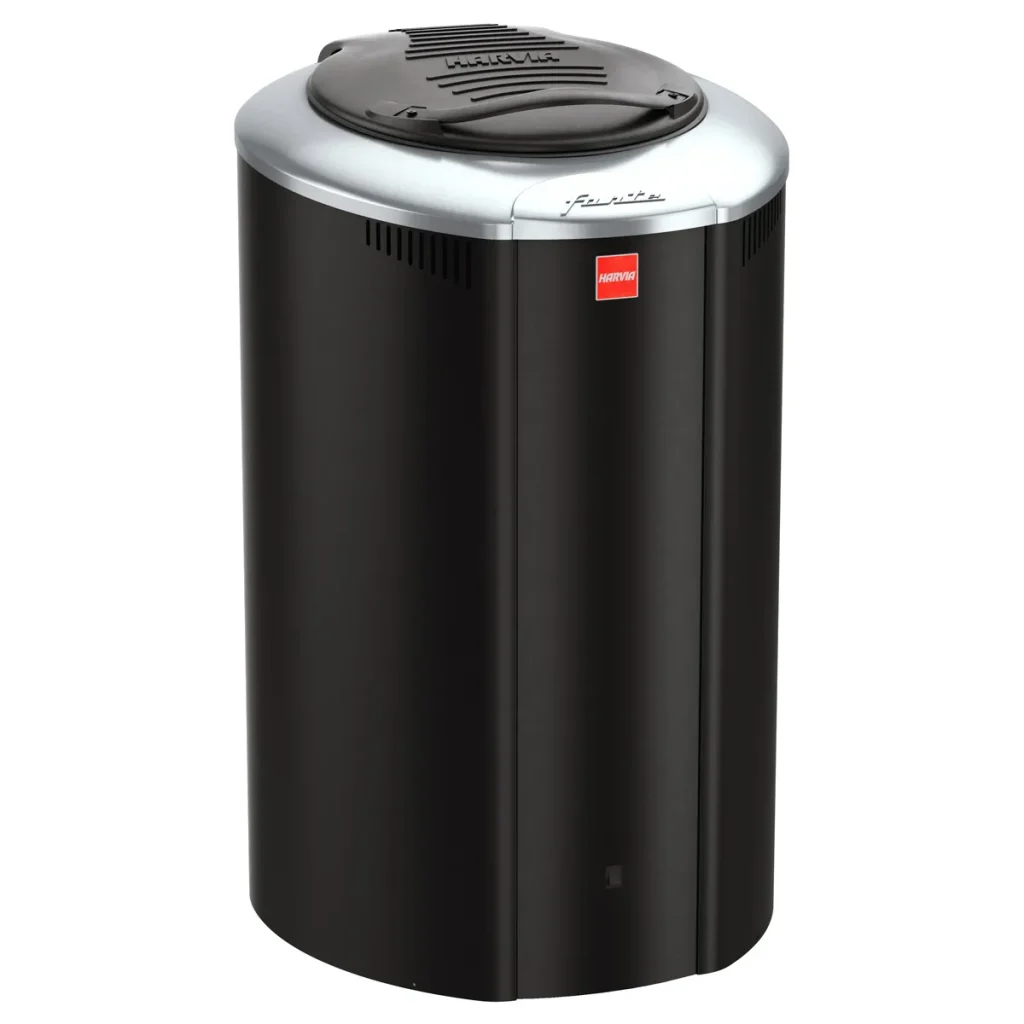
Harvia Forte, on the other hand, is a unique innovation, as it’s always on and ready for use because it comes with a standby heat feature; when you have that on, you can sauna any time, even on a whim, since it only takes 5–15 minutes to reach a pleasant sauna temperature.
Its excellent thermal insulation makes sure the temperature stays high enough in the stone space with as little energy as possible. Using the ECO-mode saves electricity the most, while still not shutting off the heater.
Reviewers love Forte for its soft, moist, and pleasant löyly that won’t run out even when there are several bathers. When you leave the cover opened for longer, you get more hot and intense löyly.
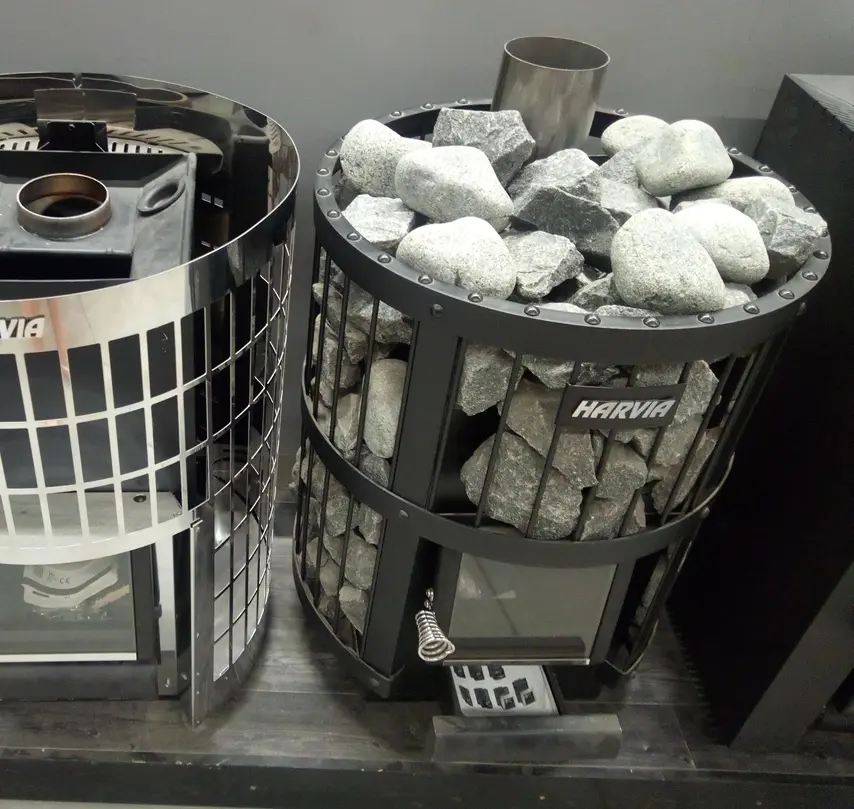
Finally we get to Harvia Legend, the most loved löyly sauna stove from the brand.
One reviewer describes it all (translated from Finnish): “Best löyly I’ve ever experienced. The wood burns very cleanly. I need much less wood than with my previous heater. Very moist löyly with lots of rocks, the sauna room stays hot for hours after the fire has gone out.”
Legend is slightly more efficient than Linear 16, so it does really burn wood more cleanly, but the efficiency score (68%) is still below those of most competitors.
4. Mondex
Mondex could be ranked much higher, but since their signature electric heaters all require 400V and therefore don’t work in US homes, I can only showcase their wood sauna stoves, which they only have two of.
Mondex was founded in 1992 in Ylivieska, Finland where they design, engineer, and make all their sauna products.
They have always had their own style and appeal instead of copying other sauna brands:
Mondex Motti
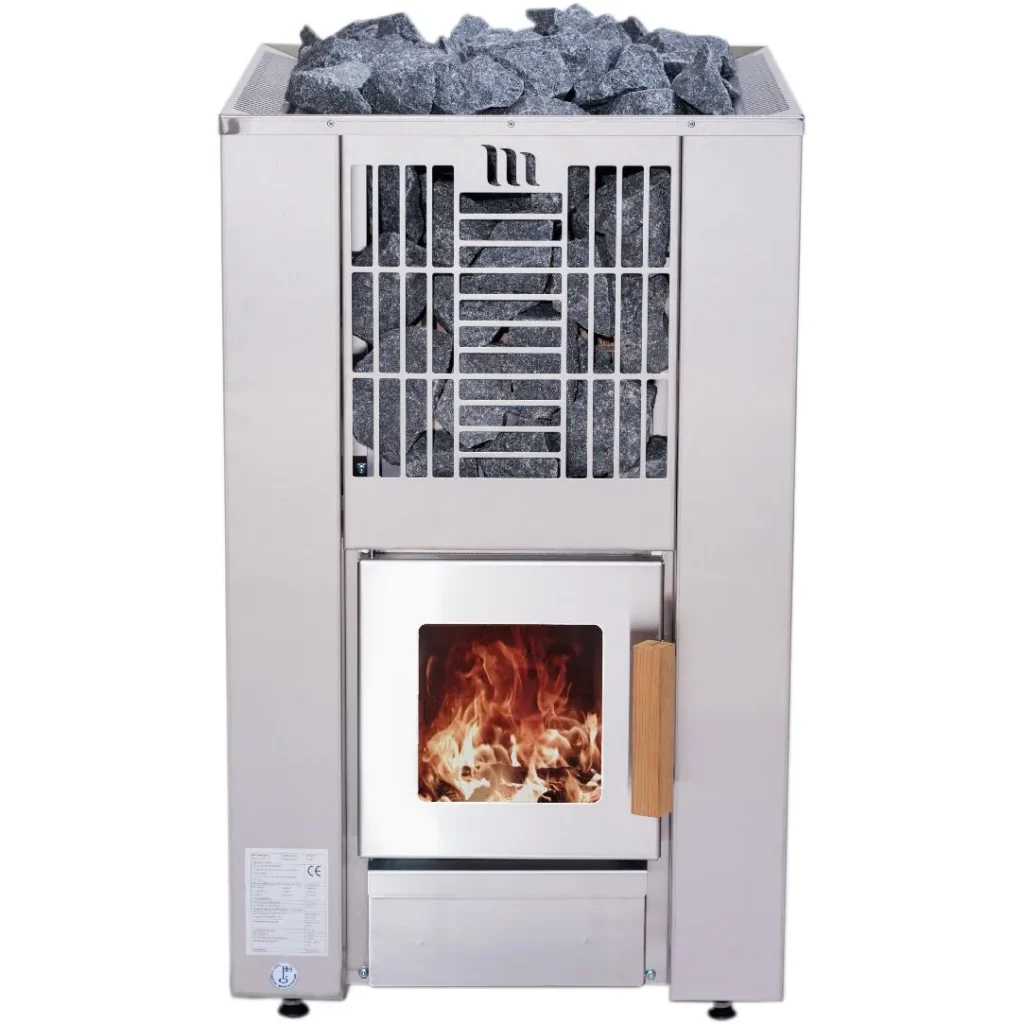
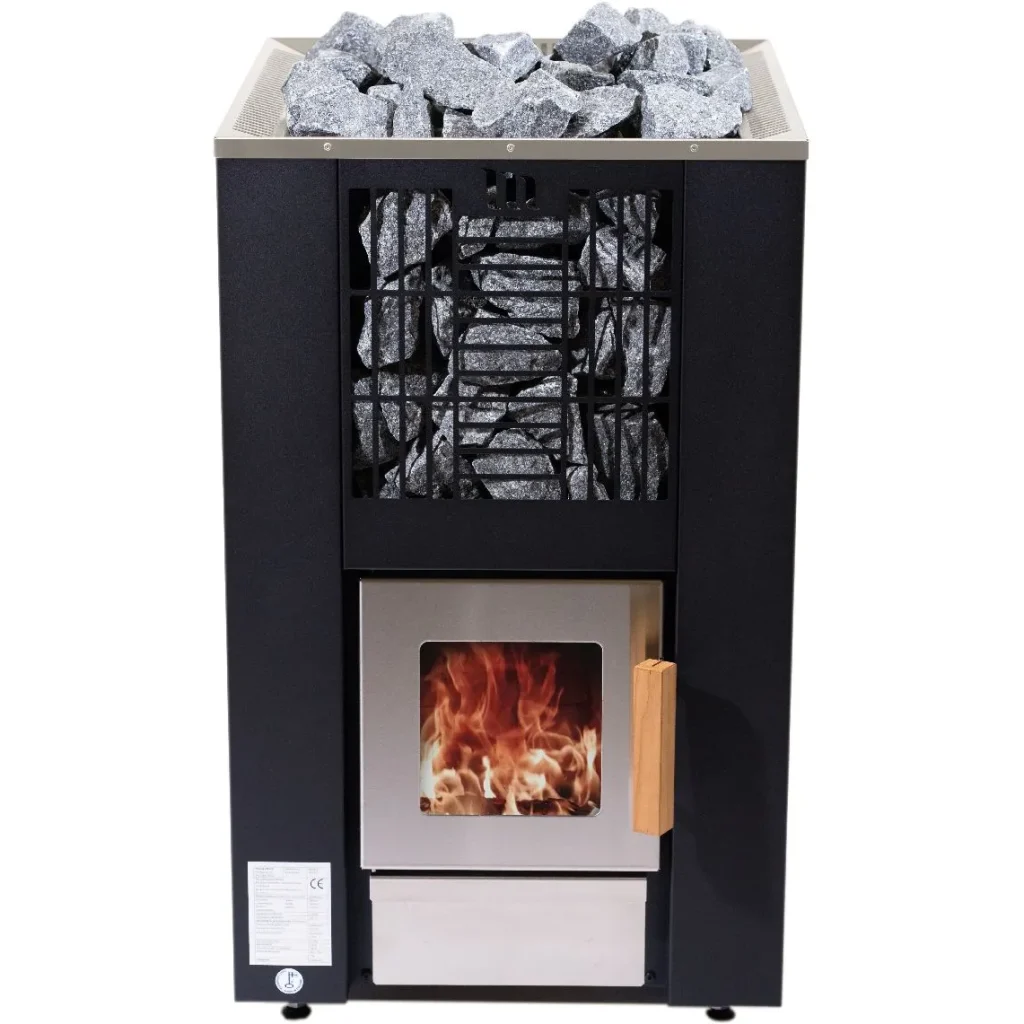
Mondex Klapi
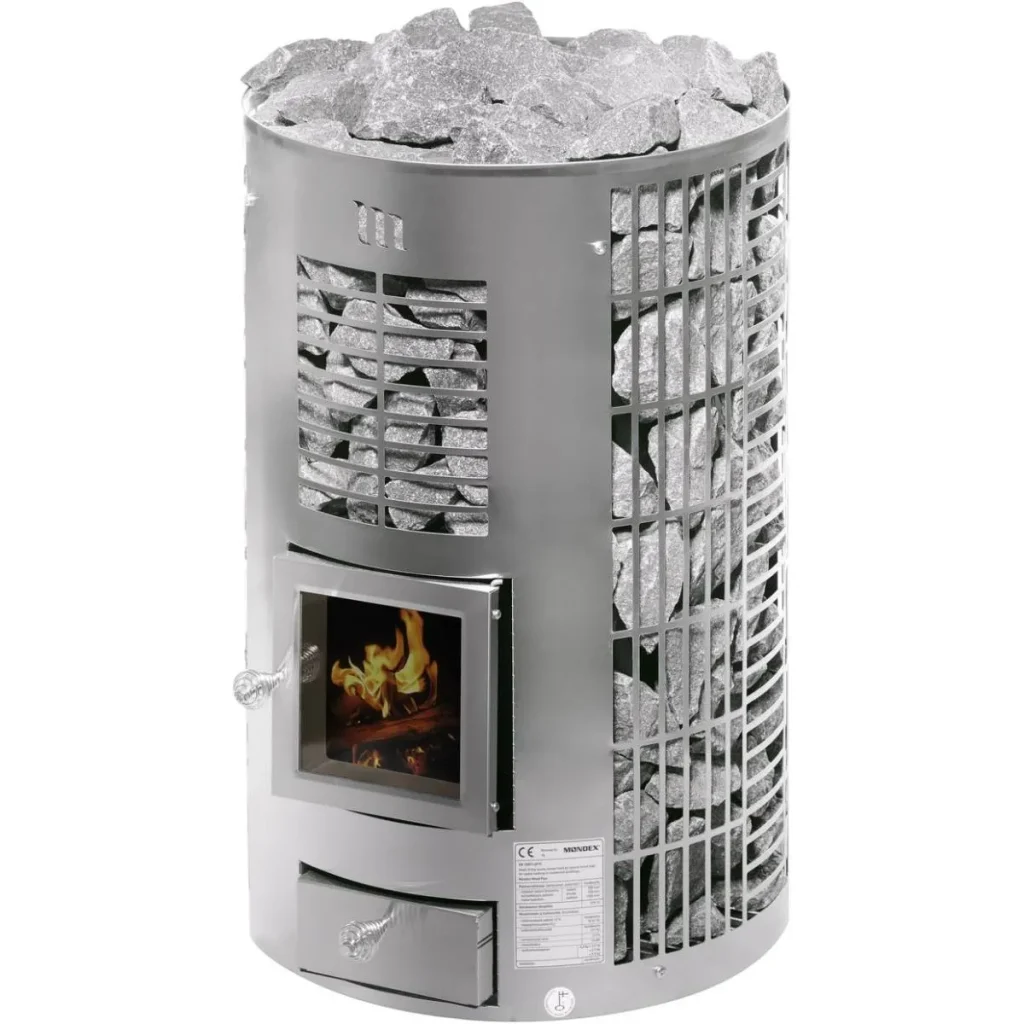
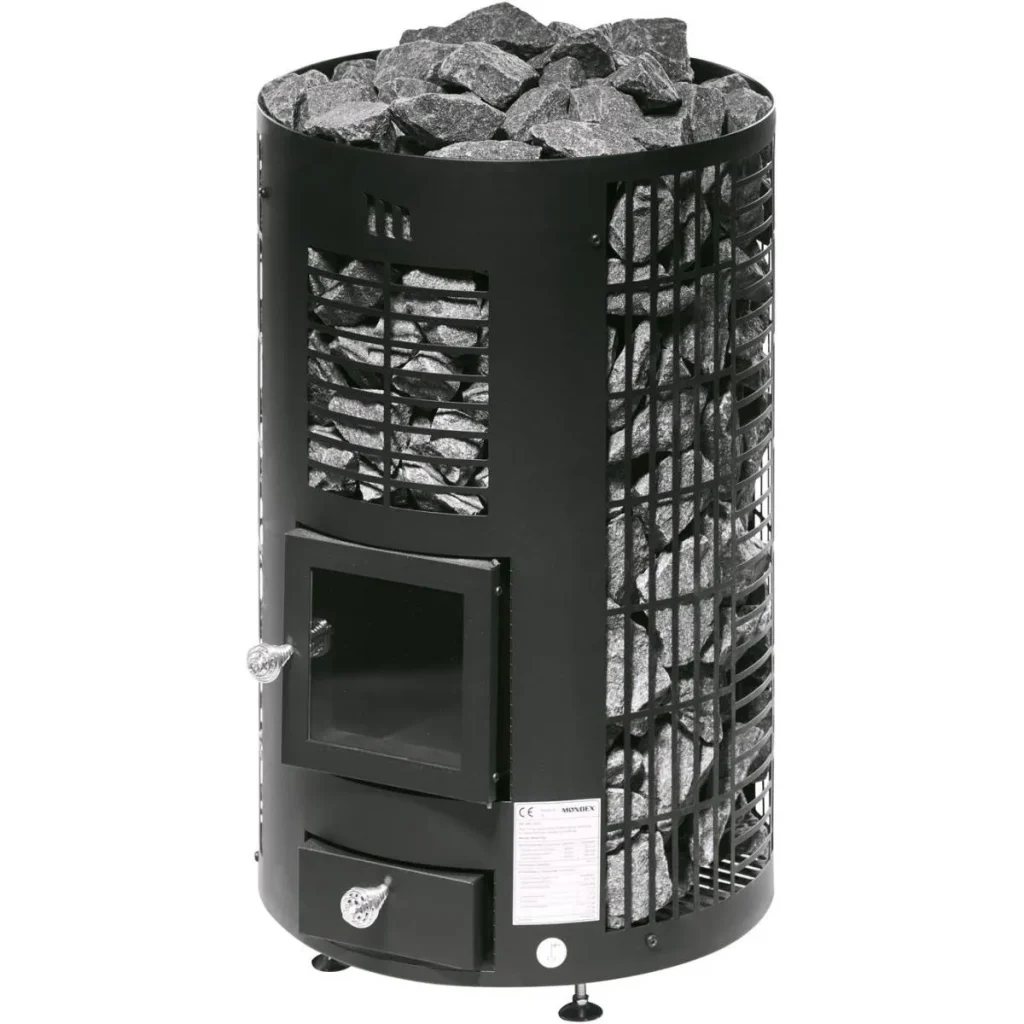
Assessing the most important specs, both Klapi and Motti’s firebox ceiling height is on the thicker side (8 mm), which extends their longevity. Efficiency is 71%, meaning a Mondex stove heats your sauna room with less wood than many competitors, such as Harvia Linear 22 whose corresponding score is 62.3%.
5. IKI
IKI is 100% handmade in Finland, founded in 1997. It was the first sauna company to introduce the open steel grid design that many others have copied since.
IKI makes both electric and wood-burning sauna heaters. The latter, their epic wood-burning stoves, are what IKI is most known for. I had the pleasure to review their most popular model, IKI Original.
With an IKI heater, you get durability and the best quality possible, but some learning and new skills may be required when using their wood-burning heaters.
That’s because they don’t have a grate or an ash box like all other stoves. It’s a big deal, since the ash box is normally used for natural ventilation too.
IKI’s response is that a grate and an ash box are simply not needed because the wood burns so cleanly.
There are some other distinguishing features as well, like the round fire chamber the door of which opens upward unlike most other stove doors. Some users love these features, whereas some think they’re impractical.
Some love the original look, while it makes others think of fish traps and washing machines.
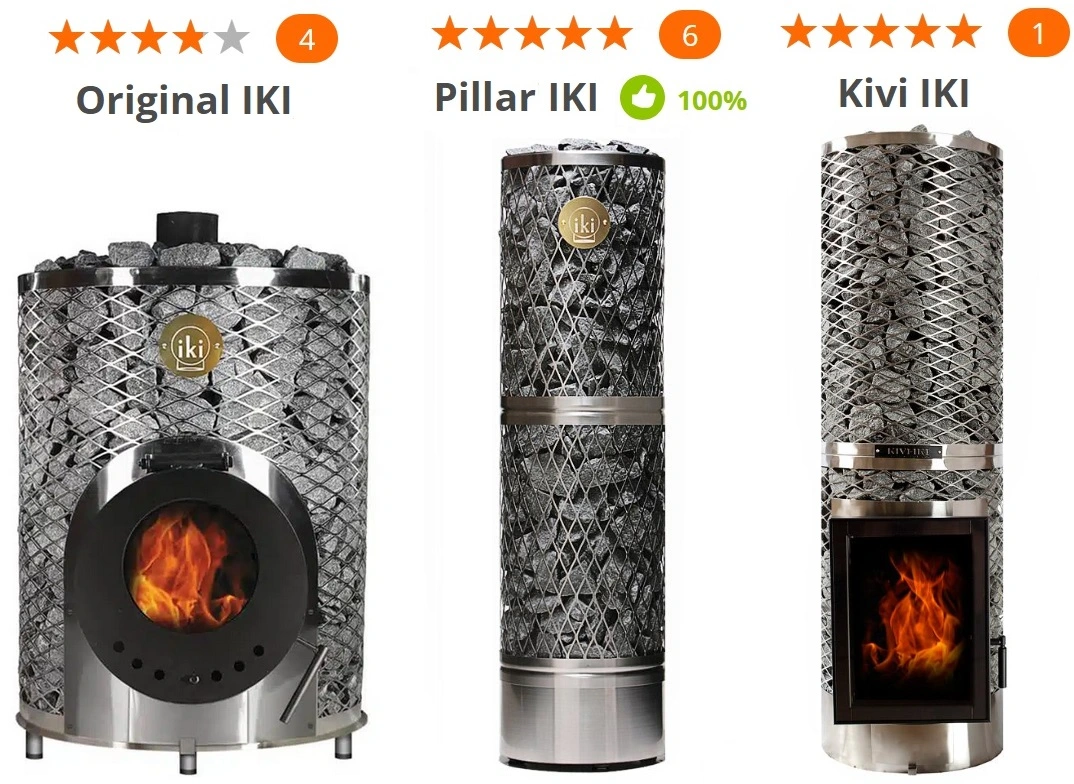
I’ve seen some people on Reddit wonder whether they should buy an IKI because they’ve heard somewhere it’s the best. The answer is fortunately simple: IKI is the ultimate löyly sauna heater, meaning it’s in its element at lower temperatures and lots of pouring water on the sauna rocks.
So if you’re one of those people who wonder how to get their sauna to that “sweet spot” of 200+ degrees and whether to pour water on the sauna rocks or not 😄, then IKI is definitely not for you!
Since the rock mass in IKI sauna heaters is gigantic, several Finnish reviewers say they get amazing löyly at just 130–150 F (55–65 C).
Regarding electric IKI pillar heaters, many combine them with a Huum UKU WiFi control unit, which together cost around $4,200–$4,500 (shipping and sauna rocks NOT included). Now that you can get a high-quality, fully Finnish-made Narvi WiFi pillar heater more affordably (with shipping and taxes included), that’s a more compelling deal.
6. Huum
Huum, the first Estonian brand in my list, was founded in 2013, meaning it’s still in its infancy compared to many Finnish sauna brands.
Because of its young age, Huum doesn’t have the track record that reputable Finnish brands do.
Although HUUM sauna heaters are extremely hyped by salespeople and therefore wanted by the public, the reality is quite different than many people would expect. With Huum, the more research you do, the uglier it gets.
As evidenced by such few reviews below, Huum is an unpopular brand in Finland. That’s because Finns know what to expect from sauna heaters unlike many others and are thus less gullible with everything related to saunas.
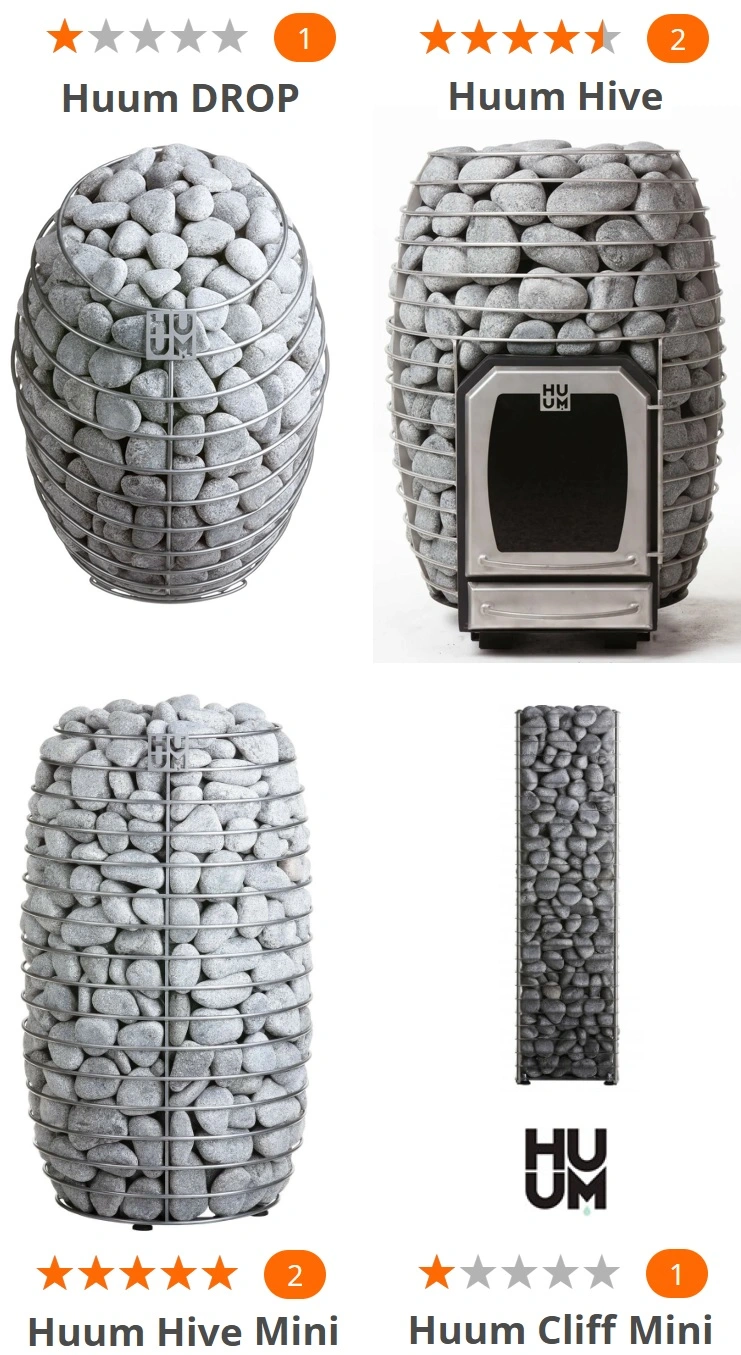
Based on countless reviews (both Finnish and English), this is what people have to say about their Huum heaters:
🔶 “the heating elements “melted,” to which Huum responded it was a user error; 5-year warranty is a joke”
🔶 “wire harness nearly burnt, heater has been in use for under 1 year, notification of defects has been made extremely difficult”
🔶 “warranty doesn’t cover heating elements that are the weakest link of the entire product”
🔶 “there’s too little space between the heating elements, so it’s best to use fewer stones than Huum recommends”
🔶 “been using the heater for two months, now there’s a weird smell while heating, like something’s melting”
🔶 [about Huum Cliff Mini]: “When stacking sauna rocks, the support beams keep coming off in the back, while the ones in the front keep bending. Either this exact product is defected, or the heater is just a toy. With this price, you expect better quality.”
To be fair, there are happy Huum sauna heater owners out there too. I wouldn’t even discuss Huum here if I thought it’s pure garbage.
But I do still think these issues should be emphasized, since so many people buying Huum honestly think they’re buying the “best” heater out there. Even when they’re forced to replace the heating elements (sometimes ALL of them) within a few years of use, and at their own expense!

One thing never mentioned on Reddit or anywhere else is that sauna heaters are much more affordable to make in Estonia than Finland; yet, Huum heaters are more expensive although the quality is inferior to the best sauna heater brands.
In 2024, the median salary in Finland was €3,160, while the Estonian equivalent was only €1,641. This means sauna companies in Finland pay their sauna heater employees higher salaries than what is the case in Estonia.
This translates to Huum profiting much more per heater. How does Huum justify their overpriced heaters? The answer is they don’t have to, as so many people just love the aesthetic of Huum heaters!
The most important thing to understand with Huum is that you’re paying for the looks and the app. That’s where Huum’s assets lie instead of any fundamental sauna heater craftsmanship.
What Huum really is the best at is marketing. I’d say they’ve done a brilliant job at convincing huge crowds of their heaters’ superiority although the evidence speaks to the contrary.
Since Huum is so young, it’ll take a long time to see what quality they’re truly able to offer. If we think of my dad’s retired, 37-year-old Helo heater, for any Huum heater to reach the same age, it would have to be partly functional even in 2050 (!). Right now that seems impossible.
If you absolutely want a Huum sauna heater, the wood-burning ones have a better reputation. If you get an electric model, make sure it comes with a separator case (also called an air tunnel), as it’ll protect the heating elements from warping and breaking.
7. Saunum
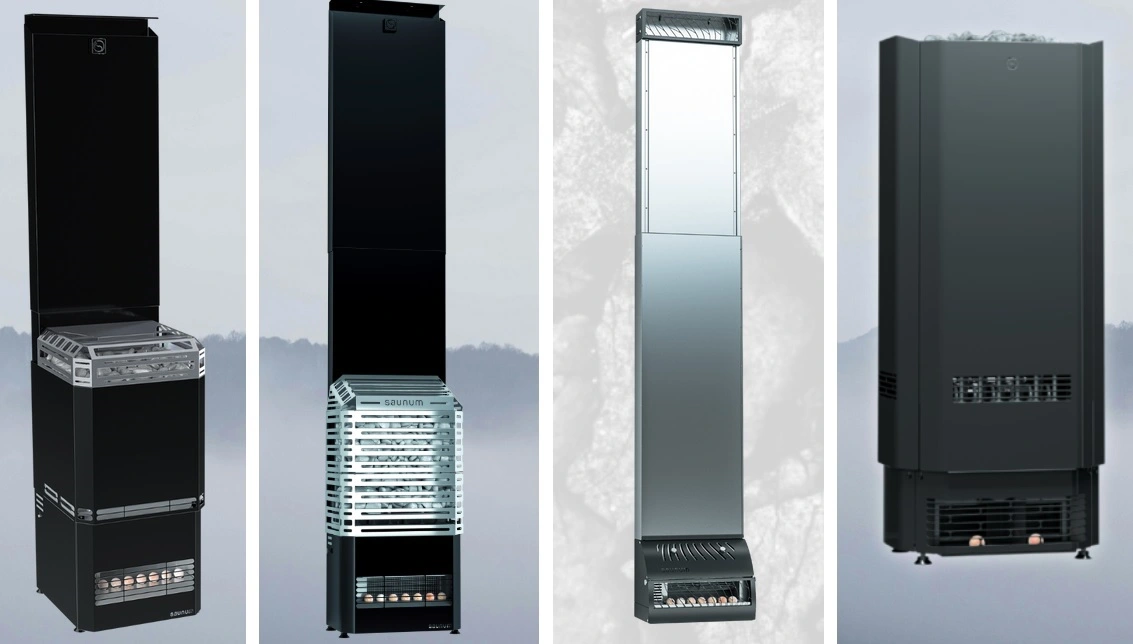
This Estonian brand deserves to be on this list, as it’s the sauna world’s biggest innovation in a long time, but since it’s such a new company (its heaters have been available in the US since 2023), it can’t be ranked any higher at this stage.
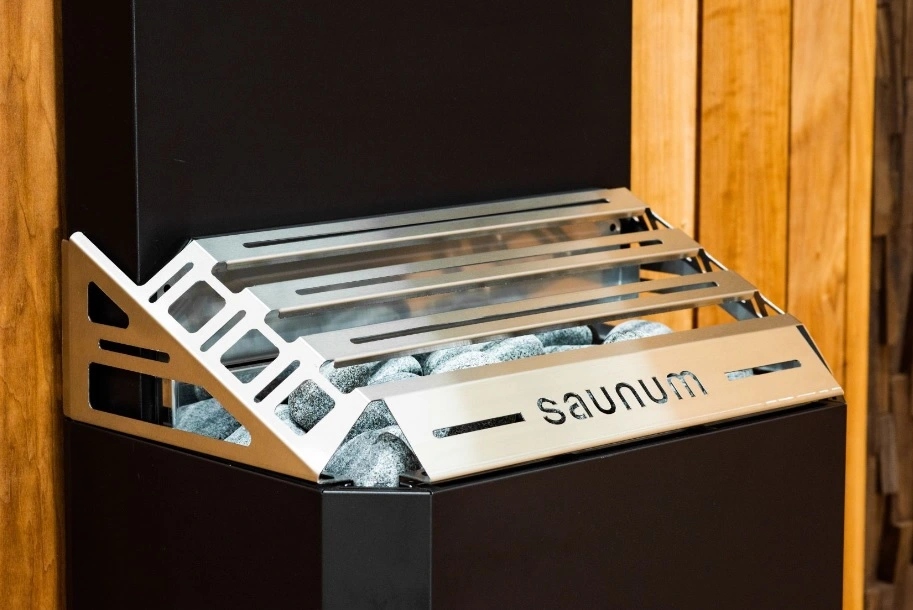
Even the mere look of Saunum sauna heaters is enough to tell you that they are something else.
The reason for their height is the blending chamber where hot air from the ceiling and more oxygen-containing cool air from floor level are mixed and then circulated throughout your sauna.
This not only creates very even heat and pleasant löyly but makes temperature differences in your sauna as minimal as possible.
How this shows in practice is that there is no feisty löyly hitting your head while your feet are cold, but instead, you’re embraced by an even and soft cloud of long-lasting steam.
If you already have a sauna heater you’re happy with, Saunum also sells heat equalizing systems that are “compatible” with other heaters. That way you can enjoy your old heater but bring your sauna experiences to a new, more pleasant and less fatiguing level.
Are there any cons to this bliss? Not necessarily cons, but a few things should be made clear.
🔶 Saunum can’t fix the worst saunas: every regular sauna should have good ventilation. If your sauna doesn’t have any fresh air coming in, Saunum can’t magically make it happen. It can then only circulate the stuffy air present in your sauna.
🔶 Saunum appeals to tech lovers but isn’t a must in any properly built sauna for most people. I, for one, have never had my feet cold and my head burning hot in any sauna; that’s to be expected, too, since it’s not normal for any proper sauna to have an issue like this.
That’s exactly why sauna hats are unnecessary as well.
Only badly designed and constructed saunas can have extreme heat variation, and even then, there are often considerably cheaper fixes than Saunum: these include raising the sauna benches, pouring more löyly instead of going for higher temperatures, adding air vents, and so on.
🔶 As Saunum heaters are pricey, you get the most out of them in specific situations, one of which is if you’re in a wheelchair; people who can’t easily climb and sit on the highest sauna bench are the ones who suffer the most from lacking heat and löyly, since they naturally always rise.
If you’ve saunaed before while in a wheelchair, the difference between that experience and Saunum should feel like night and day.
Frequently Asked Questions (FAQ)
1. What is the lifespan of a sauna heater?
It’s generally said that wood-burning sauna heaters last about 10 years, while electric ones last for 10–15 years.
This varies by model, though. Above I mentioned an old Misa sauna stove that lived for nearly 40 years before it was replaced with a new Misa. This is reflected in the price too; the most affordable heaters (around $1,000) won’t last this long.
For reference, my previous wood-burning Harvia lasted for 20 years (2004–2024) and electric Helo sauna heater for 21 years (2001–2022).
How you use your heater and how often has a major effect: by replacing sauna rocks every 1–3 years and by not stacking them too tightly but allowing enough airflow, you can extend the lifespan of your sauna heater.
2. Is it expensive to heat a sauna and do sauna heaters use a lot of electricity?
Luckily sauna heaters aren’t that expensive to run.
I compared four reputable sources, Harvia among them, and calculated that if you pay $0.12–$0.16/kWh, and sauna every day for 30–60 minutes, it costs $21–$44 a month.
The range is quite wide, as your sauna size, saunaing time, heater type, ventilation, and temperature preferences affect your electricity consumption.
The best way to reduce your electricity bill is to say goodbye to excessive heat, aim for the optimal range of 140–185 F (60–85 C), and pour lots of löyly instead, as it will make the sauna feel a lot hotter.
An outdoor sauna (especially in a cold climate) with an electric sauna heater should be insulated well, since it helps cut down costs.
3. What is the cheapest way to heat a sauna?
The answer is wood, but only when you own a woody property, meaning you get the wood for free if you’re willing to do the chopping.
If you don’t have access to wood, it’s possible it isn’t any cheaper than electricity, as you’re potentially paying for the transportation too.
Solar power will require a huge initial investment, but is of course free to use for those few people who it’s a year-round option for.
4. Which is better, steam or heat sauna?
A traditional sauna gives you both heat and steam, meaning it’s more versatile than steam rooms.
Steam (löyly) is the whole point of saunaing, so steam is always better than just heat. But you wouldn’t be getting any steam if you didn’t have heat first.
If you’re confused on how a sauna (heater) should be used, this dry vs. wet sauna discussion will provide clarity.
5. Is it OK to put water in a sauna heater?
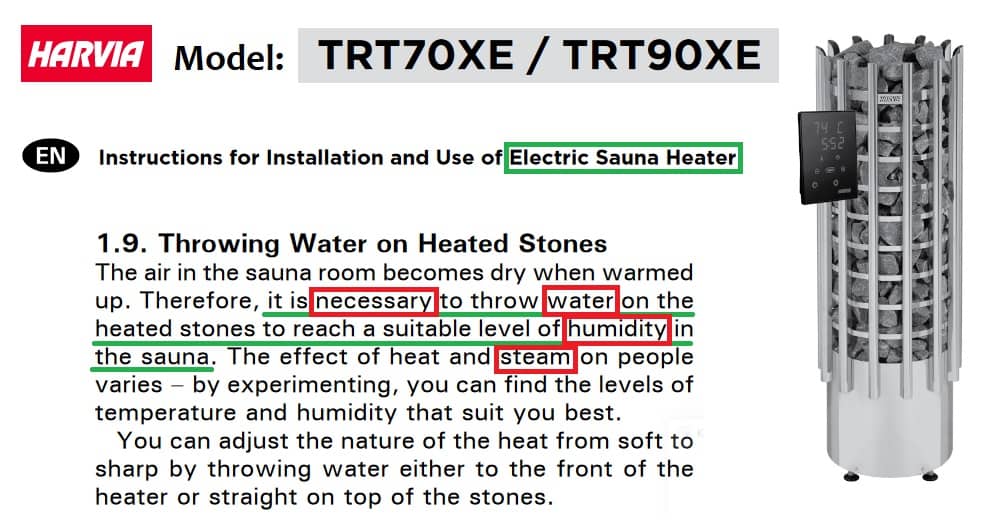
Not only okay, but a must!
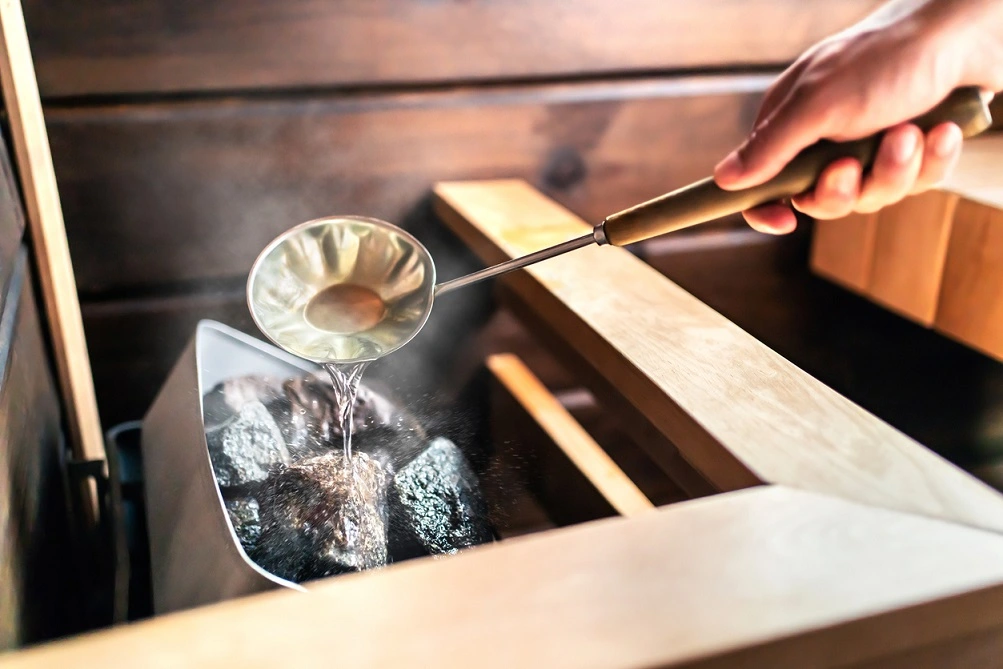
Pouring water on the hot sauna rocks produces steam (löyly) that’s the #1 reason for saunaing. It’s also the #1 criterion when buying a sauna heater: will it produce good steam or not?
Sauna heaters with the biggest stone mass bring the most löyly when you throw water on them. They can also take in the most water, which means all the water will turn to steam and evaporate instead of dripping on the floor through the stone mass.
Final Thoughts
Now that you know a ton about different sauna heaters, you’re much more equipped to choose the right one for your needs.
In case you forgot which one intrigued you the most, or in general want to compare the best sauna heaters with each other, you can find them all in the shop.
Also, stay tuned for my next article on sauna heater certifications. They have an enormous effect on how your electric heater works in practice., i.e., for how long it can stay on, what kind of temperatures are possible, etc.
You may already know that most electric sauna heaters only stay on for one hour, which is a nuisance for many. I’ll show you a way around it in my next post!